Boolean Logic for Kids
The true-or-false math from George Boole that hides inside every computer.
Why Yes-or-No Thinking Matters
A lot of thinking is like choosing a color from a rainbow. But some thinking is more like answering a yes-or-no question. Is the door open? Is the light on? Is the answer true or false? George Boole turned that kind of logic into mathematics.
He helped establish modern symbolic logic, and Boolean algebra is now basic to the design of digital computer circuits. That is a huge legacy, because it means ideas from a 19th-century mathematician sit quietly inside phones, tablets, computers, and game systems.
What Boolean Logic Is
Boolean logic is a system for working with statements that can be sorted into two basic outcomes: true or false. Boole’s system works with the presence or absence of something, like on or off in an electrical circuit.
That is what makes the system powerful. It takes a messy question and turns it into a clear structure. Once something can be represented in a true-or-false way, it becomes easier to test, combine, and use in machines.
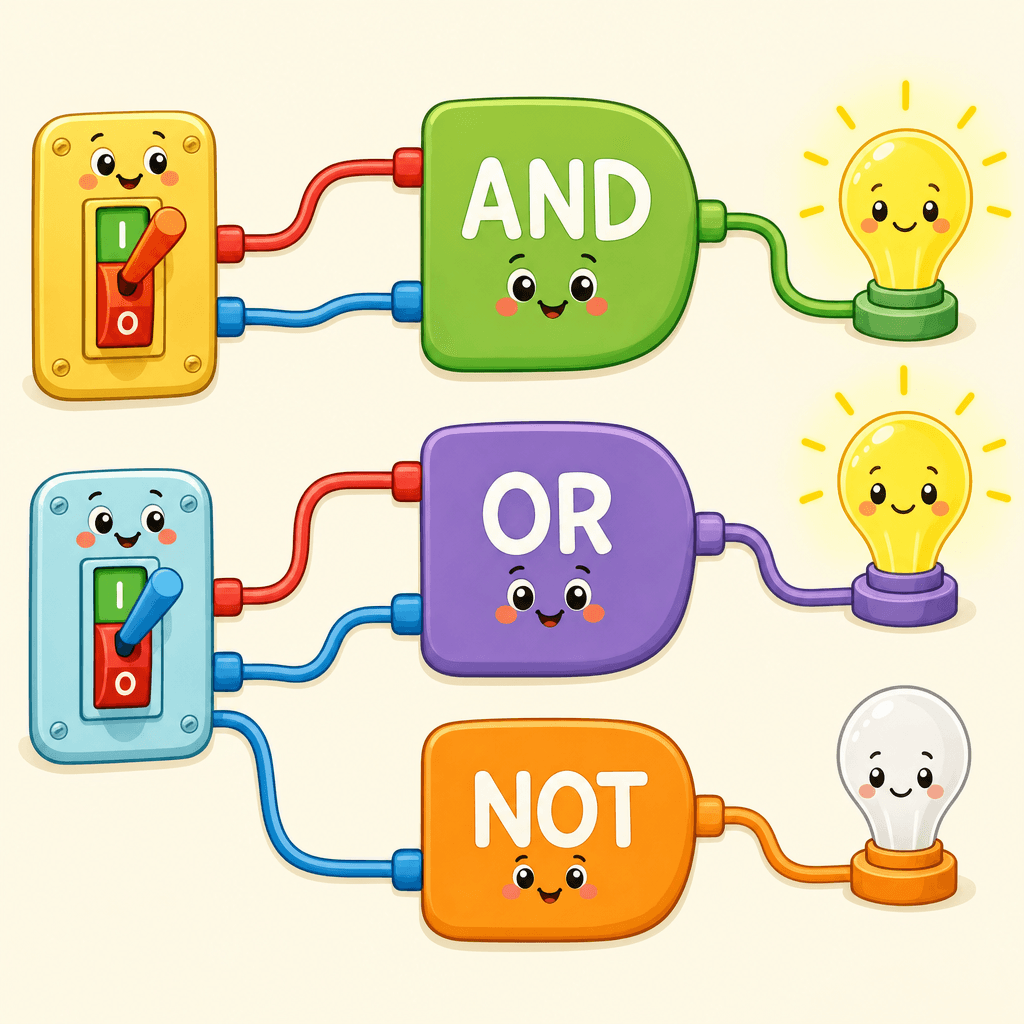
AND, OR, and NOT
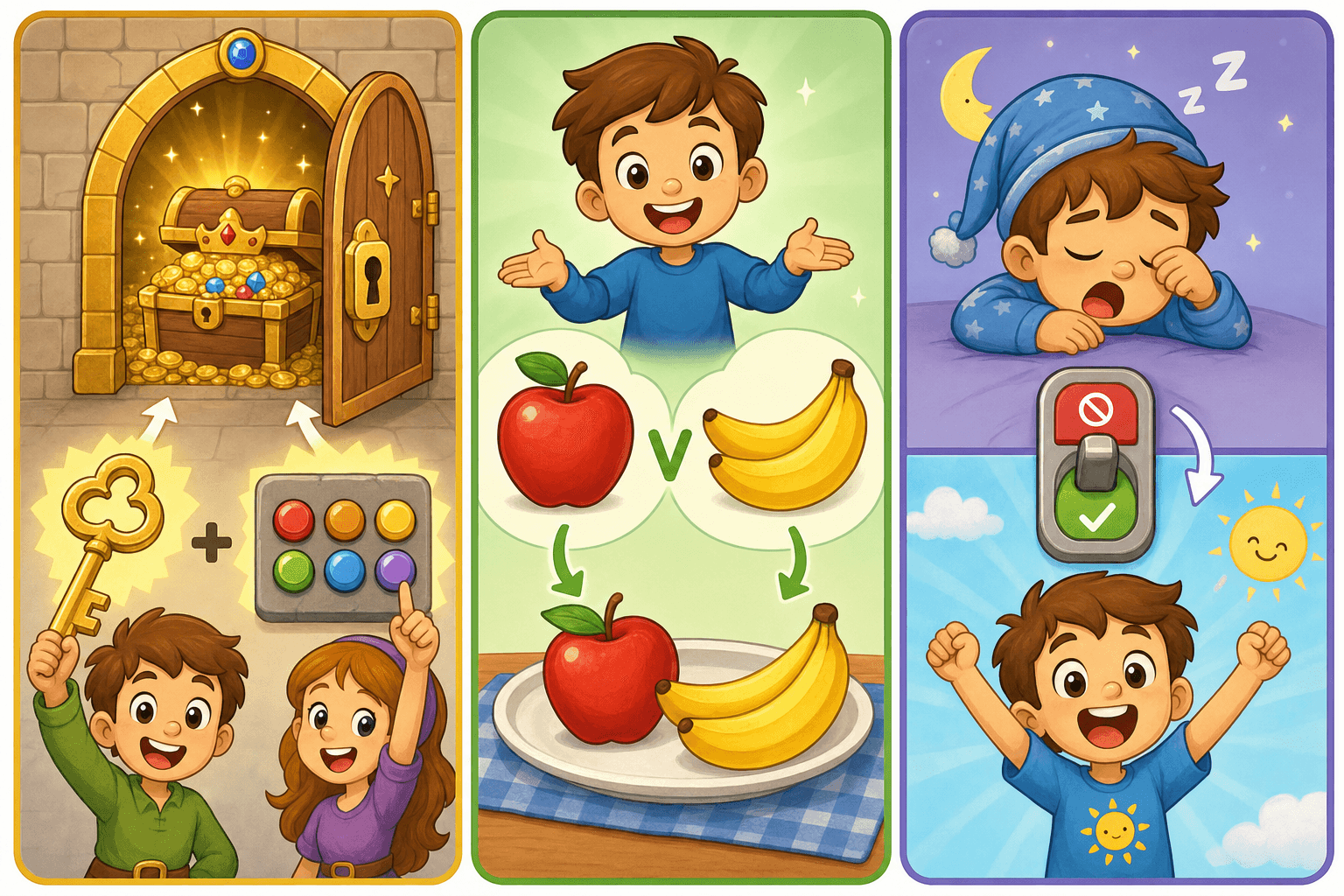
The most famous Boolean words are AND, OR, and NOT. Imagine a game rule that says, “You can enter the secret room if you have a key AND the door code.” You need both conditions.
Now imagine a snack rule: “Choose apples OR bananas.” One is enough. NOT flips the answer: “NOT sleepy” means the same as “awake.” These are not just grammar tricks; they are logic tools used in search filters, coding, and game rules.
How Circuits Use On and Off
Now imagine a machine that understands two states instead of words: on and off. All digital computers rely on a binary system of ones and zeros and on rules of logic set out by George Boole.
This is where Boole’s idea became truly world-changing. If a circuit can act like true/false, yes/no, or on/off, then it can follow Boolean rules. Enough of those rules together help a machine compare, choose, sort, remember, and calculate.
You Already Use Boolean Thinking
- Sorting cards by “shiny AND rare” is Boolean thinking.
- Searching for “cats OR dogs” is Boolean thinking.
- A game prize that unlocks only when you finished a level AND NOT run out of energy.
Quick Facts About Boolean Logic
Every computer decision is really a chain of true/false choices.
Tiny switches set to on or off follow Boolean rules billions of times to run apps and games.
AND, OR, and NOT can be combined into powerful rules.
By stacking these simple operations, machines can compare, sort, and make complicated decisions.
The word “Boolean” in coding comes straight from George Boole.
Programmers use “Boolean” values, true or false, named after the man who invented the math.
Why Kids Already Use Boolean Thinking
You do not need to be a programmer to use Boolean logic. George Boole’s genius was noticing that logic itself could be handled like math.
Once he did that, he helped open the door to the digital world. For kids, that is exciting because it means even a very abstract idea can someday power real inventions.
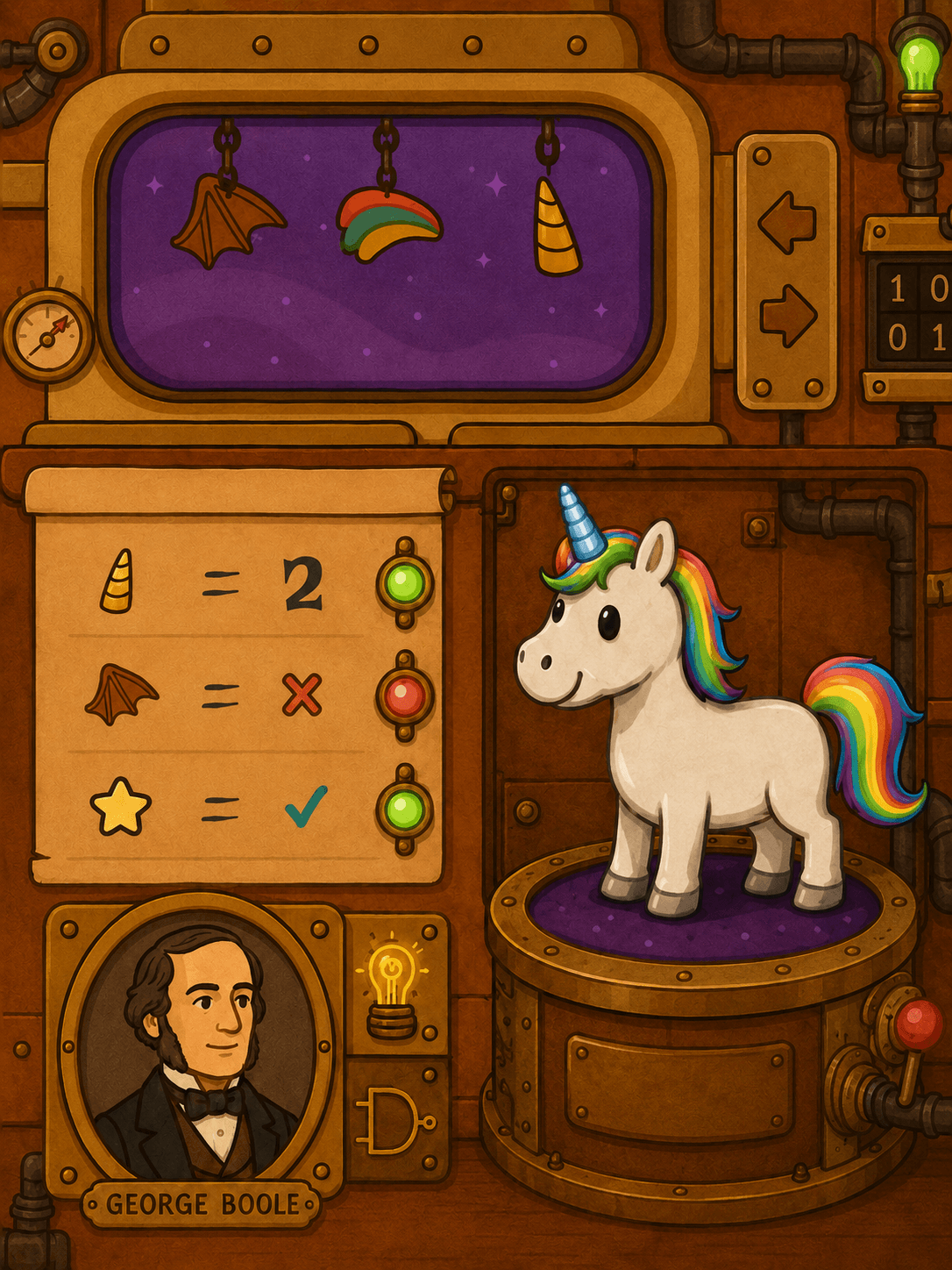
Boole's Creature Machine
Use AND, OR, and NOT to build creatures and solve true-or-false puzzles!