Isaac Newton Facts for Kids
Discover the story of a curious boy who asked big questions and changed the way we see the world.
A Curious Child in the Countryside
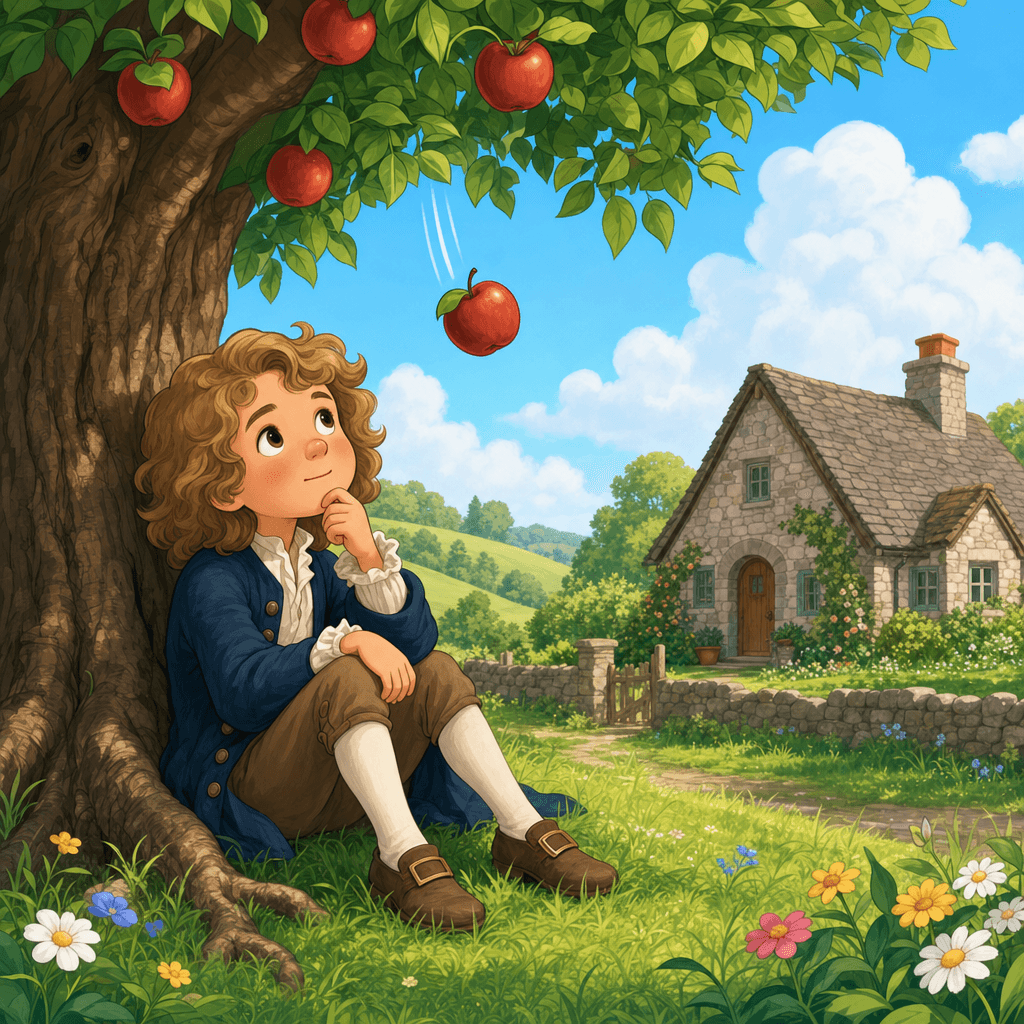
Isaac Newton was born in Woolsthorpe, a small village in Lincolnshire, England. His early life was not especially easy. His father died before he was born, and later his mother moved away for a time, leaving Isaac to be raised largely at Woolsthorpe.
He grew up in the countryside instead of in a grand city school, but that did not stop him from becoming one of the most famous scientists in history. His story is a great reminder that a curious child with a lot of questions can grow into someone who changes the world.
From Farm to Cambridge
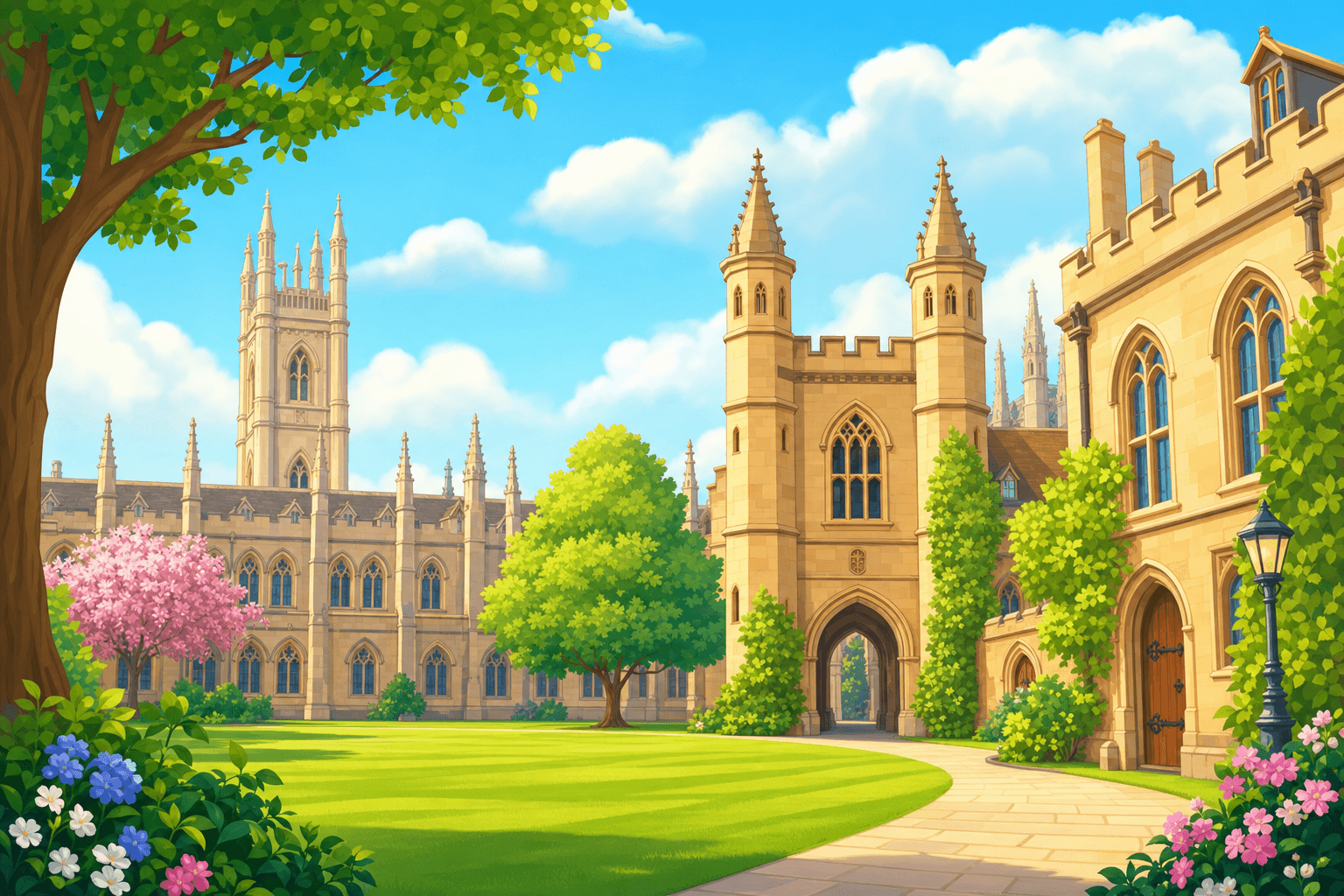
Newton attended school near Grantham and later went to Trinity College, Cambridge. At first, he did not seem like a superhero scientist in a comic book. He was a student who kept reading, thinking, and experimenting.
Cambridge gave him access to mathematics and natural philosophy, which was the old name for much of science. He arrived in 1661, graduated in 1665, became a Fellow a few years later, and then rose to the famous Lucasian Chair of Mathematics. That path from student to leading scholar placed him in the center of scientific change.
His early path
The Year of Wonders
One of the most famous parts of Newton’s life happened when the plague closed Cambridge and sent him back home to Woolsthorpe. For about 18 months, he worked largely on his own.
It was there that he experimented with refracted light and thought deeply about gravity. People often call this period his “year of wonders,” even though it lasted longer than a single year. It became famous because so many of his biggest ideas took shape there.
Light, Telescopes, and Gravity
- He showed that white light is made of many colors using a prism.
- He built powerful telescopes to explore the stars.
- A falling apple helped him think about gravity, a force that pulls things together.
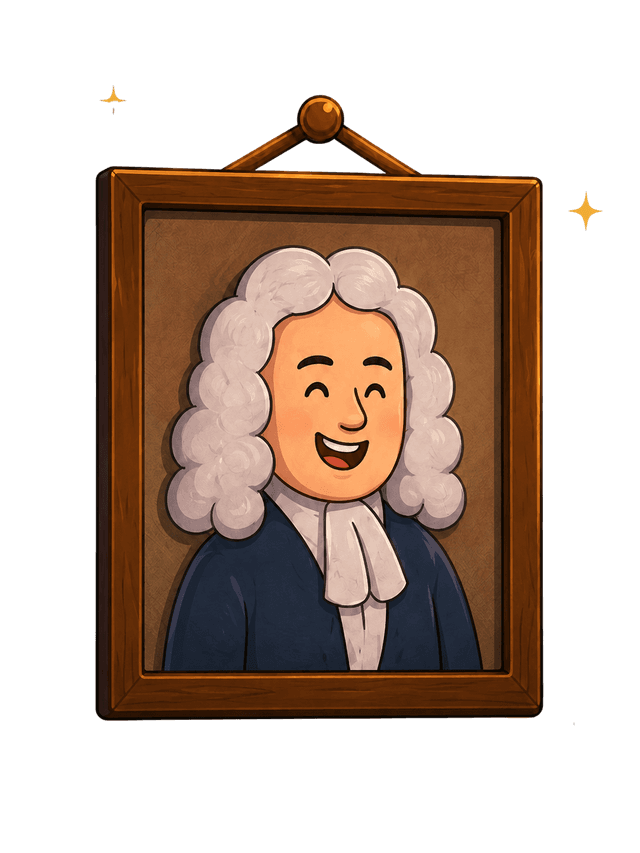
Many kids know Newton because of the apple story, but he did much more than think about falling fruit. He published Principia Mathematica, the book that set out his laws of motion and universal gravitation, and those ideas became the backbone of classical physics. Newton later became President of the Royal Society and also served as Master of the Mint, so his career stretched far beyond one single discovery.
Fun Facts About Newton
He wrote his first notes at home when he was just a teenager.
Newton filled notebooks with questions and experiments long before he was famous, proof that great science often starts with everyday curiosity.
He became a professor at Cambridge when he was only 26!
He was given the famous Lucasian Chair of Mathematics, one of the most respected teaching positions in the country.
The apple story might be true, or it might be a legend!
Historians do not believe an apple bonked Newton on the head. The tradition says that watching an apple fall helped him think about gravity.
His laws of motion help explain cars, rockets, sports, and more.
Engineers still use Newton’s laws to plan satellite paths, design rockets, and understand how everyday objects speed up and slow down.
He was knighted for his amazing work.
Newton was honored as a knight, becoming Sir Isaac Newton, and also served as President of the Royal Society and Master of the Mint.
Why Kids Still Learn About Him
Kids still learn about Newton because his life shows how science grows from observation, patience, and imagination. He asked giant questions: Why do things fall? What is light? How do planets move? Those are the same kinds of questions children still ask.
His answers continue to help scientists and engineers design rockets, understand orbits, and study light. Newton’s life is a powerful lesson that big discoveries do not begin with having all the answers. They begin with noticing something ordinary and deciding to ask one more question.
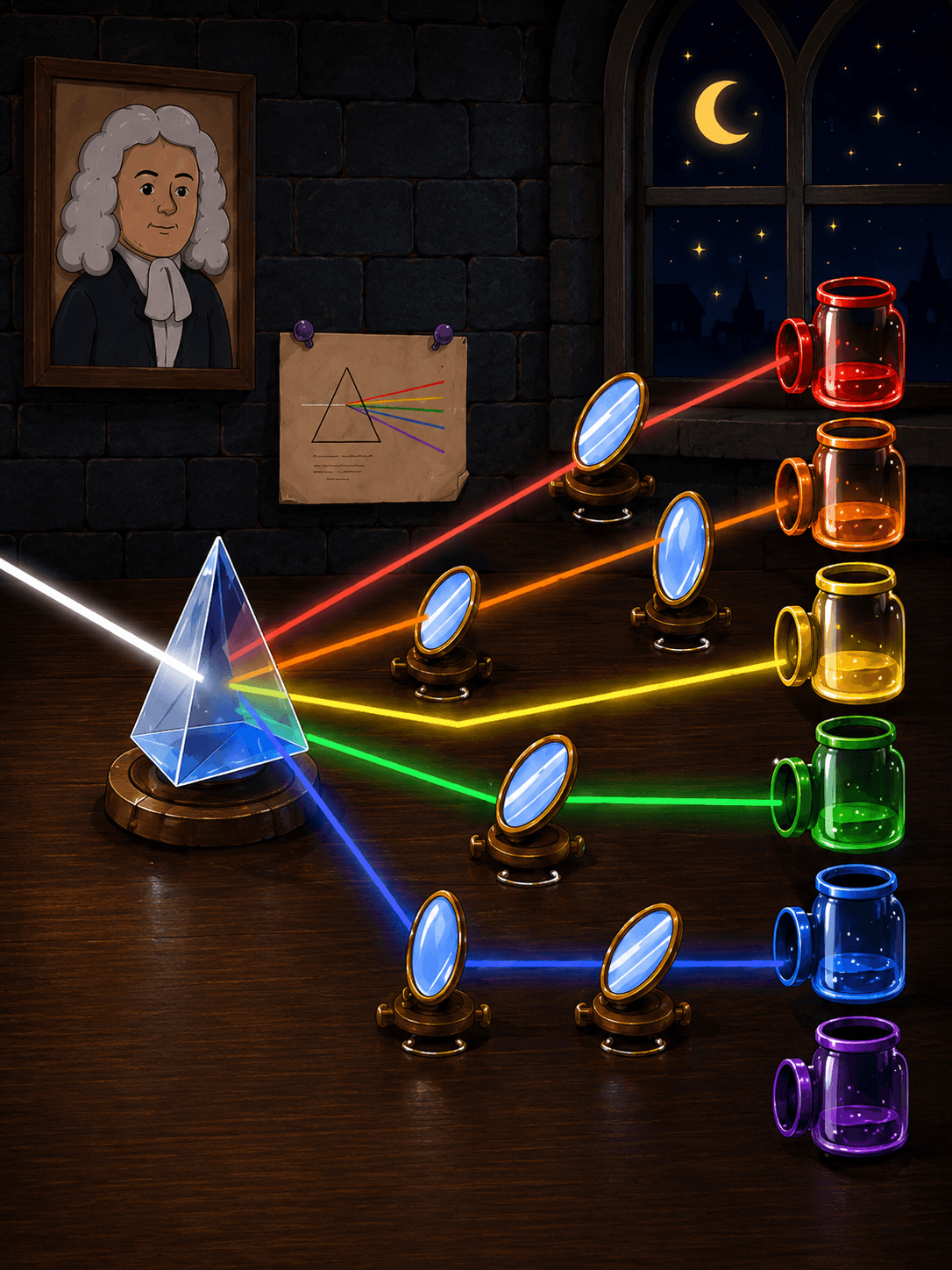
Newton's Prism Lab
Explore light, color, and discovery in this hands-on science adventure!