Isaac Newton: Gravity, Motion, and Orbits
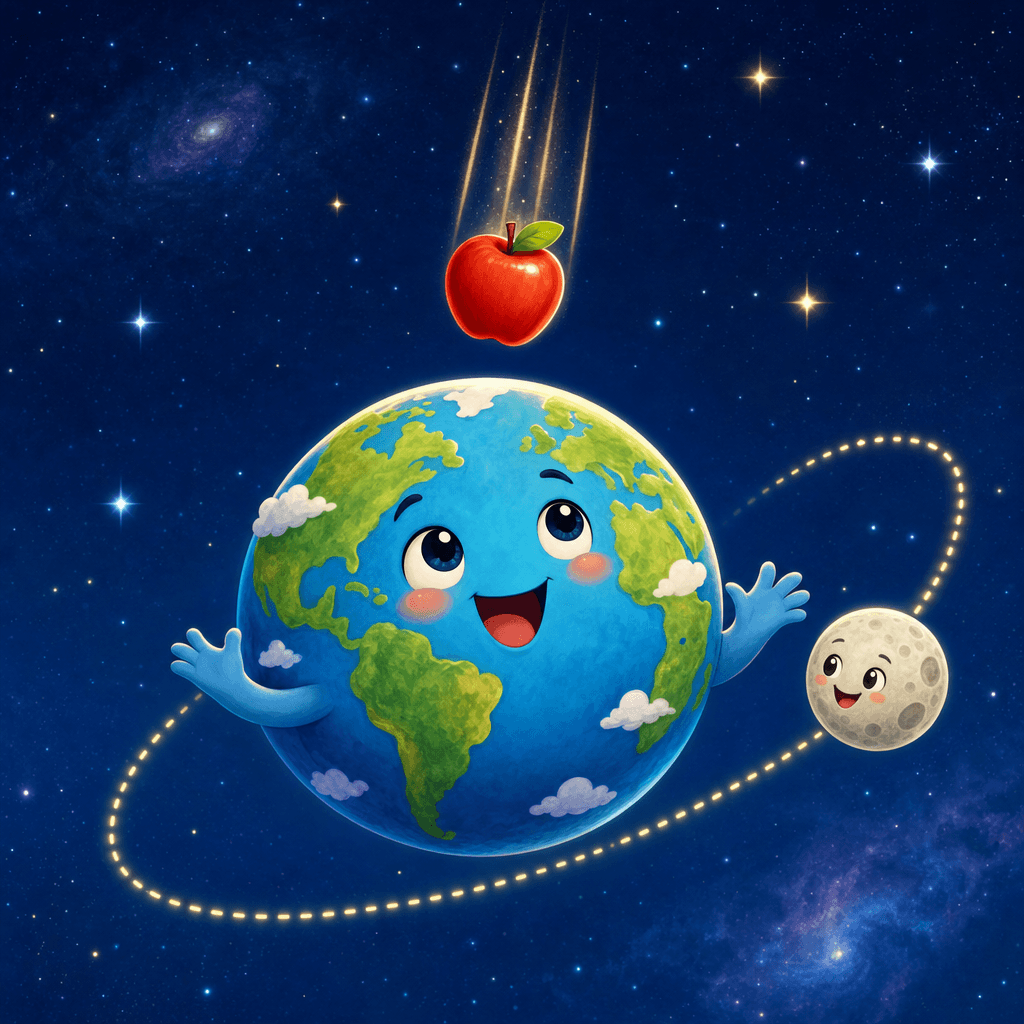
How the same force that drops an apple keeps the Moon flying around the Earth.
What Newton Wanted to Explain
Have you ever dropped a ball, rolled down a hill, or stared at the Moon and wondered why things move the way they do? Isaac Newton helped answer those questions.
In the 1600s, he wrote ideas about motion and gravity that became some of the most important rules in science. Newton realized that the same kind of force that makes an apple fall on Earth also helps explain why the Moon stays in orbit and why planets travel around the Sun. Today, NASA still teaches Newton’s ideas to explain rockets, satellites, and space travel.
Newton’s First Law
Newton’s first law is often called the law of inertia. It says that an object at rest stays at rest, and an object in motion keeps moving in a straight line at the same speed unless an outside force changes it.
That sounds fancy, but you feel it all the time. A skateboard standing still does not suddenly zoom away by itself. And if you are riding in a car that stops quickly, your body wants to keep moving forward for a moment. That is why seat belts matter so much: they give the outside force that helps stop you safely.
Force, Mass, and Acceleration
Newton’s second law explains how strongly an object changes its motion. In simple words, a bigger push makes a bigger change, but heavier things are harder to speed up.
That is why it is easier to kick a soccer ball than to shove a parked car. The ball has much less mass, so the same push changes its speed much more. If you want a rocket to move faster, you need more force or less mass.
Equal and Opposite Pushes
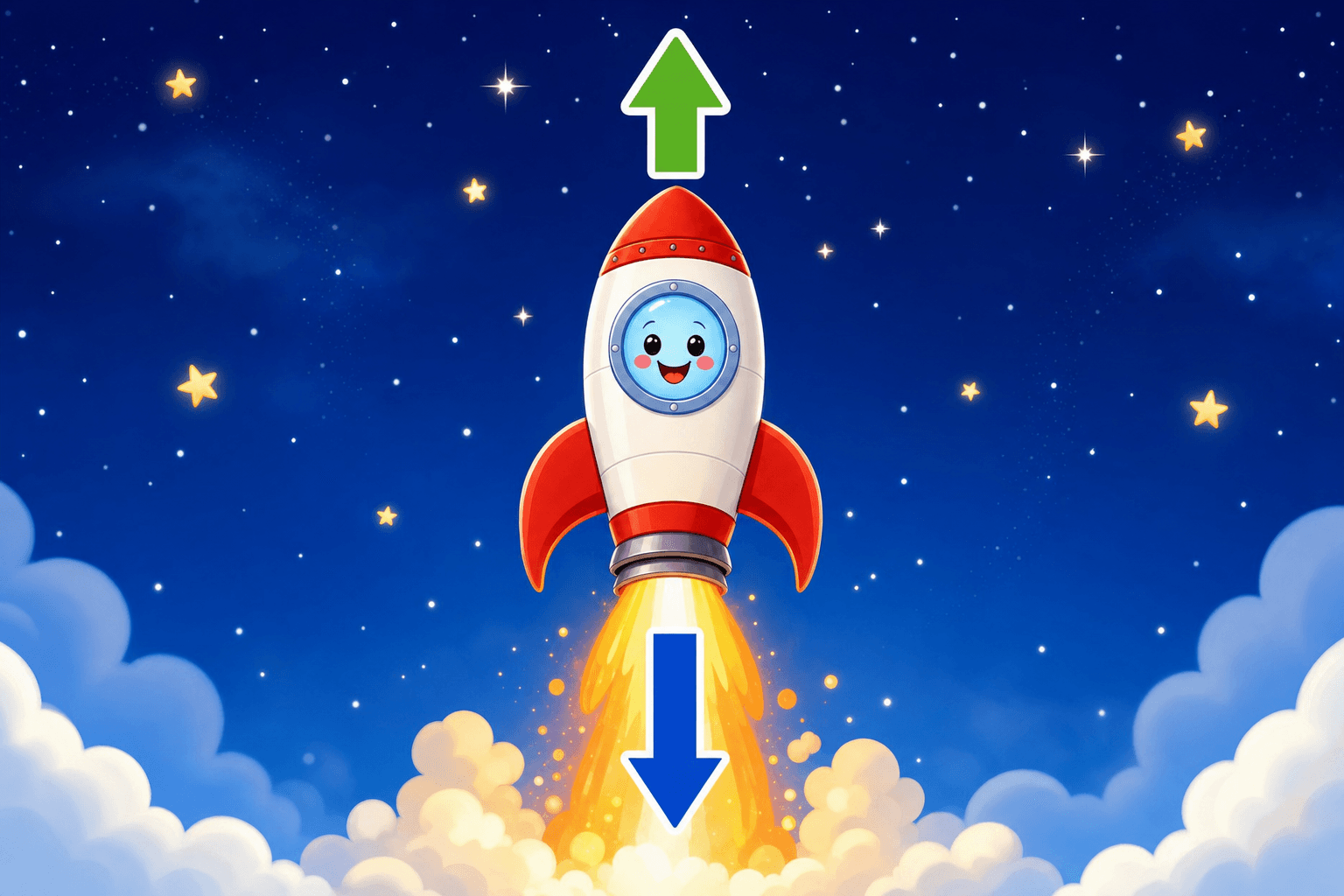
Newton’s third law says that when one object pushes on another, the second object pushes back with an equal and opposite force.
You feel this when you jump: your feet push down on the floor, and the floor pushes you upward. Rockets work the same way. The rocket blasts gas downward and backward, and the gas pushes the rocket upward and forward.
Why Orbits Happen
Now comes the really amazing part. If Earth’s gravity pulls things downward, why doesn’t the Moon crash into us? Newton explained that an object in motion wants to keep moving forward, but gravity bends that path.
NASA uses Newton’s famous “cannon on a mountain” idea to show this. If a cannonball moves slowly, it falls to the ground. If it moves fast enough sideways while gravity keeps pulling it down, it keeps “falling around” Earth. That curved path is an orbit. The Moon is Earth’s natural satellite, and the International Space Station is a human-made one.
Newton’s Laws in Everyday Life
- Bikes speed up when you pedal harder: more force, more motion.
- Roller coasters race downhill because gravity keeps pulling them.
- Seat belts and helmets work because moving bodies want to keep moving.
Quick Facts About Newton’s Science
The same gravity that drops an apple holds the planets in orbit.
Newton showed that gravity is a universal force: it works on apples, moons, and entire planets in exactly the same way.
Newton also studied light and color, not just falling objects.
He used a prism to show that white light is really a mix of many colors, which connects to his Prism Lab.
Engineers still use his laws to plan satellite paths today.
Newton’s rules help scientists send spacecraft from one planet to another with incredible accuracy.
Why Newton Still Matters
Newton’s ideas are not trapped in an old history book. They help engineers plan satellite paths, design rockets, and understand how spacecraft move from one planet to another.
They also help kids understand everyday life: why a ball curves, why a bike speeds up, and why helmets and seat belts protect us. When you learn Newton, you are learning a set of ideas that connect playgrounds, cars, sports, and outer space into one giant science story.
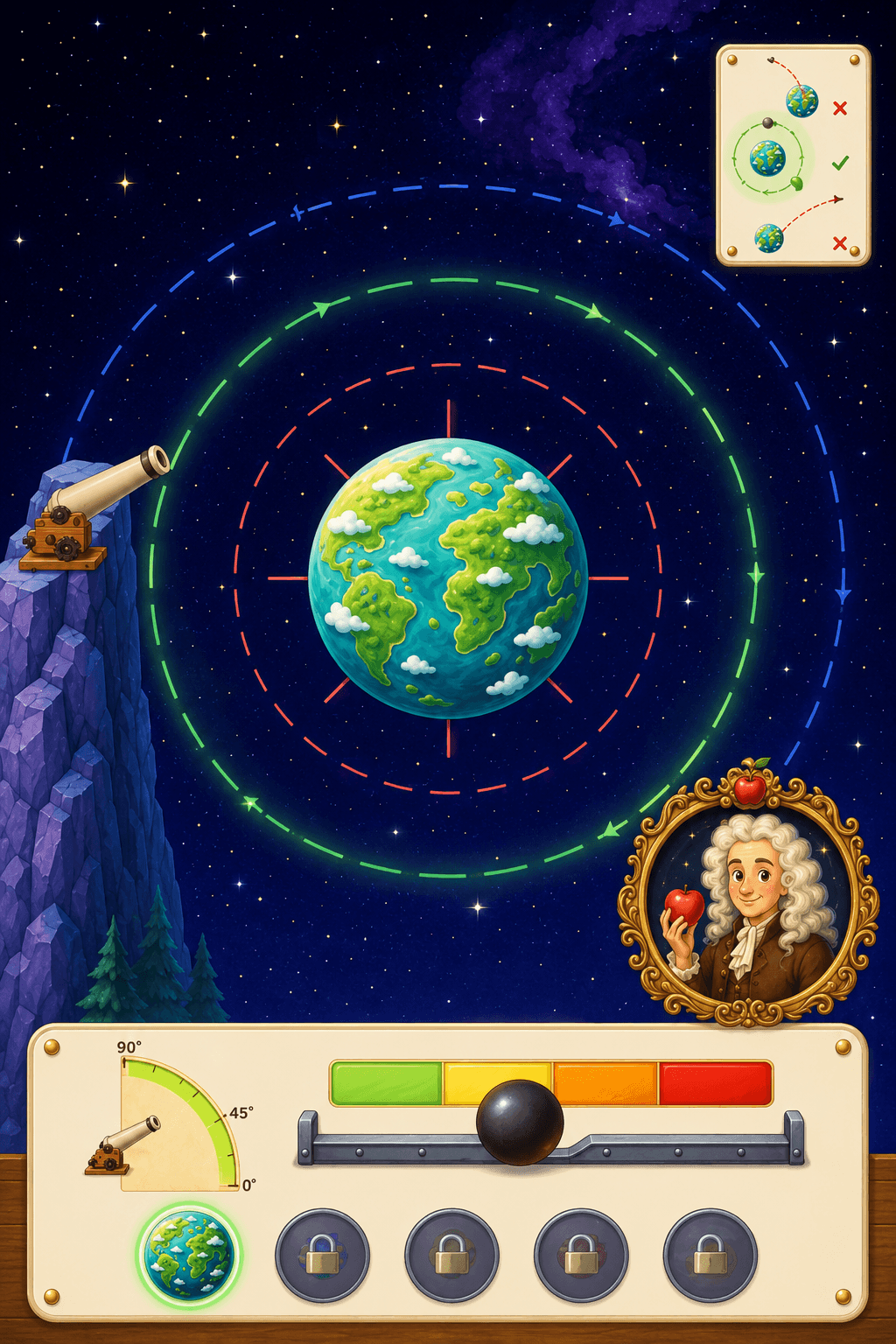
Newton's Orbit Cannon
Fire the cannon, bend the path with gravity, and launch things into orbit!