Robert Koch: Proving Germs Cause Disease
Meet the germ detective who showed how tiny bacteria can make people sick.
Before Scientists Knew About Germs
Today, most kids grow up hearing about germs. But long ago, people did not clearly know that tiny living organisms could cause specific diseases. Robert Koch helped change that.
He is known as one of the founders of bacteriology, and he discovered the bacterium that causes tuberculosis. His work was powerful because it moved people from guessing to testing. Instead of saying “maybe this sickness comes from bad air,” Koch asked a sharper question: “Can we find the exact microbe, study it, and connect it to a disease?”
What Bacteria Are
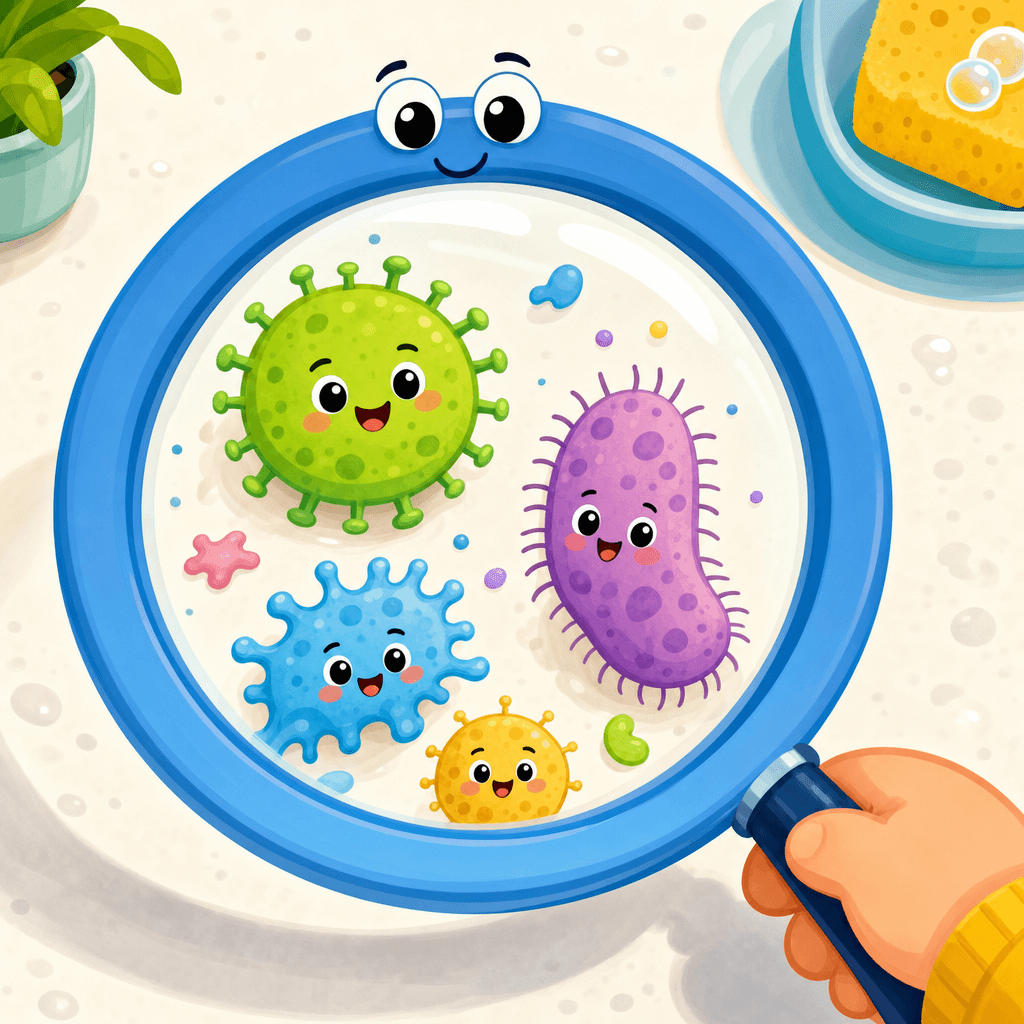
Bacteria are tiny living things, often too small to see without a microscope. Some are harmless, and some are even helpful, since many bacteria in our bodies help with digestion.
But some bacteria can make people sick. Germs can spread in different ways, including touching, coughs and sneezes, food, water, and shared objects. So scientists need careful tests. If many different germs exist, how do you prove which one is causing a specific illness? That was one of the great puzzles Koch helped solve.
Koch’s Big Discoveries
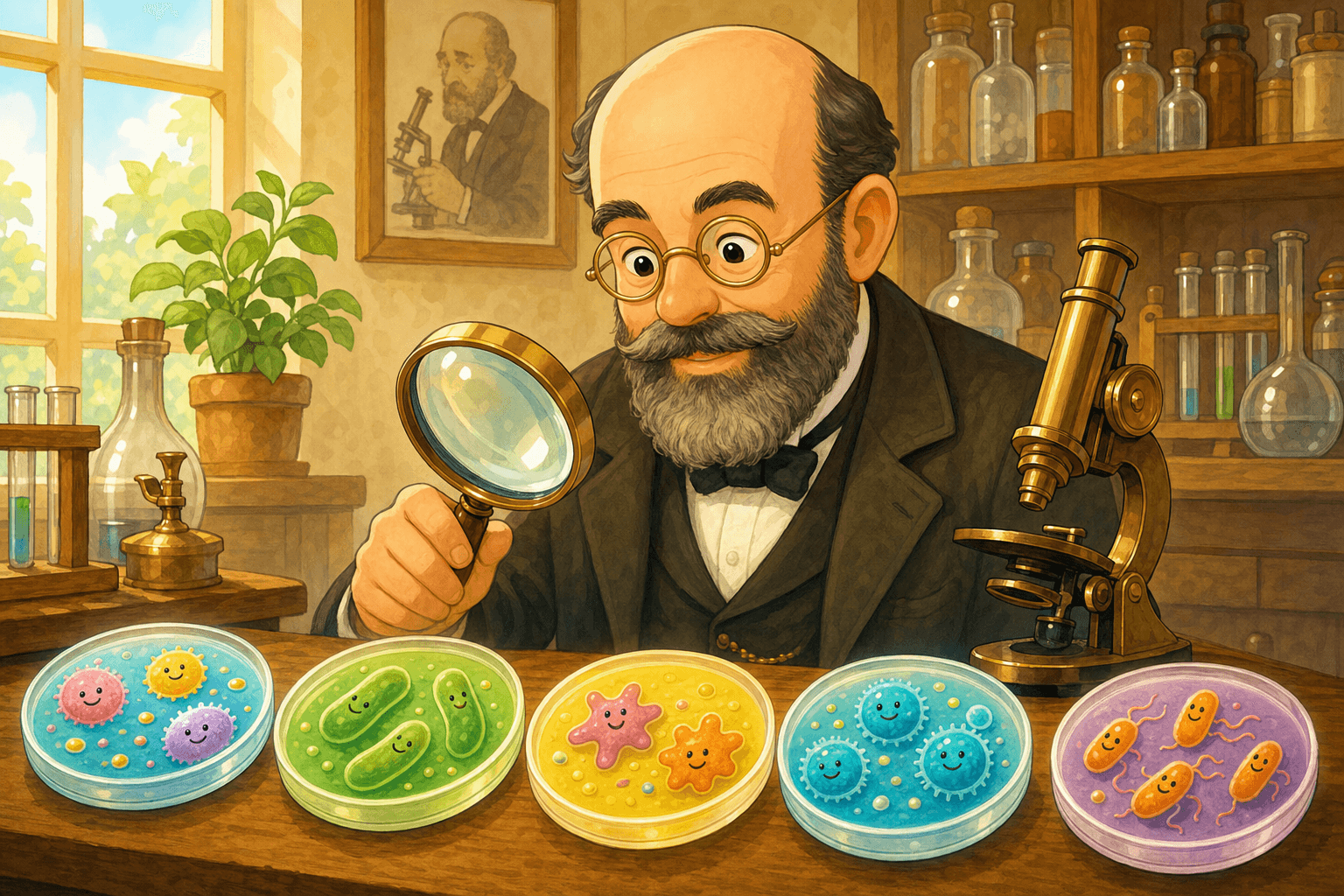
Koch became famous for tracking down the causes of several major diseases. He is credited with discovering the anthrax disease cycle and the bacteria responsible for tuberculosis and cholera.
He described the tuberculosis bacterium in 1882 and later identified the bacterium that causes cholera while investigating outbreaks. In other words, Koch was a kind of germ detective who worked to show which germ matched which disease.
A Simple Version of Koch’s Postulates
One reason Koch matters so much is that scientists later summarized his method into what became known as Koch’s postulates. In a simple, kid-friendly version, the logic goes like this:
First, look for a certain germ in sick organisms but not in healthy ones. Second, grow that germ separately. Third, see whether the isolated germ can cause the disease. Fourth, find the same germ again. The bigger lesson is not memorizing four rules; it is learning how science tests ideas step by step instead of guessing.
Why This Changed Medicine
- Knowing the cause of a disease helps scientists search for treatments.
- Clean water and safe food stop many germs from spreading.
- Washing hands and covering coughs slow down infections.
Quick Facts About Germ Science
Not all bacteria are bad; many help your body.
Helpful bacteria assist with digestion and even protect us, while only some kinds cause illness.
Koch identified the tuberculosis germ in 1882.
Finding the exact microbe behind a disease was a huge step that helped later scientists look for cures.
Good science tests ideas instead of guessing.
Koch’s careful step-by-step method is the heart of how scientists prove what causes a disease.
What Kids Can Notice Today
You do not need a laboratory to notice why Koch’s work still matters. Infections can spread through close contact, shared objects, food, liquids, and sprays from coughs or sneezes.
Koch did not solve every germ mystery forever, and modern microbiology is far more advanced than 19th-century science. But he helped build the habit of proving what causes disease, one of the bravest and most useful habits in science.