The Solar System for Kids
One star, eight planets, and a whole lot of space in between. Let’s line them up in order and meet each one.
What is the solar system?
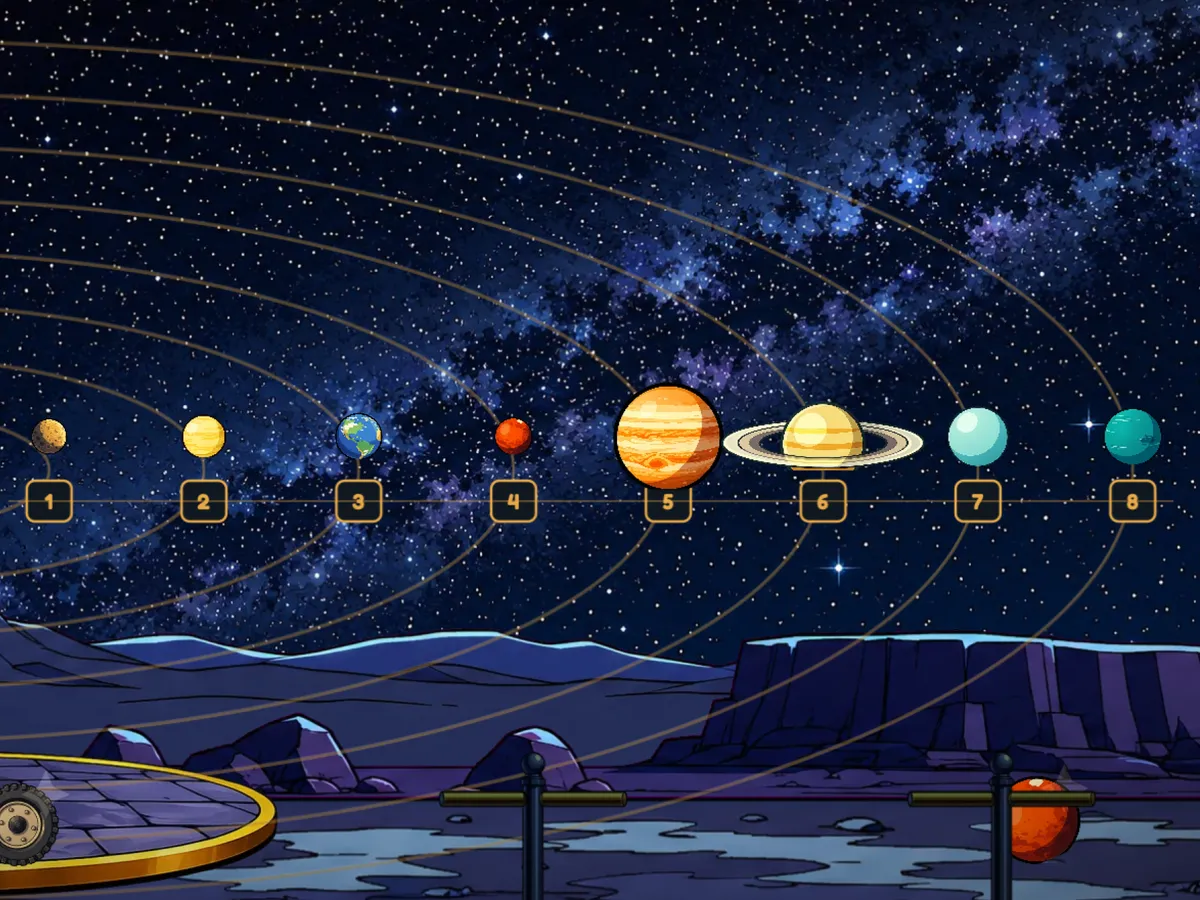
The solar system is the Sun and everything that travels around it: eight planets, their moons, dwarf planets like Pluto, and lots of asteroids and comets. The Sun is a star, and it is so big that it holds almost all the stuff in the whole solar system.
The eight planets in order from the Sun are Mercury, Venus, Earth, Mars, Jupiter, Saturn, Uranus and Neptune. Here’s a trick to remember them: My Very Excellent Mother Just Served Us Noodles.
Meet the planets, in order
 Rocky
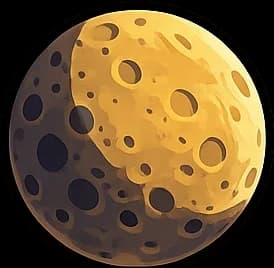
Rocky1. Mercury
The smallest planet and the closest to the Sun. Scorching by day, freezing at night, because it has almost no air.
 Rocky
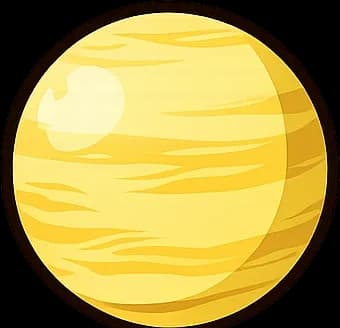
Rocky2. Venus
The hottest planet, about 465°C, hot enough to melt lead. Thick clouds trap the heat like a blanket.
 Rocky
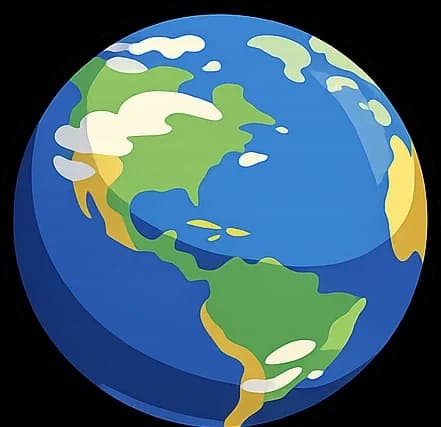
Rocky3. Earth
Our home! The only place we know with liquid water on the surface, and the only one with life.
 Rocky
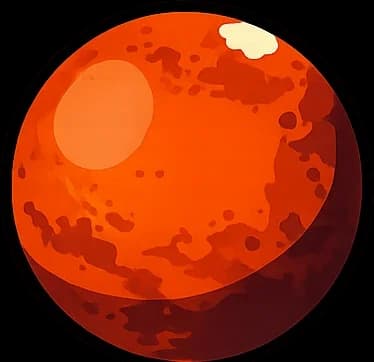
Rocky4. Mars
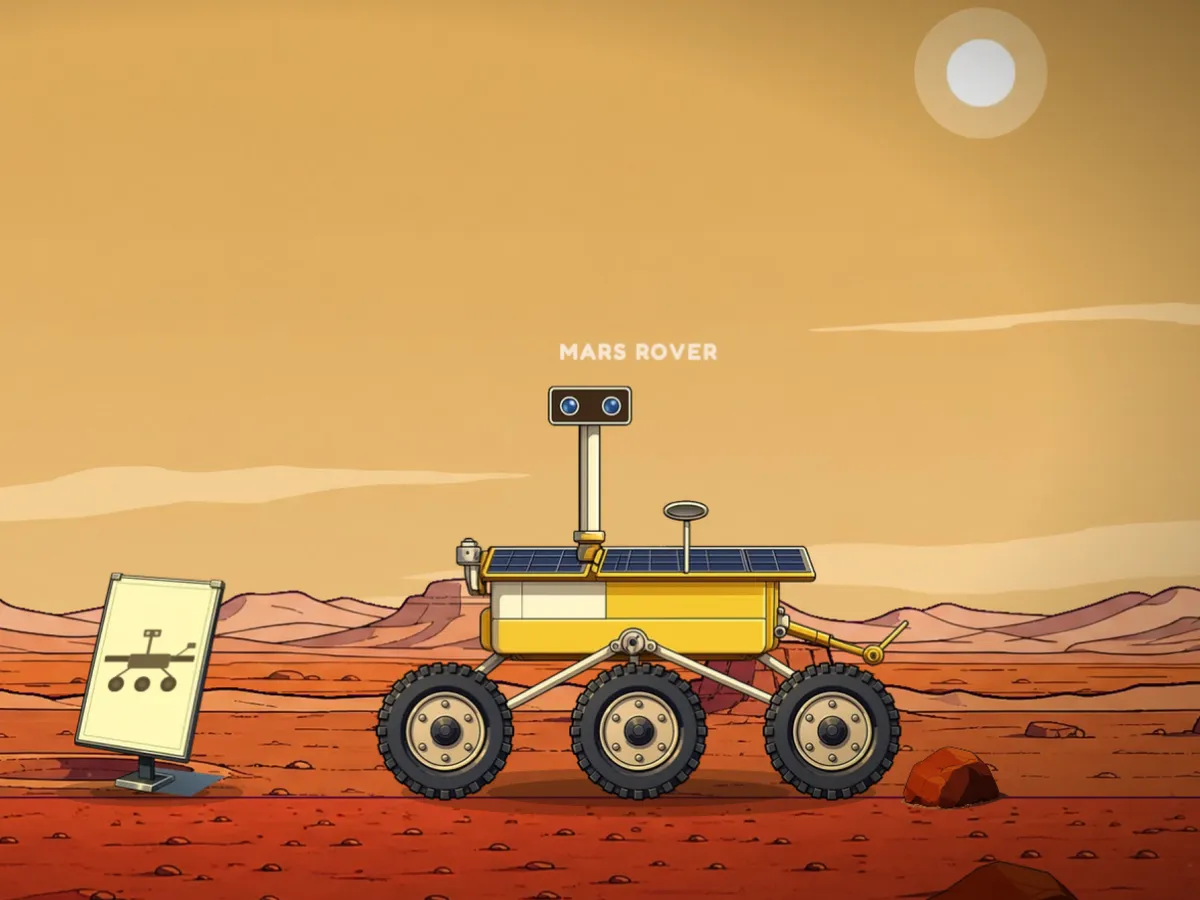
The red planet. Its dust is full of rust, and robot rovers drive across it. Explore Mars.
 Gas giant
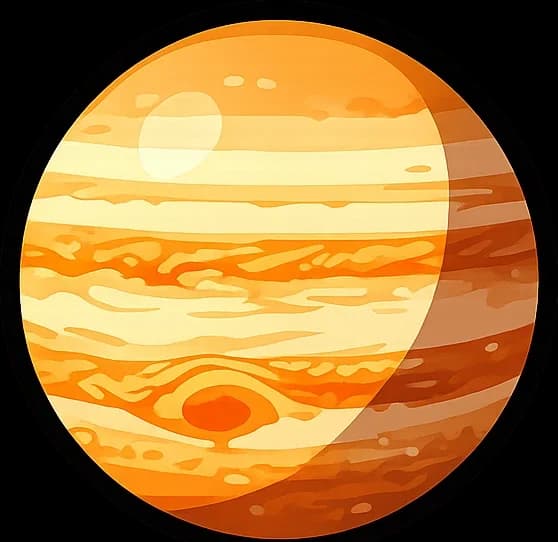
5. Jupiter
The biggest planet. All the others could fit inside it, and its Great Red Spot is a storm wider than Earth.
 Gas giant
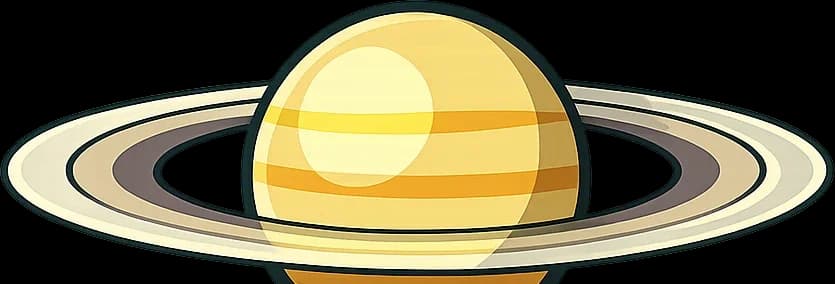
6. Saturn
Famous for its bright rings, made of billions of chunks of ice and rock. Other giants have rings too, just fainter.
 Ice giant
7. Uranus
It spins tipped over on its side, as if something knocked it over. Methane gas gives it a pale blue-green colour.
 Ice giant
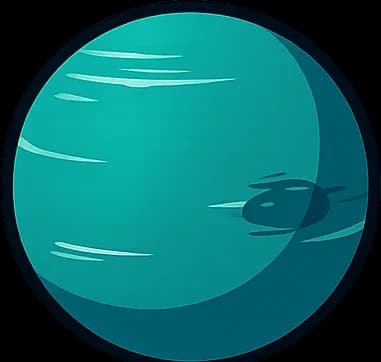
8. Neptune
The farthest planet and the windiest. It’s nearly the same colour as Uranus, just a little bluer.
📏 How far from the Sun?
Distances measured in “Earths”: Earth’s distance from the Sun counts as 1.
- Mercury0.4
- Venus0.7
- Earth1
- Mars1.5
- Jupiter5.2
- Saturn9.5
- Uranus19.2
- Neptune30.1
Neptune is about 30 times farther from the Sun than Earth is. The four rocky planets are all squeezed close together near the Sun.
Why is Venus hotter than Mercury?
Mercury is closer to the Sun, so you might guess it is the hottest planet. But it has almost no air to hold heat in, so its night side gets freezing cold.
Venus is wrapped in a thick blanket of clouds and carbon dioxide gas. Sunlight gets in, but the heat cannot get out. This is called the greenhouse effect, and it makes Venus about 465°C everywhere, day and night.
A clockwork solar system
An orrery is a model of the solar system with gears that make the planets move around the Sun. The first one was built about 300 years ago, long before anyone had a photograph of a planet.
But no model can show sizes and distances truthfully at the same time. If the Sun were a football, Earth would be a peppercorn about 24 metres away, and Neptune would be more than 700 metres away!
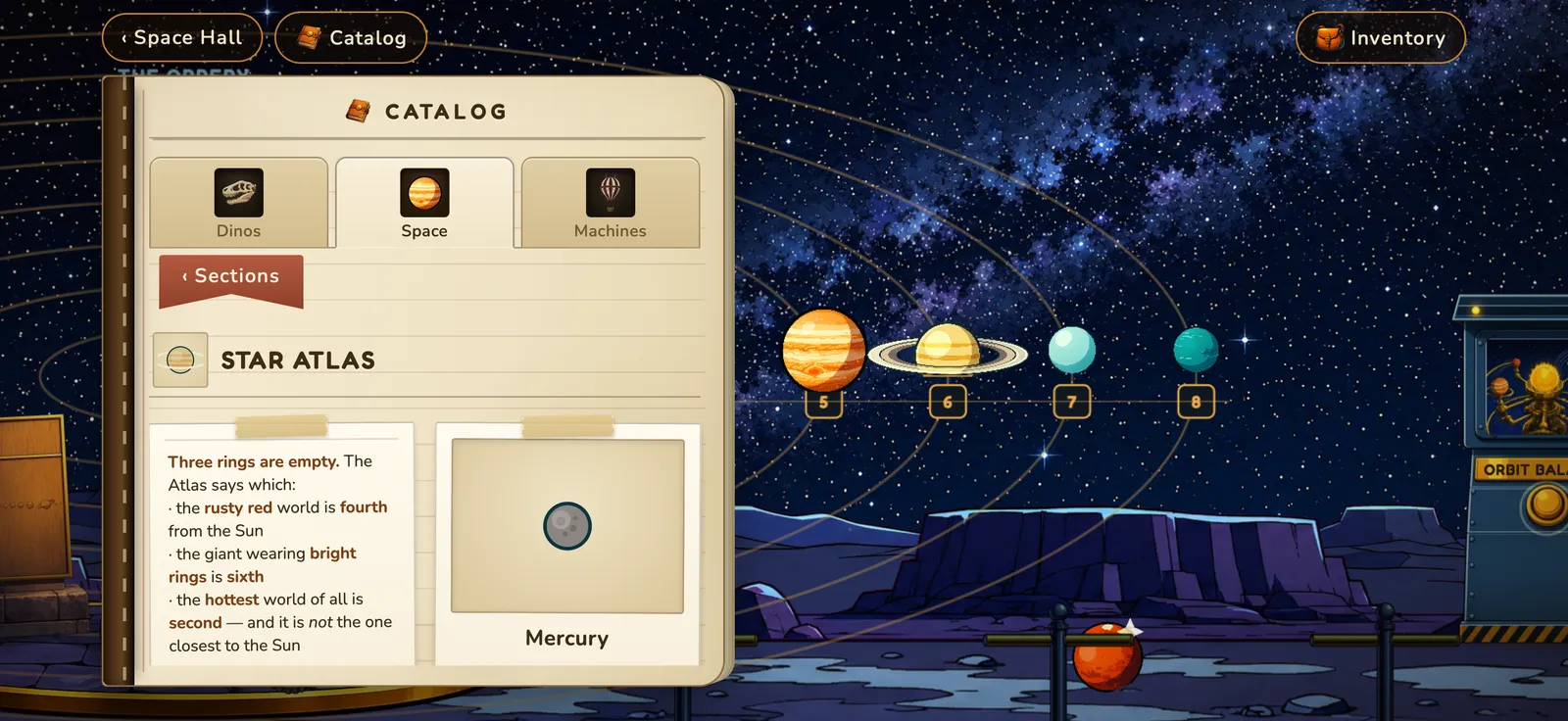
Out-of-This-World Planet Facts
A year on Neptune lasts about 165 Earth years.
A year is the time a planet takes to go once around the Sun. The farther out a planet is, the longer its year.
Jupiter’s Great Red Spot is a giant storm.
It is wider than the whole Earth, and astronomers have watched it swirl for more than 150 years.
Saturn’s rings are mostly ice.
Most of the pieces are no bigger than a snowball, but there are billions of them.
Uranus rolls around the Sun on its side.
Scientists think a giant crash long ago may have tipped it over.
Neptune has the fastest winds of any planet.
Its storms blow faster than any on Earth, even though it is so far from the Sun’s warmth.
Science words to know
- Planet
- A large, round world that travels around a star and has cleared its path.
- Orbit
- The curved path one object takes around another, like Earth around the Sun.
- Orrery
- A clockwork model of the solar system.
- Dwarf planet
- A round world, like Pluto, that orbits the Sun but shares its path with other objects.
Quick quiz!
0 / 31. Which planet is the hottest?
2. What is the fourth planet from the Sun?
3. Which planet is the biggest?
Questions kids ask
What are the 8 planets in order?
Mercury, Venus, Earth, Mars, Jupiter, Saturn, Uranus and Neptune. Remember them with “My Very Excellent Mother Just Served Us Noodles”.
Why isn’t Pluto a planet anymore?
In 2006 astronomers decided a planet must clear its path around the Sun. Pluto shares its path with many icy objects, so it is now called a dwarf planet.
Which planets have rings?
All four giant planets have rings: Jupiter, Saturn, Uranus and Neptune. Saturn’s are just the brightest and easiest to see.
Why do planets go around the Sun?
The Sun’s gravity pulls on them, and they are moving sideways so fast that they keep falling around it instead of into it. Find out more in why do astronauts float.
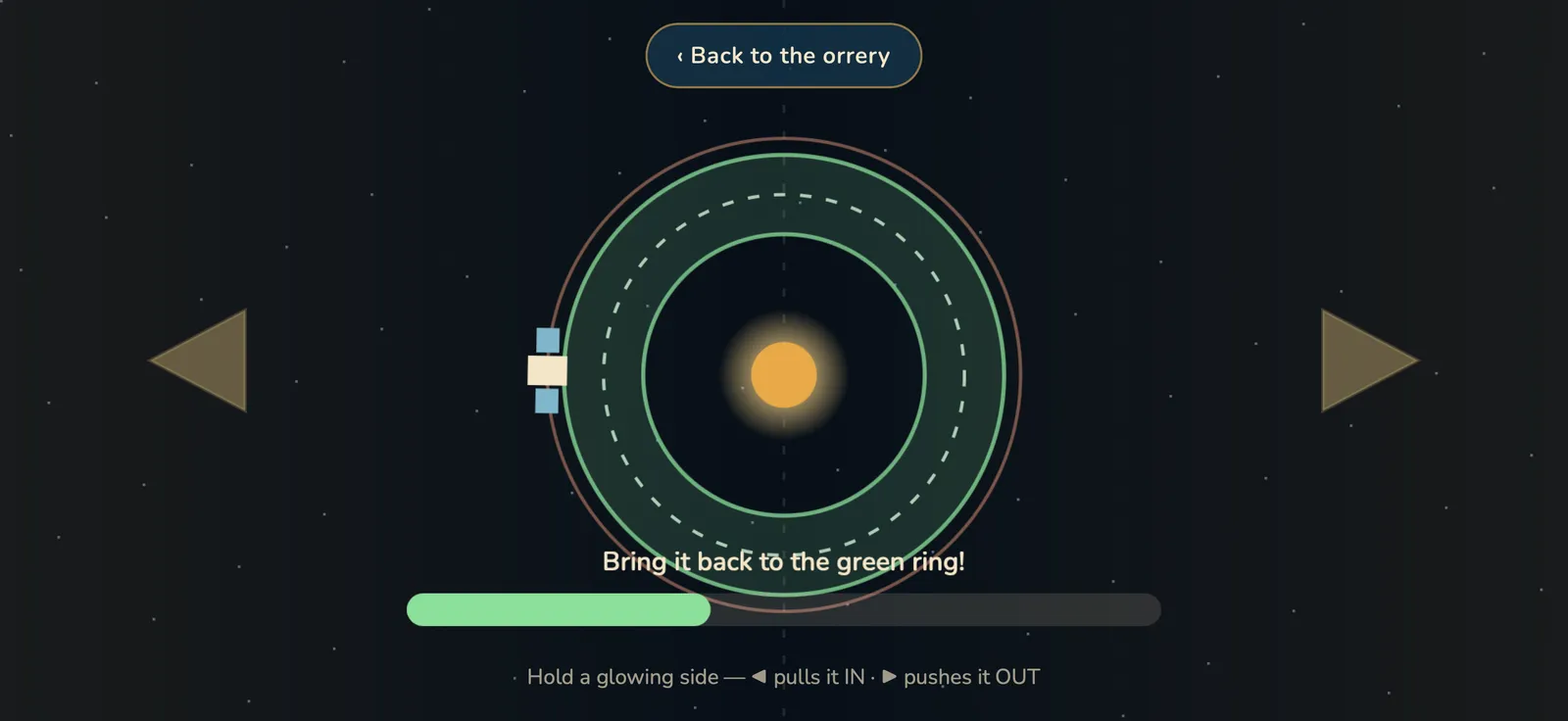
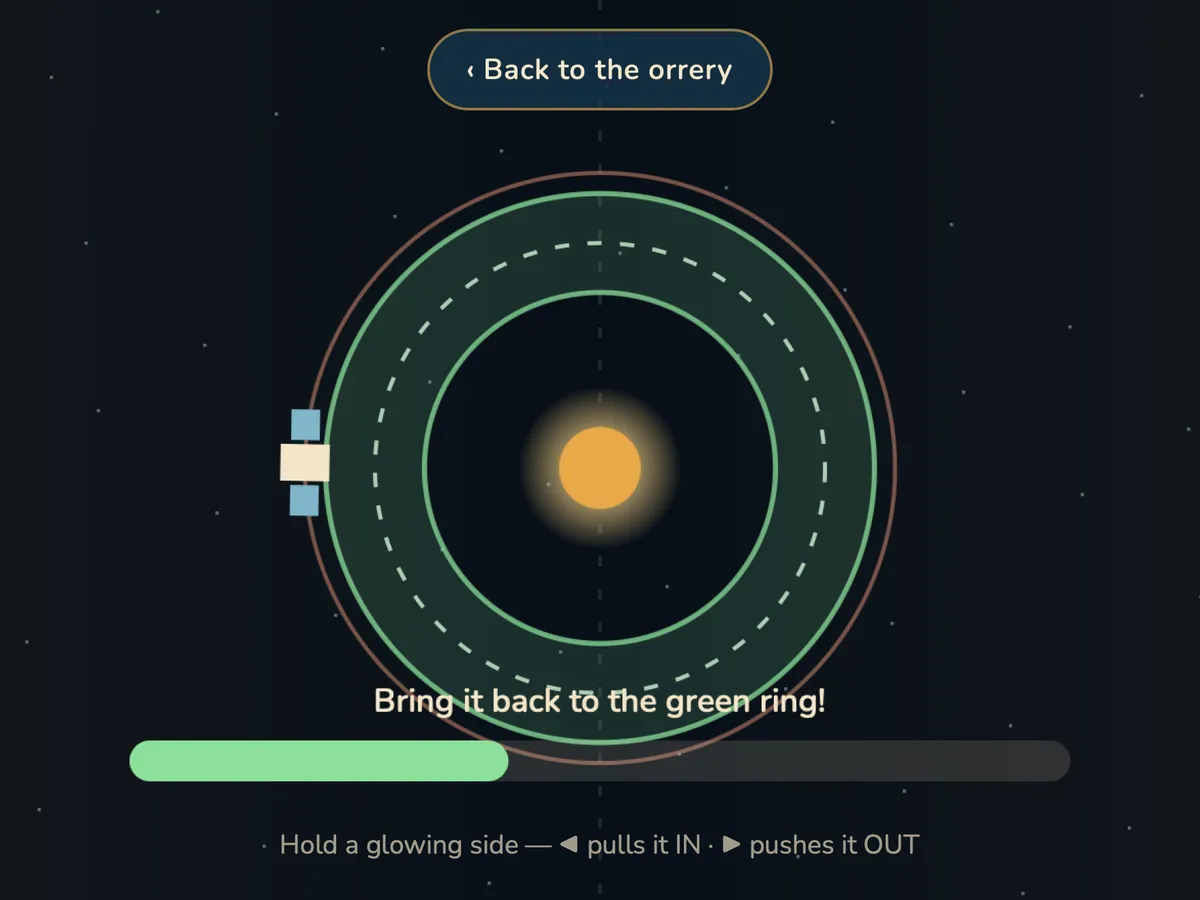
Orbit Balance
Keep a drifting satellite inside the green ring by tilting your device. An orbit is a balance between falling inward and racing sideways!
No ads, ever · Plays offline · Made for young kids and adults