Space Facts for Kids
Blast off through the Space Wing: visit the planets, drive a Mars rover, land on the Moon, float outside a space station and look through a golden telescope.
Where does space begin?
Space starts surprisingly close: about 100 kilometres above your head, roughly the distance of a one-hour drive on a motorway, but straight up. Above that, the air is so thin that it is almost gone, and the sky turns black.
In space there’s no air, so there’s no sound, no wind and no weather. But there is plenty of gravity. It holds the Moon around Earth, and Earth and the other planets around the Sun. Let’s explore it room by room.
Explore the five exhibits
The Space Wing of the museum has five rooms. Pick one to explore.
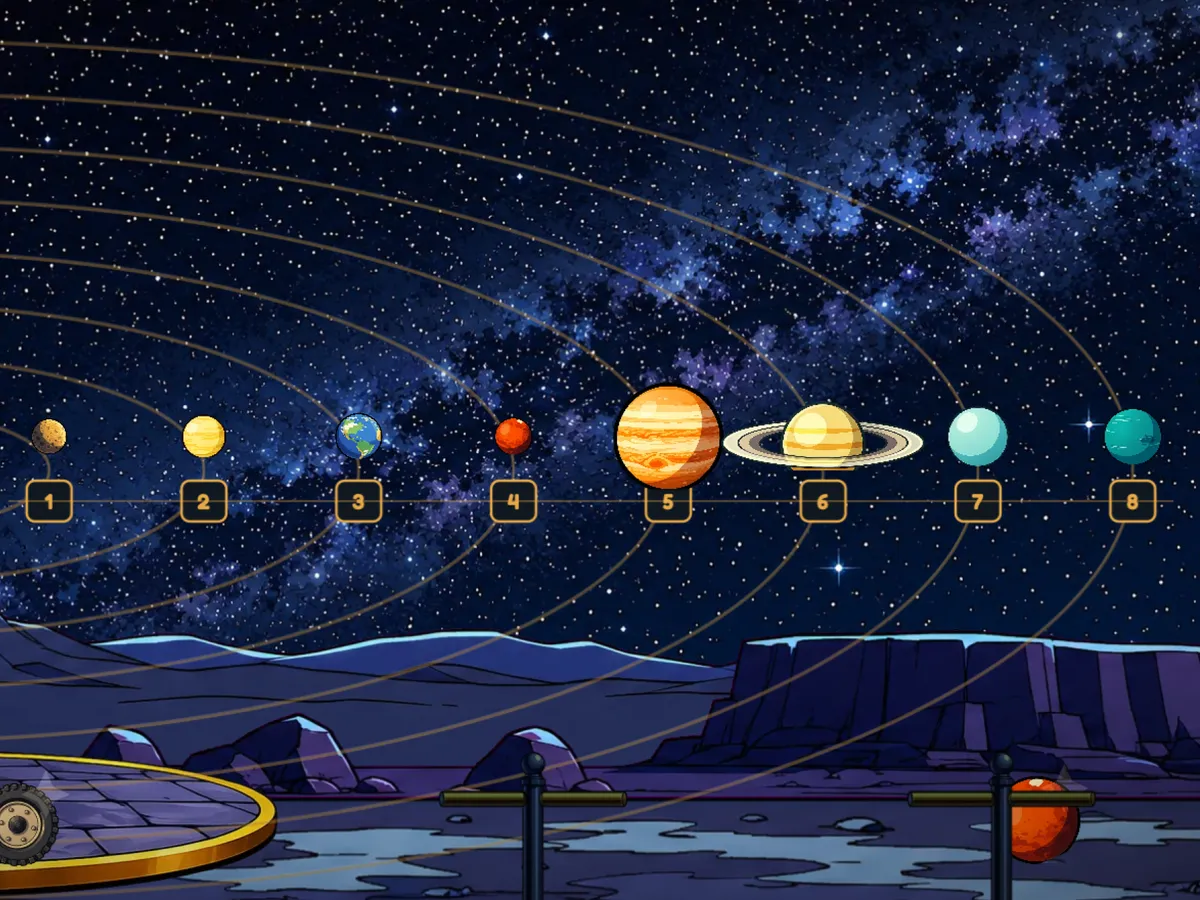
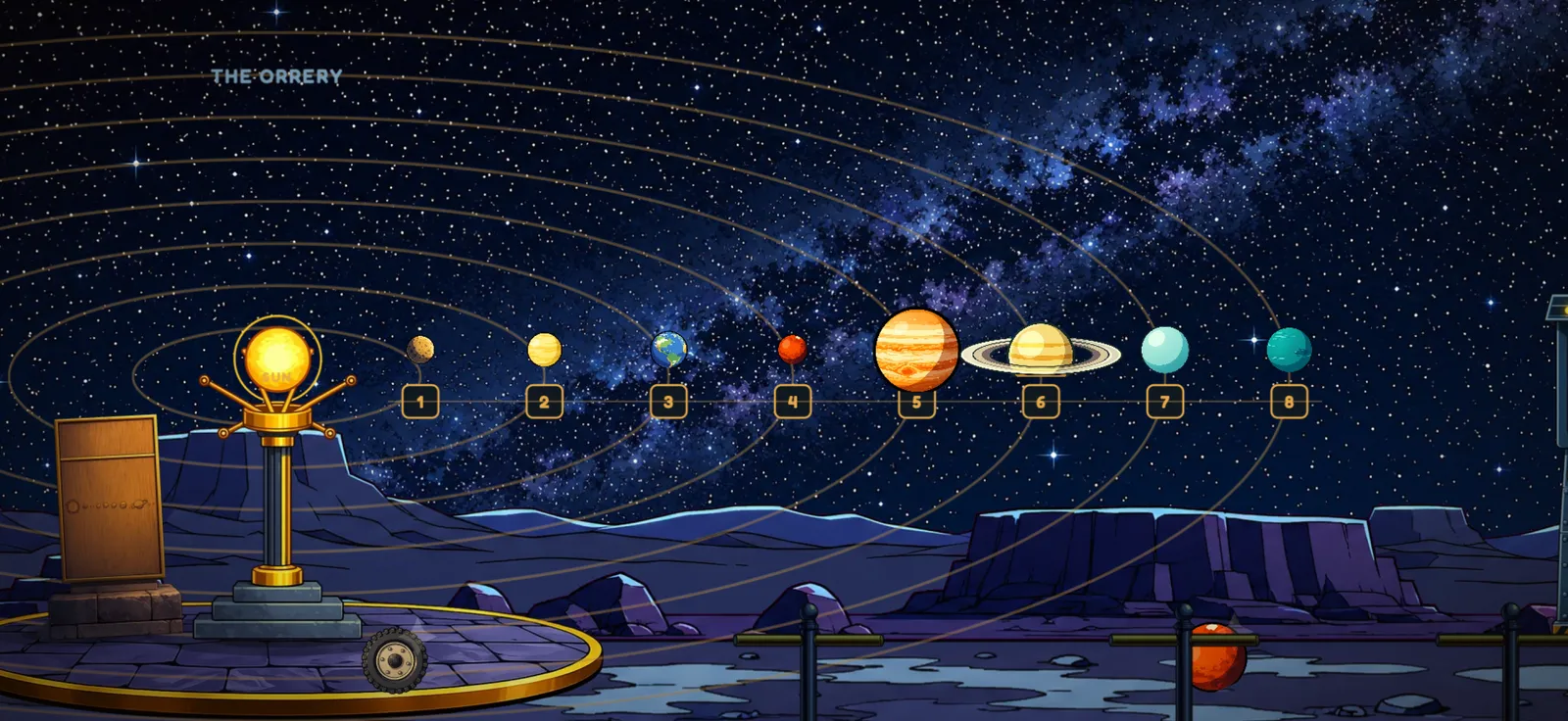
The Solar System
The 8 planets in order, and why Venus is the hottest.
Read more →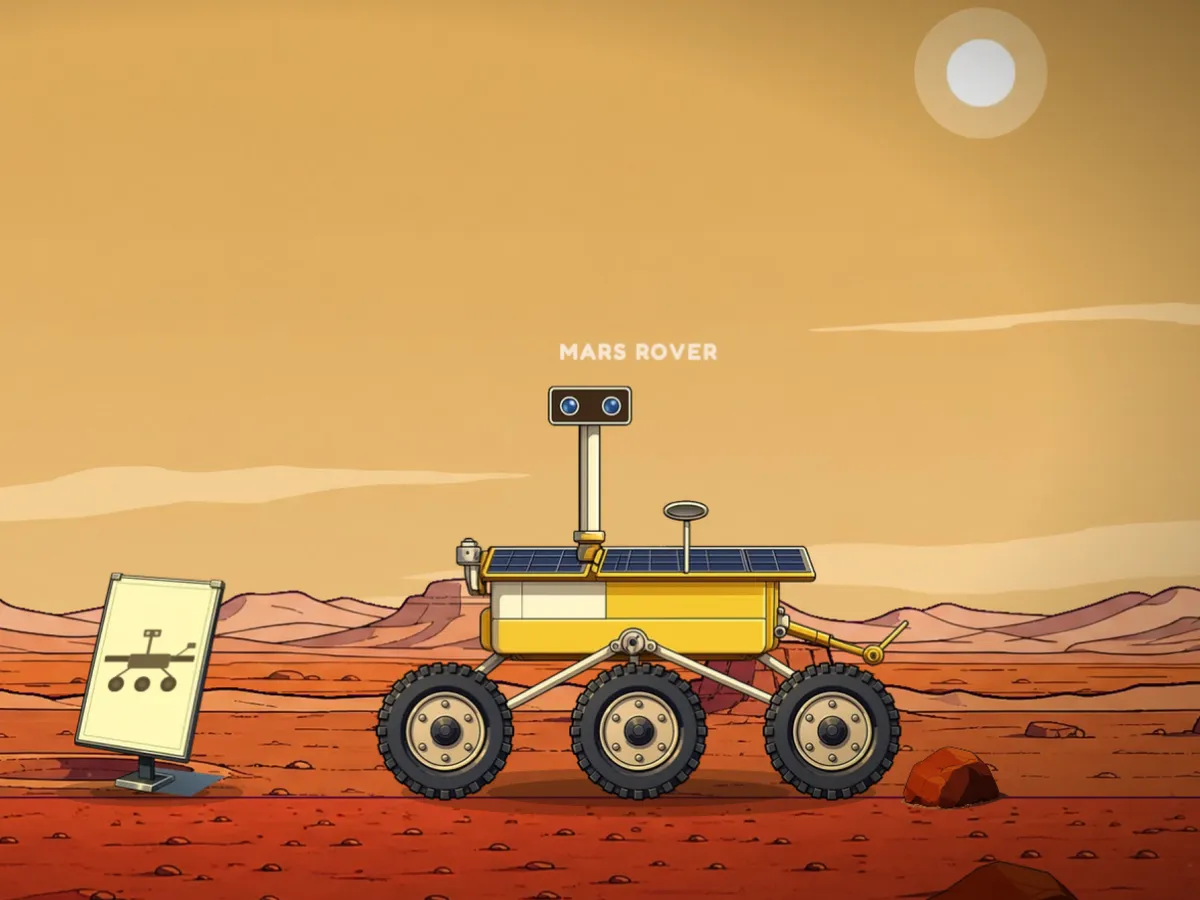
Mars
The rusty red planet and its robot rovers.
Read more →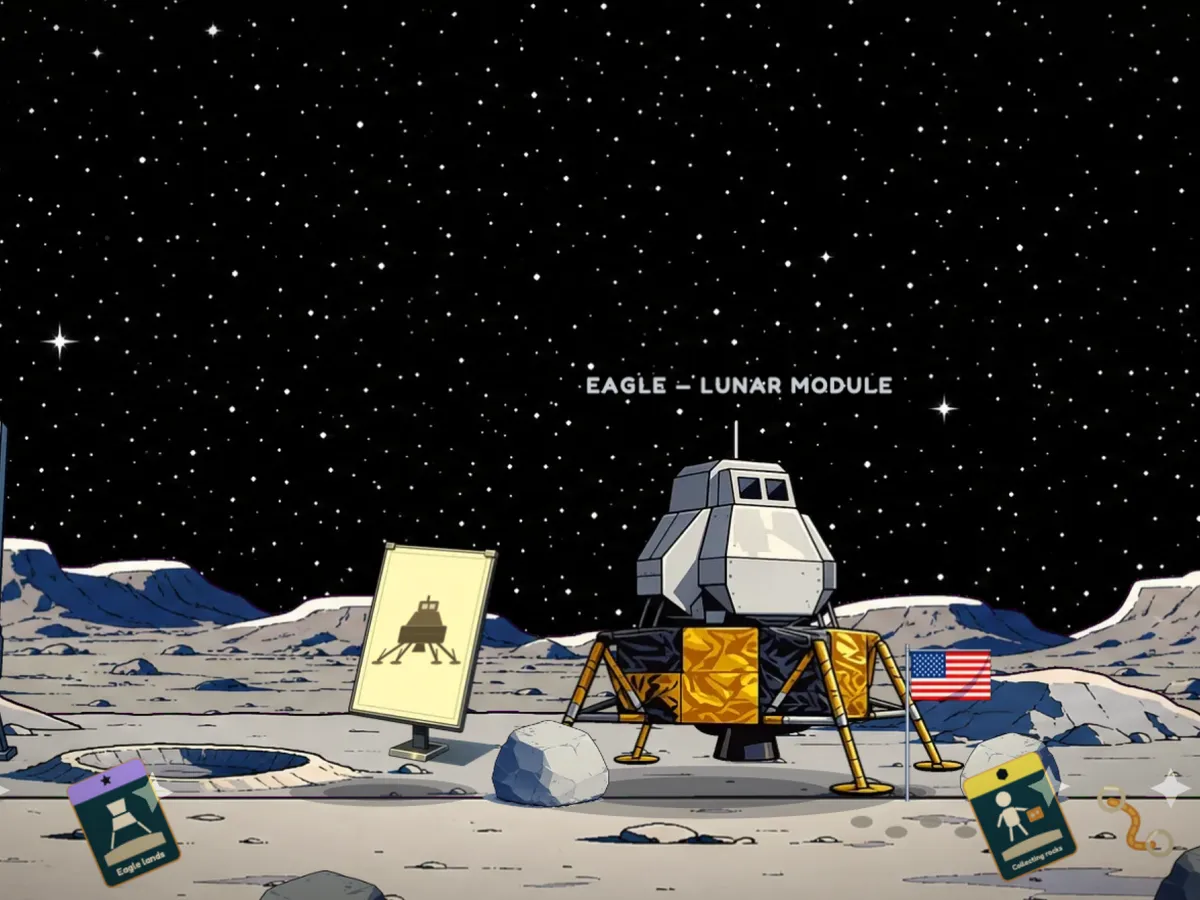
The Moon Landing
How Apollo 11 landed the first people on the Moon.
Read more →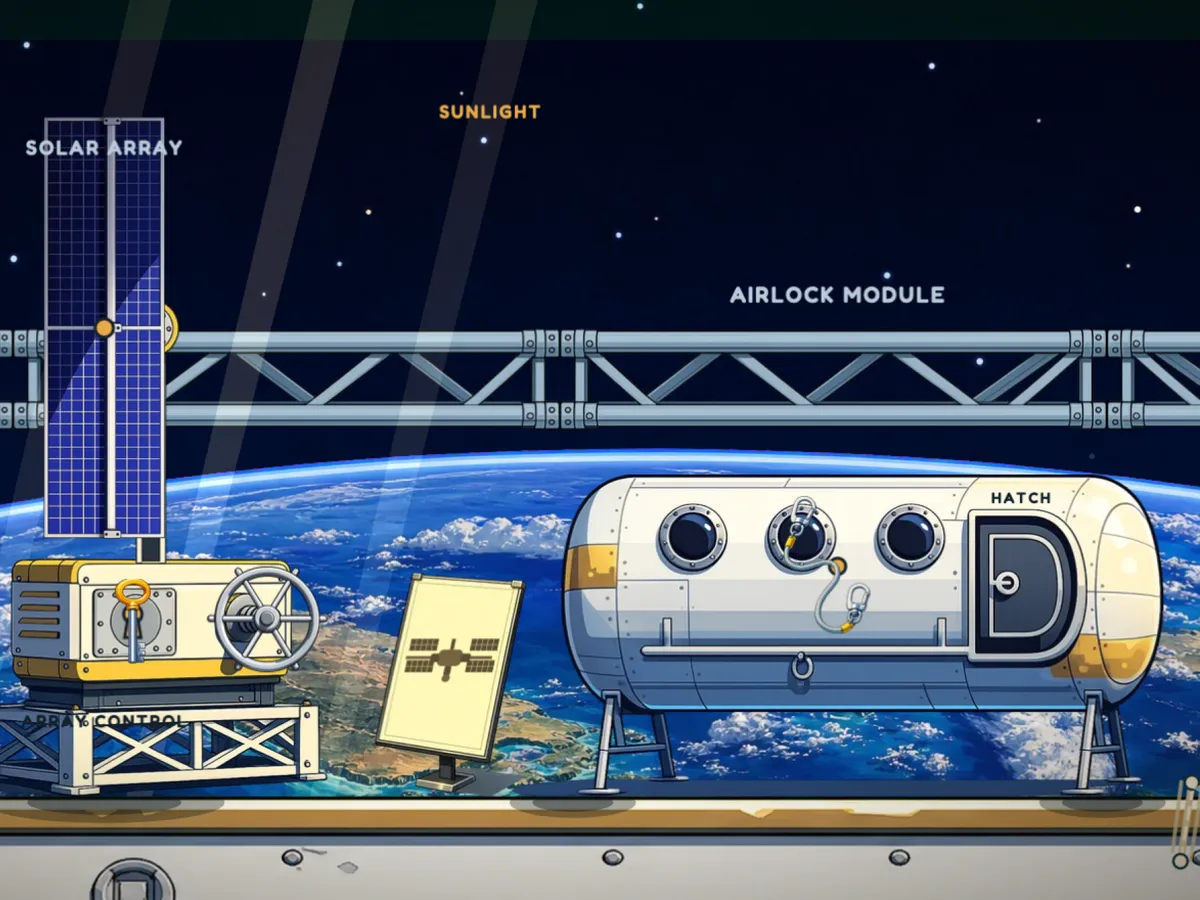
The Space Station
How astronauts live and work 400 km up.
Read more →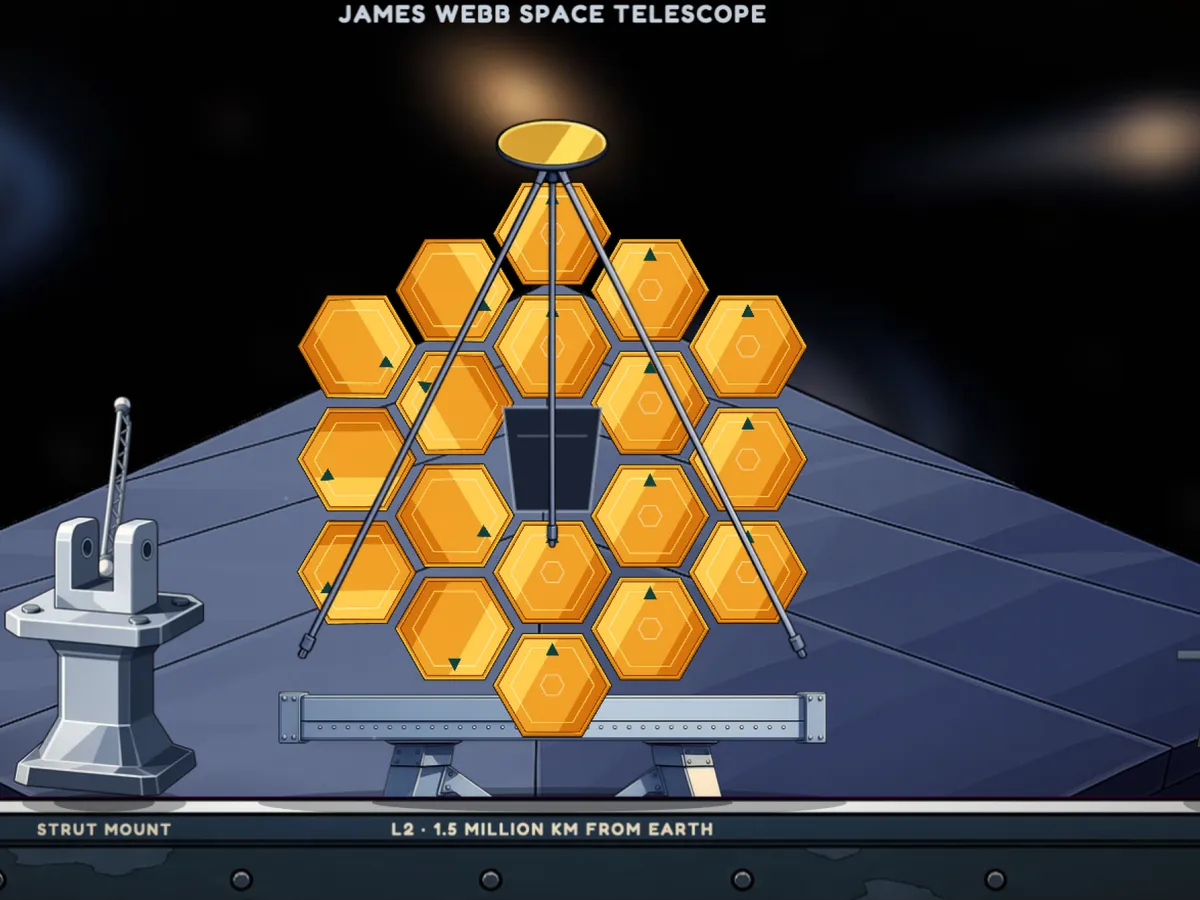
The James Webb Telescope
A golden mirror that sees invisible infrared light.
Read more →
How do rockets work?
Stages, boosters and getting to the Moon.
Read more →
Big moments in space exploration
- 1
1957The first satellite
Sputnik 1 becomes the first human-made object to orbit Earth.
- 2
1961The first person in space
Yuri Gagarin circles the Earth once in his Vostok spacecraft.
- 3
1969People on the Moon
Apollo 11 lands, and Neil Armstrong and Buzz Aldrin walk on the Moon.
- 4
1997The first Mars rover
Little Sojourner rolls across the red planet.
- 5
2000A home in orbit
The first crew moves into the International Space Station. People have lived there ever since.
- 6
2021A golden eye
The James Webb Space Telescope launches on Christmas Day.
- 7
2026Back around the Moon
Four astronauts on Artemis II fly around the Moon and home again.
Stellar Space Facts
Footprints on the Moon can last a very long time.
With no wind or rain to wipe them away, the Apollo astronauts’ bootprints are still there.
Our Sun is just one of billions of stars in the Milky Way.
And the Milky Way is just one of billions of galaxies. The James Webb telescope can see some of the most distant ones.
Astronauts float because they’re falling.
It isn’t because there’s no gravity. Find out the real reason in why do astronauts float.
Mars has a butterscotch sky.
Dust in its thin air turns the daytime sky tan, and its sunsets look blue.
The hottest planet isn’t the closest one.
Venus is hotter than Mercury, because its thick clouds trap the heat.
Science words to know
- Astronomy
- The science of stars, planets and everything in space.
- Star
- A huge, glowing ball of hot gas. The Sun is our closest star.
- Orbit
- The path of something falling around a planet or star.
- Astronaut
- A person trained to travel in space.
Quick quiz!
0 / 31. What is the Sun?
2. Who was the first person in space?
3. Why is there no sound in space?
Questions kids ask
How far away is space?
Space is usually said to begin about 100 kilometres above the ground. The space station flies about 400 kilometres up.
What is the closest planet to Earth?
Venus comes closest to Earth. Meet all eight planets in the solar system for kids.
How many people have been to the Moon?
Twelve people have walked on it, between 1969 and 1972. In 2026, four more astronauts flew around it.
Can we live in space?
Astronauts already do! People have lived on the International Space Station without a break since 2000.
The Space Wing
Rebuild the solar system, fix a Mars rover, put the Moon landing in order and align Webb’s golden mirror. Six science games are waiting.
No ads, ever · Plays offline · Made for young kids and adults