Triceratops Facts for Kids
Three horns, a bony shield and hundreds of teeth: meet the plant-eater that stood up to T. rex.
What was Triceratops?
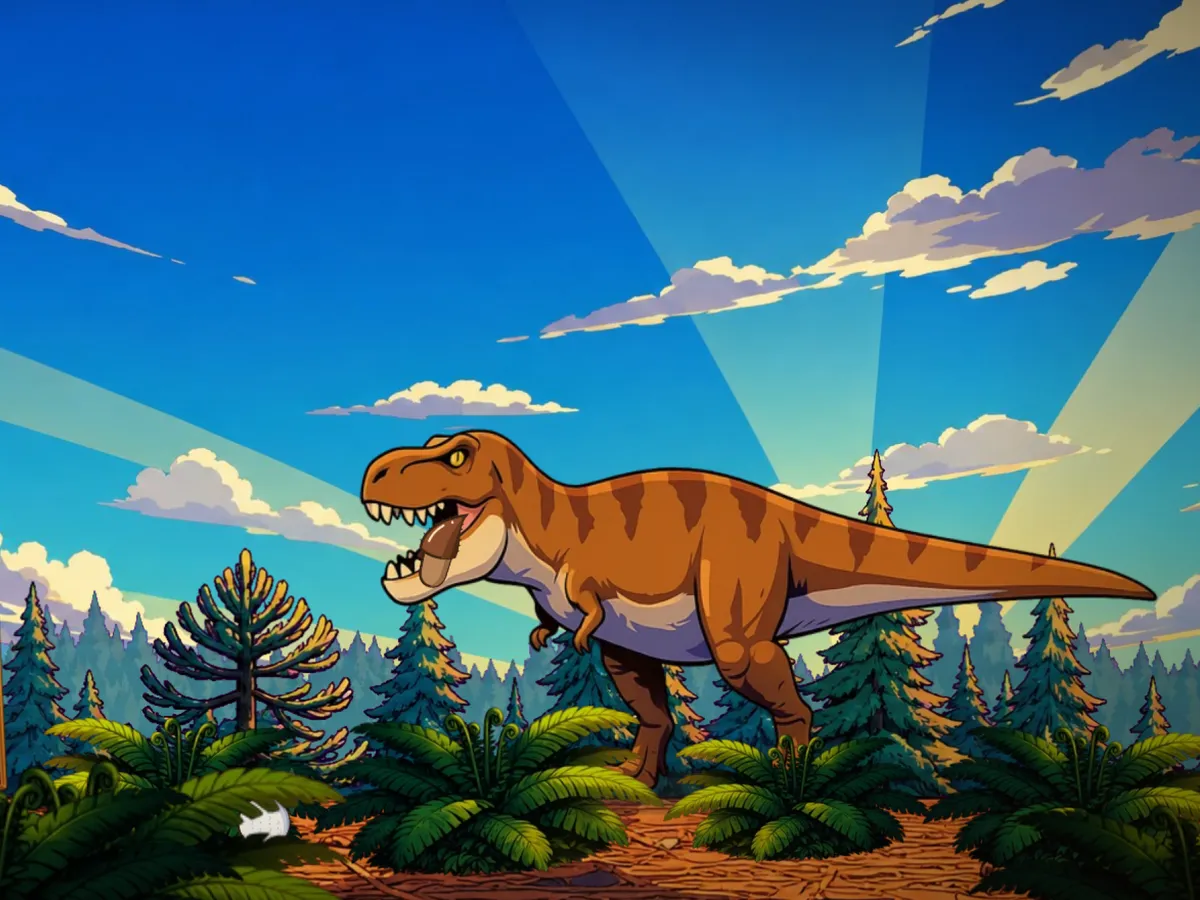
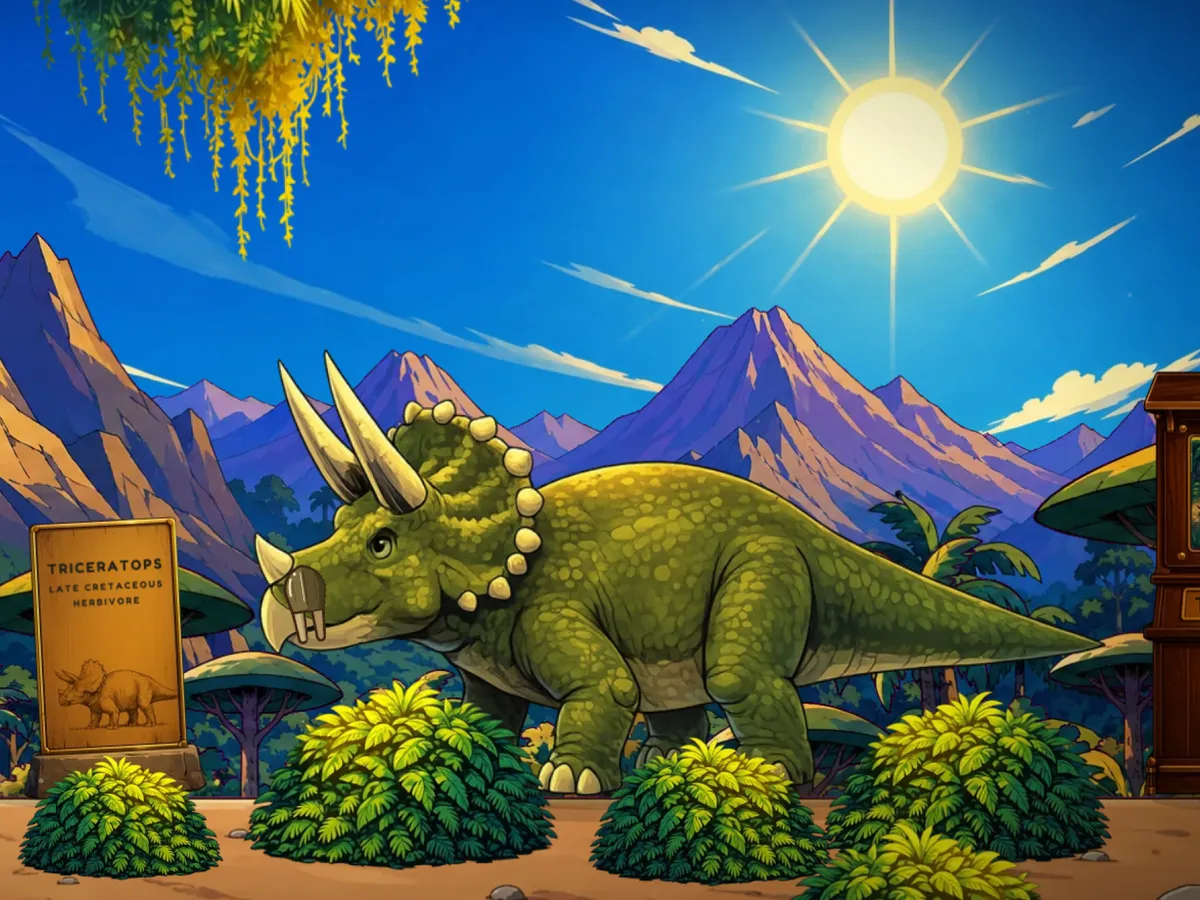
Triceratops was a big plant-eating dinosaur with three horns on its face and a huge, solid frill of bone behind its head. It lived about 68 to 66 million years ago in what is now western North America, at the same time and in the same places as T. rex.
Its name means “three-horned face”. A grown-up Triceratops could be up to 9 metres long and about as heavy as a big elephant. It was one of the last dinosaurs on Earth before the asteroid struck.
Horns and a bony shield
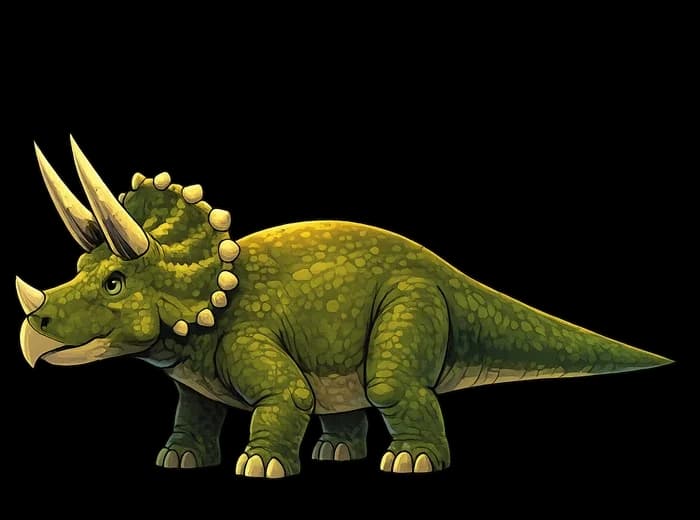
Triceratops had two long horns above its eyes and a shorter one on its nose. Its head was one of the biggest that any land animal has ever carried: the largest skulls measure about two and a half metres from beak to frill.
Many Triceratops frills have healed-over wounds right where another Triceratops’s horns would land. That suggests they locked horns with each other, a bit like deer do today. The solid frill worked like a shield.
What did Triceratops eat?
- Ferns, palms, conifers and early flowering plants. There were no grassy meadows yet!
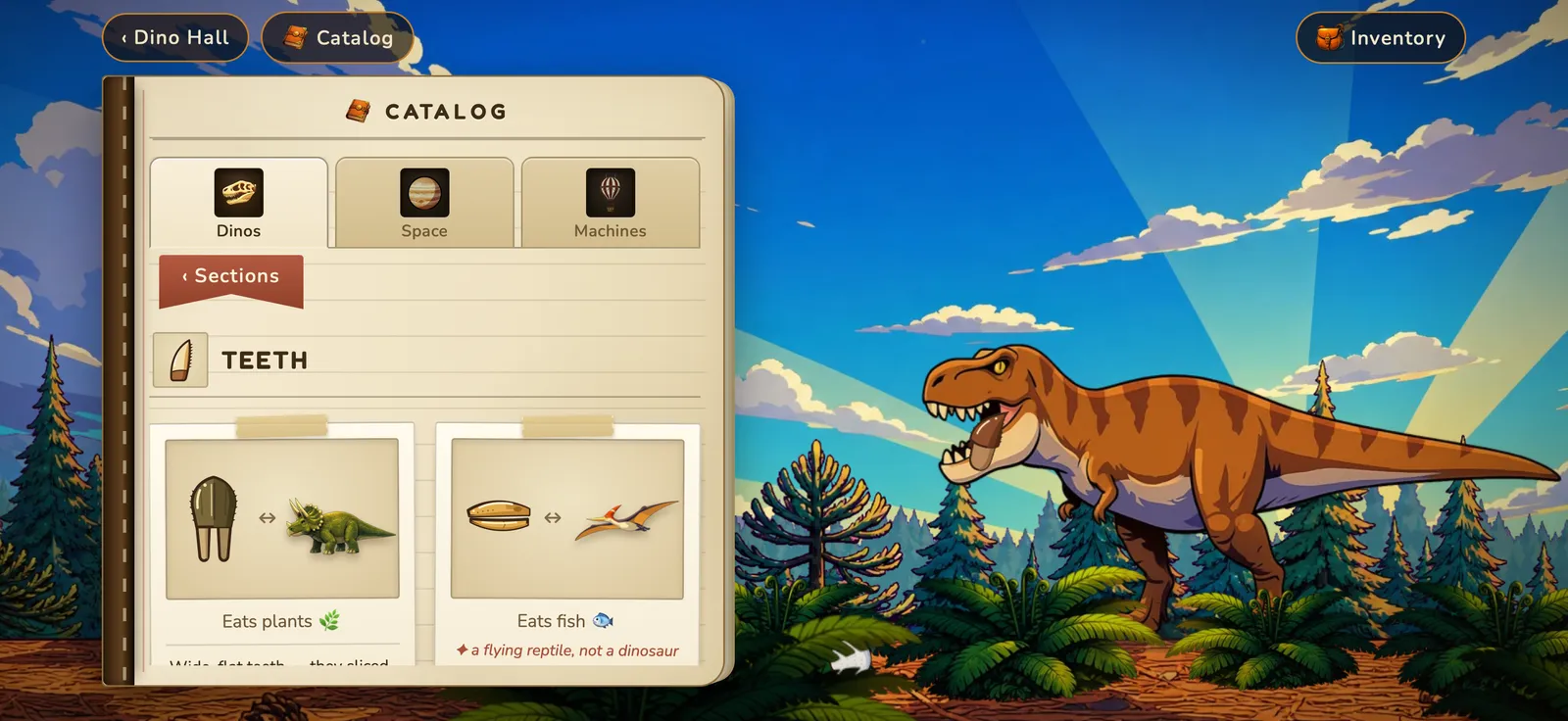
- It snipped plants off with a sharp beak, a bit like a parrot’s.
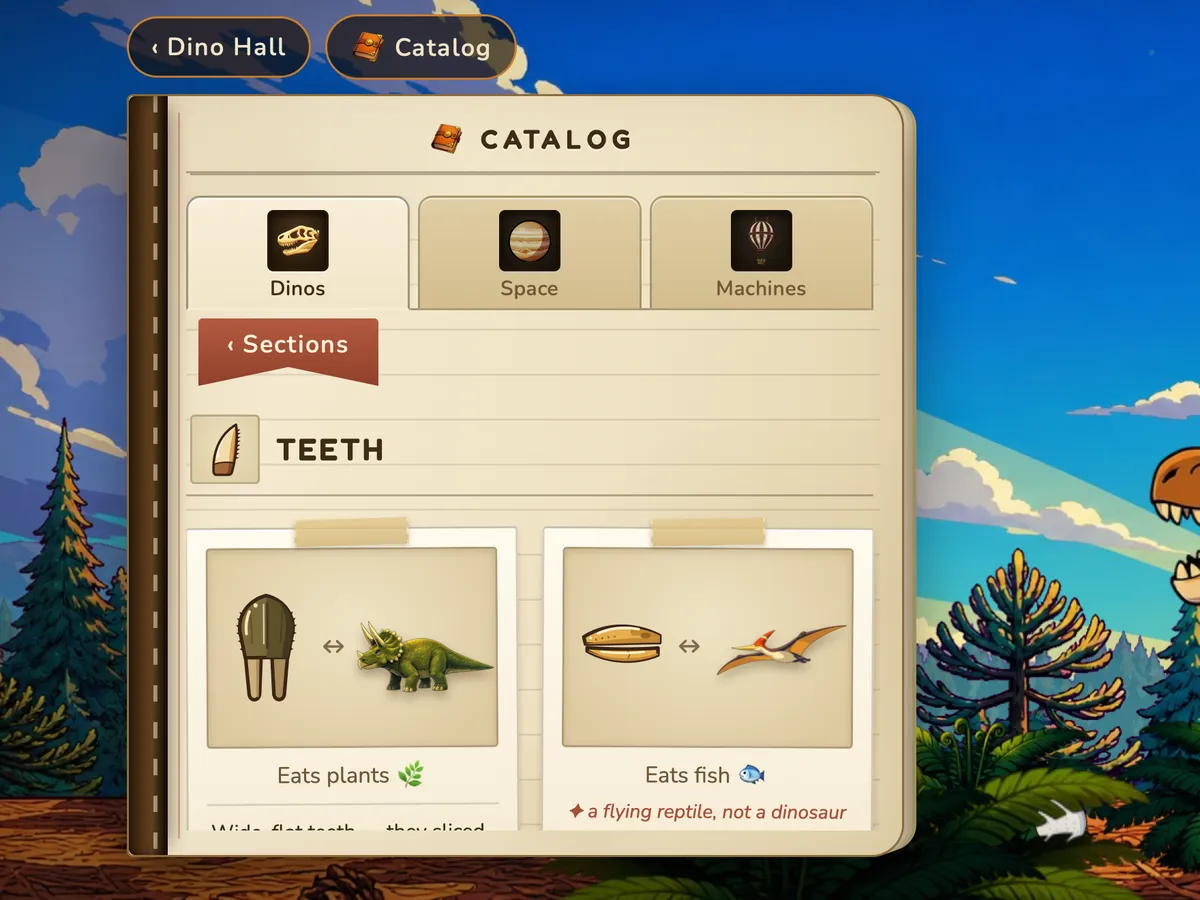
- Its teeth were slicing blades, not grinders. They wore into sharp grooved edges, so the more it chewed, the better they cut.
- It had hundreds of teeth stacked in columns, and new ones kept growing in to replace worn ones all its life.
Did Triceratops live in herds?
Most Triceratops fossils are found alone, one animal at a time. But one fossil site held three young Triceratops buried together by a flood, so scientists think they sometimes moved around in small family groups.
There is no evidence of huge herds stampeding across the plains, and no sign that they migrated long distances. Scientists only say what the fossils can show, and that is part of what makes science trustworthy.
Fun Triceratops Facts
Baby Triceratops had horns that curved backwards.
As a young Triceratops grew up, its brow horns straightened and then swung forwards. Scientists can tell a fossil’s age partly from its horns.
It survived a fight with T. rex.
One Triceratops skull has a brow horn that was bitten off by a Tyrannosaurus and then grew back. That animal lived on after the attack.
It is one of the most common big dinosaur fossils of its time.
More Triceratops have come out of the rocks than any other big dinosaur from the end of the age of dinosaurs.
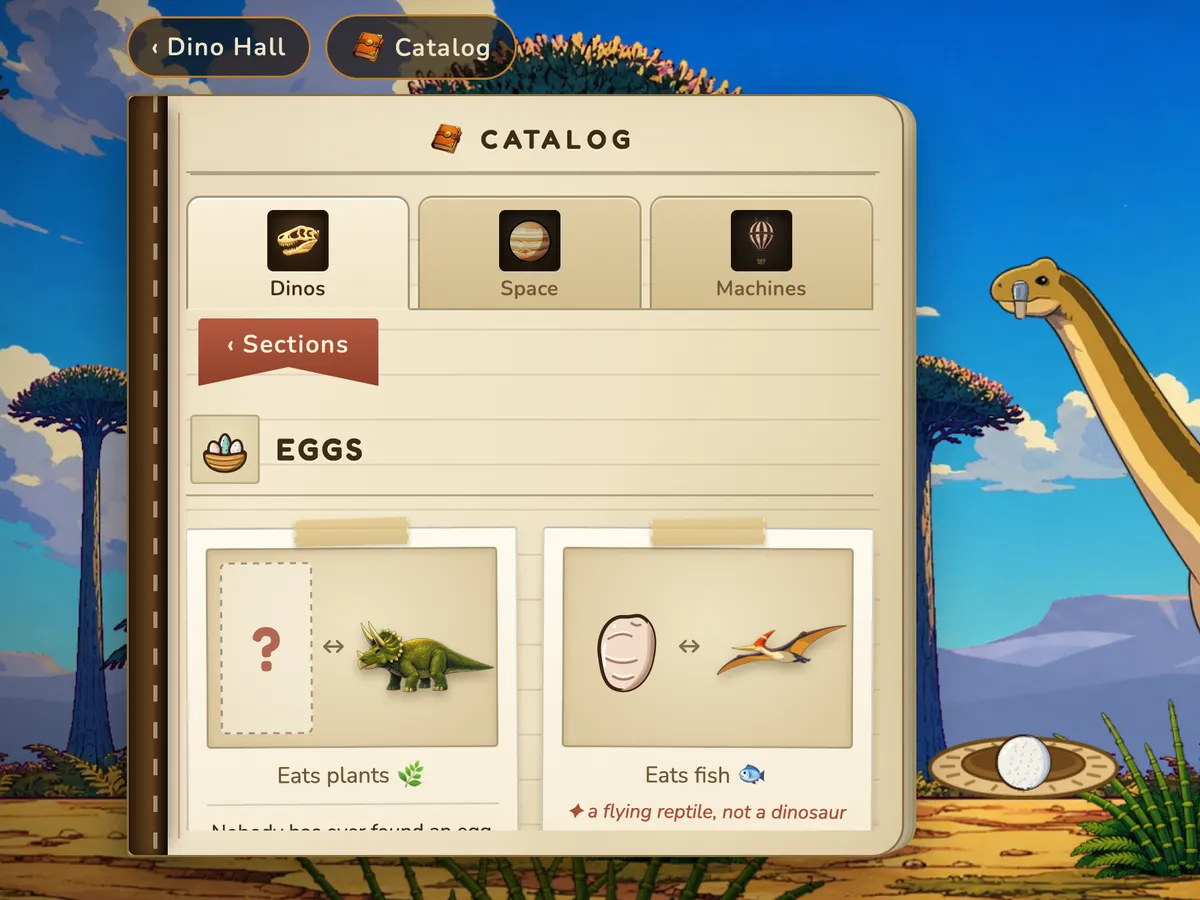
Nobody has ever found a Triceratops egg.
Its distant cousin Protoceratops laid soft-shelled eggs. Soft shells rot away easily, which may be why no Triceratops egg has turned up. Read more in dinosaur eggs.
Its feet ended in blunt hooves, not claws.
Four short, thick toes spread wide to hold up its heavy body, each ending in a rounded hoof.
Science words to know
- Herbivore
- An animal that eats plants.
- Frill
- The big plate of bone at the back of a Triceratops’s head.
- Beak
- A hard, toothless mouth edge, used for snipping food.
- Late Cretaceous
- The last part of the age of dinosaurs, which ended 66 million years ago.
Quick quiz!
0 / 31. What does the name Triceratops mean?
2. How did Triceratops teeth work?
3. Which of these did Triceratops NOT eat?
Questions kids ask
How big was Triceratops?
Up to about 9 metres (30 feet) long, and about as heavy as a big elephant. Its skull alone could be two and a half metres long.
What did Triceratops use its horns for?
Probably for locking horns with other Triceratops, and maybe for defence too. Healed wounds on their frills match where another Triceratops’s horns would hit.
Did Triceratops fight T. rex?
They lived at the same time and place, and fossils show T. rex bite marks on Triceratops bones. One Triceratops even survived a bite that took off a horn.
Was Triceratops a dinosaur?
Yes! It belongs to a group of horned dinosaurs called ceratopsians. See all five animals of the museum in dinosaur facts for kids.
Tricera Smash
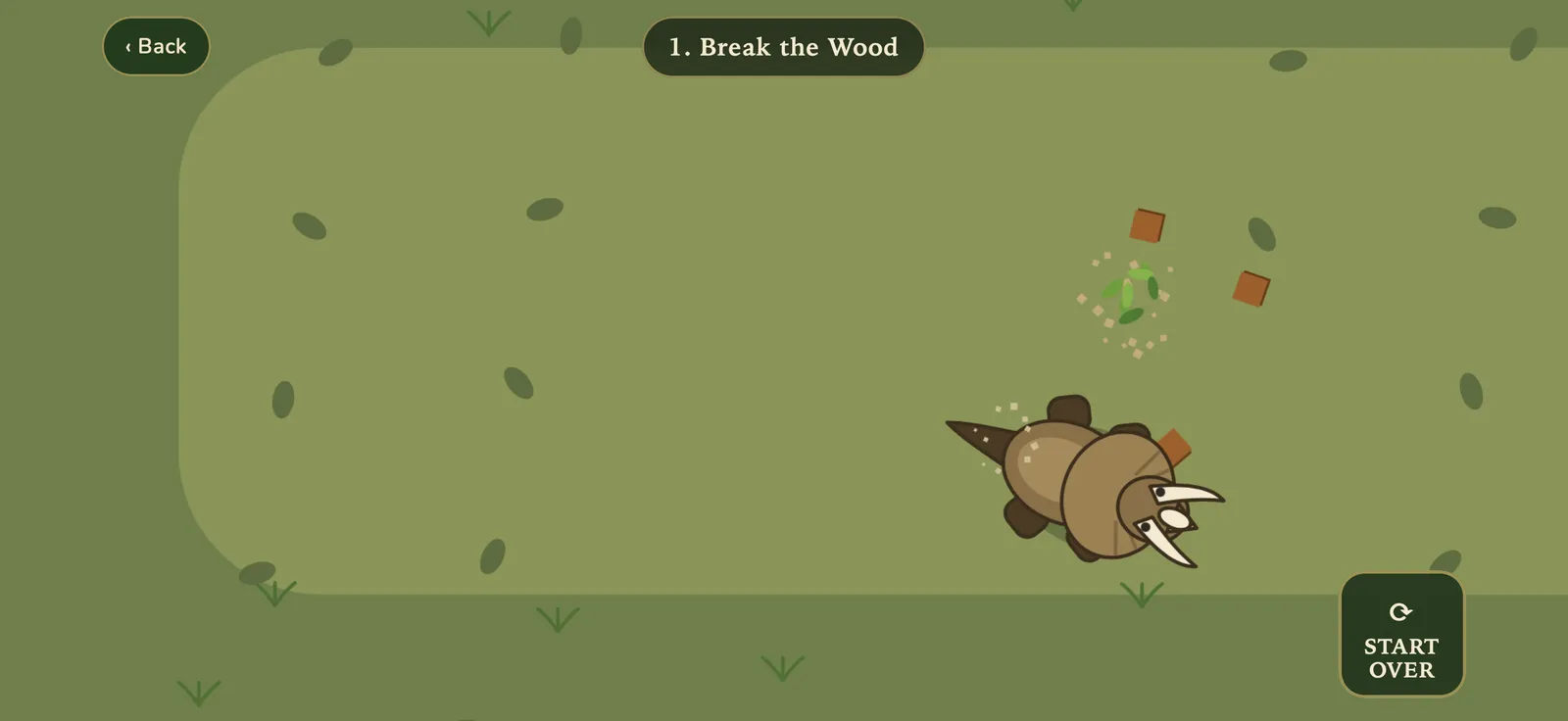
Pull back, aim and charge! Clear the trail board by board, and win a real Triceratops fact every time.
✔ The whole Dinosaur Wing is free to play
No ads, ever · Plays offline · Made for young kids and adults