Dinosaur Footprints for Kids
A dinosaur stepped in the mud millions of years ago, and its footprint is still there. Here’s how to read the clues it left behind.
What is a fossil footprint?
A fossil footprint, or track, is the mark a dinosaur’s foot left in soft ground that later turned to stone. Footprints are called trace fossils, because they are not part of the animal’s body. They are signs of something it did.
That makes them special. Bones show us what a dinosaur looked like, but footprints show us what it was doing: walking, running, turning, or travelling with others. A line of footprints made by one animal is called a trackway.
How a footprint becomes a fossil
- 1
A dinosaur walks on soft mud
Often near a lake, river or beach, where the ground is damp and squishy.
- 2
The print dries hard
The sun bakes the mud, so the footprint keeps its shape.
- 3
It gets covered up
A new layer of sand or mud gently fills the print and protects it.
- 4
Layers turn to rock
Over millions of years, more layers pile on top and squeeze everything into stone.
- 5
The print comes back
Wind and rain wear the rock away, and one day the footprint is uncovered for someone to find.
Whose foot made this?
Different dinosaurs had very different feet.
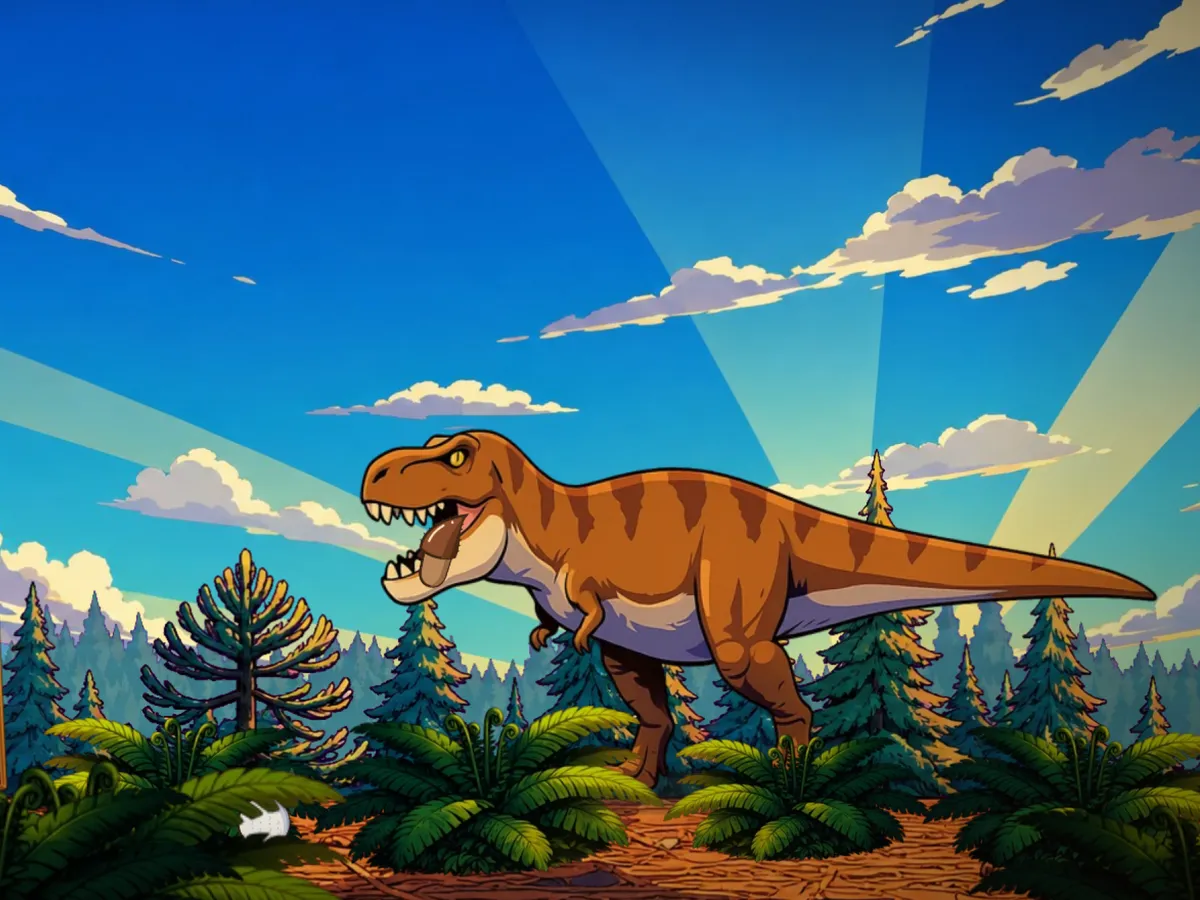
T. rex: three big toes
Three toes fanned out on the ground, each with a claw pointing down, plus a small dewclaw higher up.
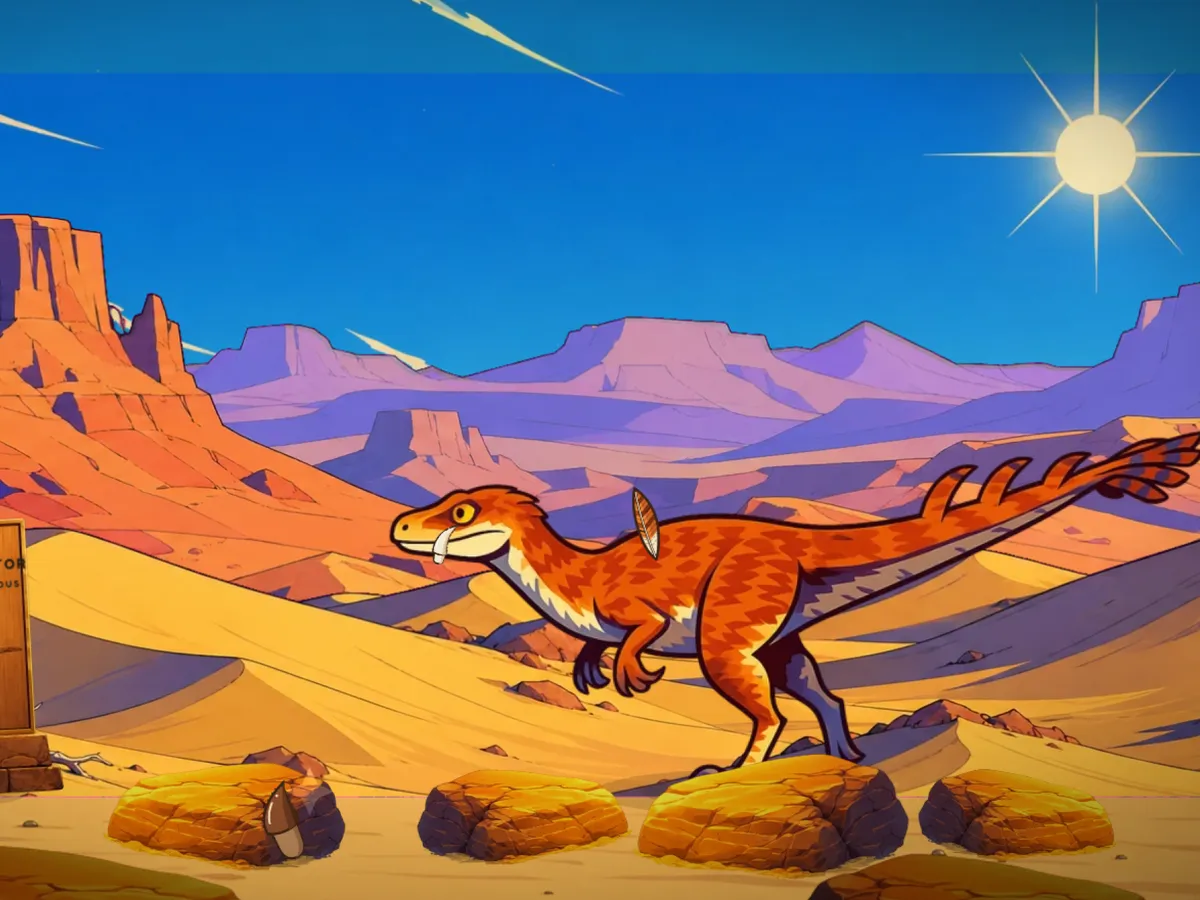
Read more →Velociraptor: two toes
It held its big sickle claw up off the ground, so its tracks show only two toes.
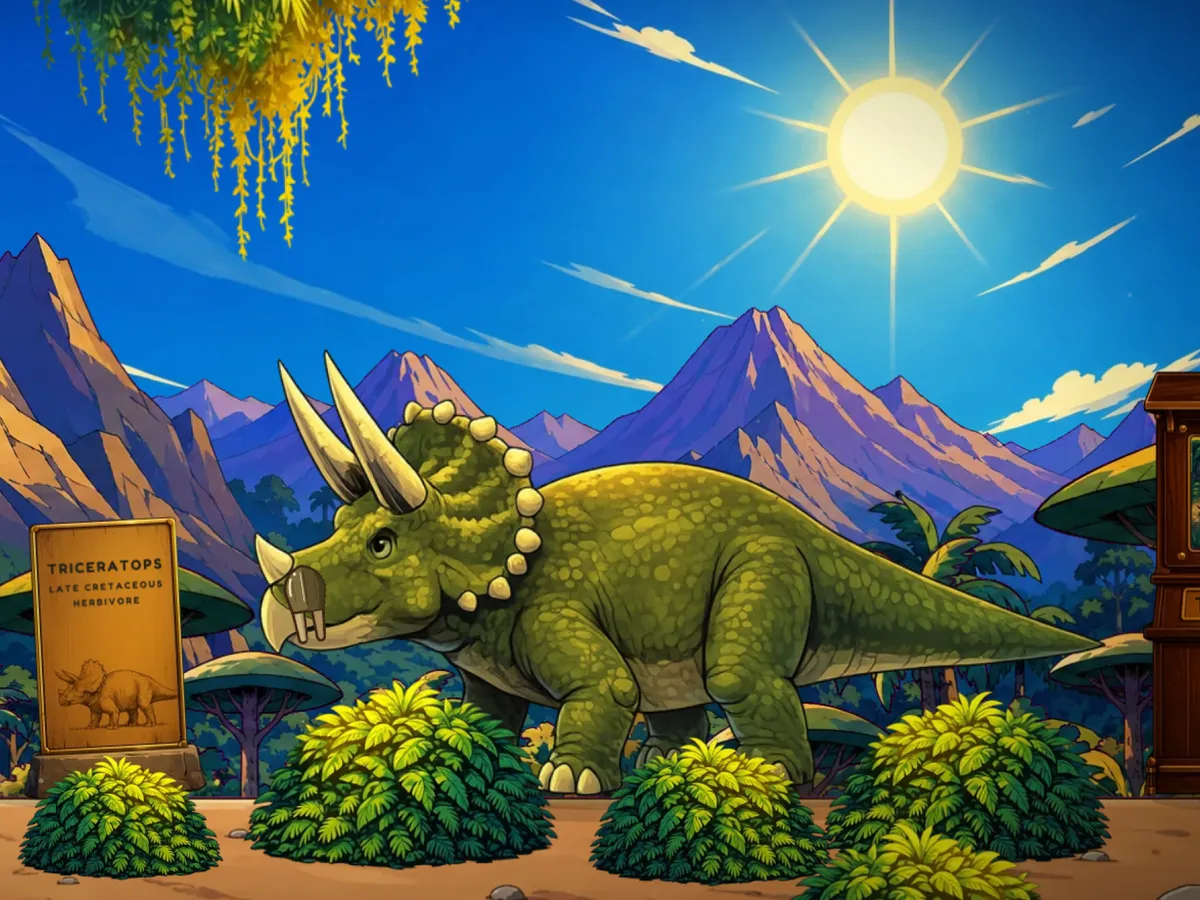
Read more →Triceratops: hooves
Four short, thick toes spread wide, each ending in a blunt hoof to carry its weight.
Read more →Sauropods: big round prints
Giants like Brachiosaurus left huge, round, elephant-like footprints.
Read more →
Inside a T. rex foot
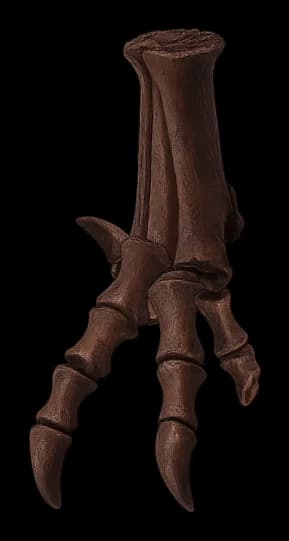
A T. rex walked on its toes. Above them stood a long bone called the metatarsal, which worked like part of its leg. The three toes fanned out below it, the middle one longest, each tipped with a claw pointing down.
This is the same plan a chicken’s foot has today. Look at a bird’s footprint in the sand, and you will see a tiny version of a meat-eating dinosaur’s track.
What can footprints tell us?
How fast was it going? Scientists measure the distance between footprints, called the stride. Longer strides for the same size of foot mean the animal was moving faster.
Did they travel together? In China, scientists found the tracks of six raptor-like dinosaurs walking side by side in the same direction, which suggests they moved as a group. Footprints can show behaviour that bones never could.
Fun Footprint Facts
Dinosaur tracks are found all over the world.
From Australia to Scotland to Bolivia, rocks of the right age can hold dinosaur footprints. Some sites have thousands of them.
Footprints are often more common than bones.
One dinosaur has only one skeleton, but it could leave thousands of footprints in its life.
T. rex footprints are very rare.
Only a few tracks have ever been found that scientists think a Tyrannosaurus may have made.
You can visit real dinosaur trackways.
Places like Dinosaur Ridge in Colorado and Dinosaur Valley State Park in Texas let visitors see real footprints in the rock.
Footprints can be measured to work out speed.
Most dinosaur trackways show walking, not running. Running tracks are much rarer.
Science words to know
- Trace fossil
- A sign of an animal’s life, like a footprint, nest or burrow, rather than its body.
- Trackway
- A line of footprints made by one animal.
- Stride
- The distance an animal covers in one step.
- Metatarsal
- A long foot bone. Dinosaurs like T. rex walked with these held up off the ground.
Quick quiz!
0 / 31. Why are footprints called trace fossils?
2. Why do Velociraptor tracks show only two toes?
3. Longer gaps between footprints usually mean the animal was…
Questions kids ask
How do dinosaur footprints become fossils?
A dinosaur stepped in soft mud, the print dried and was covered by more sand or mud, and over millions of years the layers turned to rock.
What can dinosaur footprints tell us?
Which kind of dinosaur walked there, how big it was, how fast it moved, and whether it was alone or in a group.
How many toes did dinosaurs walk on?
Most meat-eaters walked on three toes, raptors on two, and big plant-eaters like Triceratops on four or more short, thick toes.
Where can I see dinosaur footprints?
Many museums and parks have real tracks, such as Dinosaur Ridge in Colorado and Dinosaur Valley State Park in Texas.
T-rex Foot Puzzle
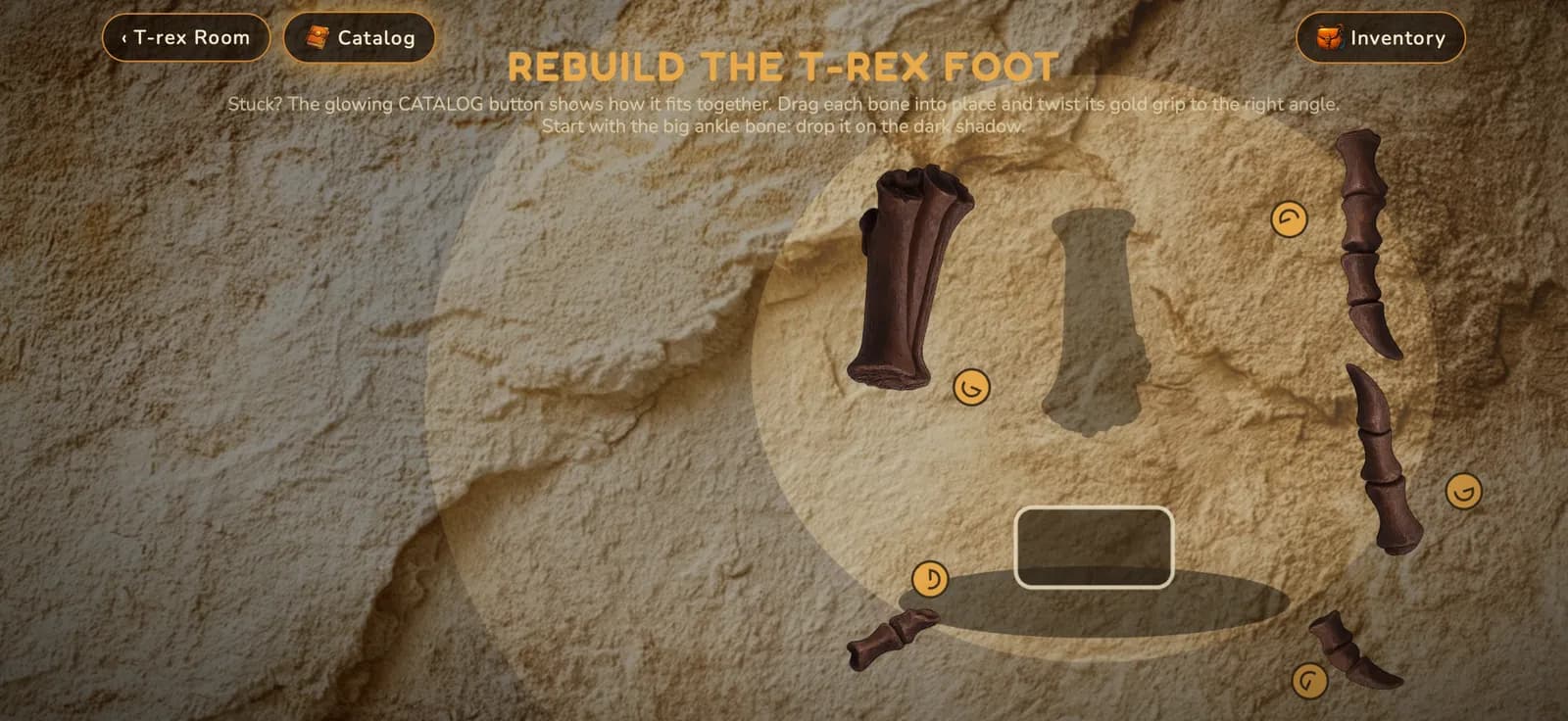
Five fossil bones, one pedestal. Rebuild a T. rex foot by dropping the tall ankle bone on its shadow, then turning each toe into place.
✔ The whole Dinosaur Wing is free to play
No ads, ever · Plays offline · Made for young kids and adults