Pteranodon Facts for Kids
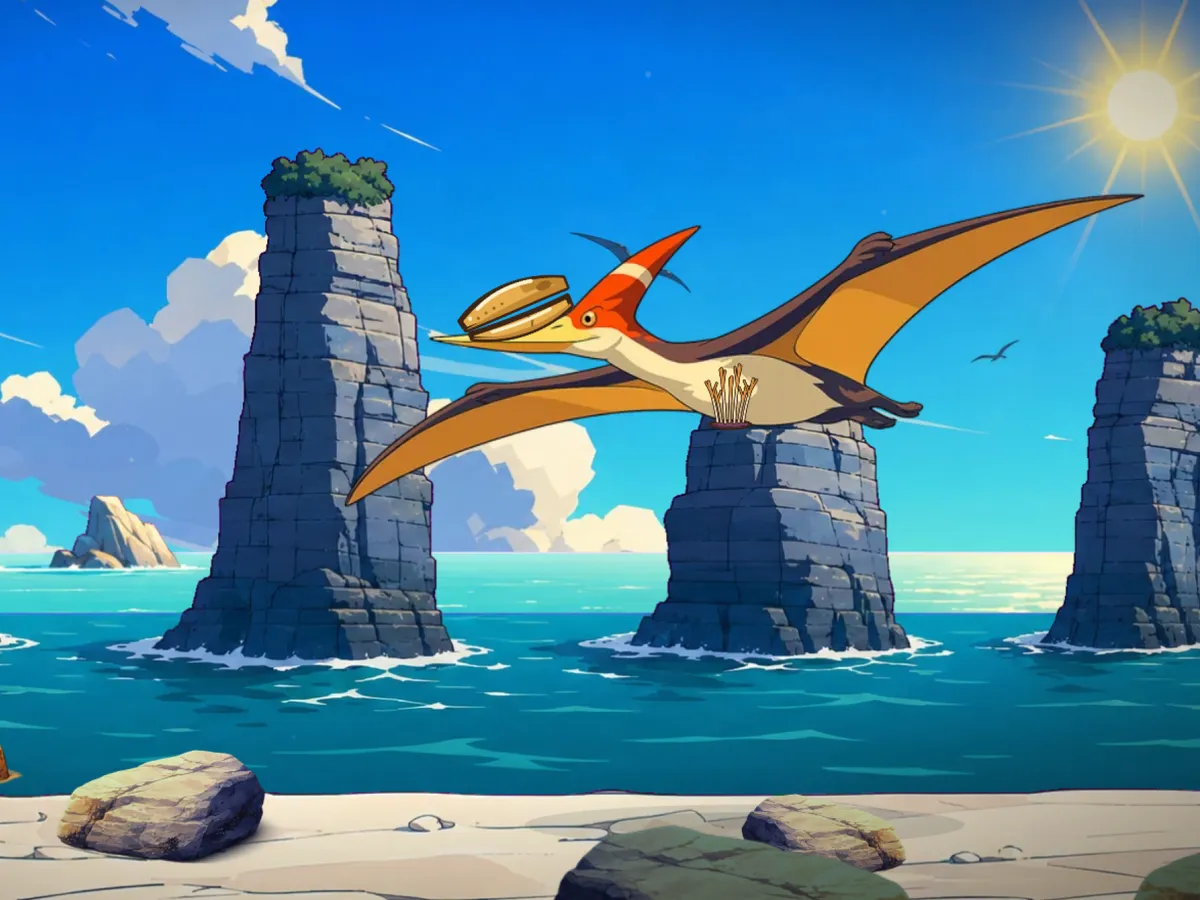
It soared over ancient seas on wings of skin, caught fish with a toothless beak, and here’s the twist: it wasn’t a dinosaur at all.
Is Pteranodon a dinosaur?
No! Pteranodon was a pterosaur, a flying reptile. Pterosaurs were close cousins of the dinosaurs, living at the same time, but they were a separate group, just like your cousins are family but are not your brothers and sisters.
Pteranodon lived about 86 to 84 million years ago and flew over a warm, shallow sea that once covered the middle of North America. Its name means “winged and toothless”, and that describes it perfectly.
Pteranodon or pterodactyl?
Lots of people call every flying reptile a “pterodactyl”. But Pterodactylus was a different, much smaller animal, and it had teeth, around ninety of them!
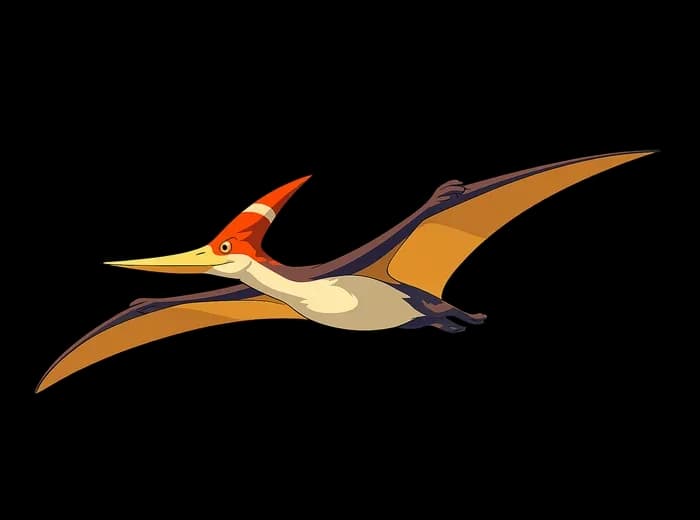
Pteranodon had no teeth at all. It had a long, pointed beak, and the males wore a big swept-back crest on their heads. So if someone says “pterodactyl” when they mean Pteranodon, now you can tell them the difference.
📏 How wide were its wings?
Wingspan is the distance from one wingtip to the other.
- Pteranodonup to 6 m
- A family car (length)about 4.5 m
- A golden eagleabout 2.2 m
- A 7-year-old, arms outabout 1.2 m
Even with wings that wide, a Pteranodon weighed only about as much as a big dog, because its bones were hollow.
How Pteranodon was built for flying
- Each wing was a sheet of skin stretched from one enormously long finger down to its leg.
- Its body was covered in pycnofibers, a soft, branching fuzz. Scientists still argue about whether to call it a kind of feather.
- Hollow bones kept it light enough to soar.
- It snatched fish from the sea with its long beak.
How did Pteranodon take off?
On the ground, pterosaurs walked on all fours, with their wings folded up. We know because fossil pterosaur footprints show both hands and feet.
To take off, many scientists think a pterosaur crouched down and sprang into the air using its strong arms, a bit like a pole-vaulter, then opened its wings and flapped away.
Fun Pteranodon Facts
Pterosaurs laid soft, leathery eggs.
Their eggs were bendy like a turtle’s, and were probably buried in the ground. Read more in dinosaur eggs.
Only the males had big crests.
Females had smaller crests and wider hips. Scientists think the big crests were for showing off.
It flew over a sea in the middle of North America.
Kansas, now far from any ocean, is one of the best places to find Pteranodon fossils, because a shallow sea once covered it.
Its name really does mean “winged and toothless”.
Its beak worked a bit like a pelican’s or a gannet’s, built for grabbing slippery fish.
It weighed about as much as a big dog.
Even with wings wider than a car is long, its hollow bones kept it light.
Science words to know
- Pterosaur
- A flying reptile from the age of dinosaurs. Not a dinosaur!
- Wingspan
- The distance from one wingtip to the other.
- Pycnofibers
- The soft, branching fuzz that covered a pterosaur’s body.
- Crest
- A bony shape sticking up or back from an animal’s head.
Quick quiz!
0 / 31. What kind of animal was Pteranodon?
2. How many teeth did Pteranodon have?
3. What covered Pteranodon’s body?
Questions kids ask
Is Pteranodon a dinosaur?
No. Pteranodon was a pterosaur, a flying reptile. Pterosaurs were close cousins of dinosaurs and lived at the same time.
Is a Pteranodon the same as a pterodactyl?
No. Pterodactylus was a smaller pterosaur with about 90 teeth. Pteranodon had no teeth at all.
What did Pteranodon eat?
Mostly fish, which it snatched from the sea with its long, toothless beak.
How big was Pteranodon?
Its wings could stretch up to about 6 metres (20 feet) across, but it weighed only about as much as a big dog.
Did Pteranodon have feathers?
It had pycnofibers, a soft fuzz. Whether they count as a kind of feather is still being argued. Learn more in did dinosaurs have feathers.
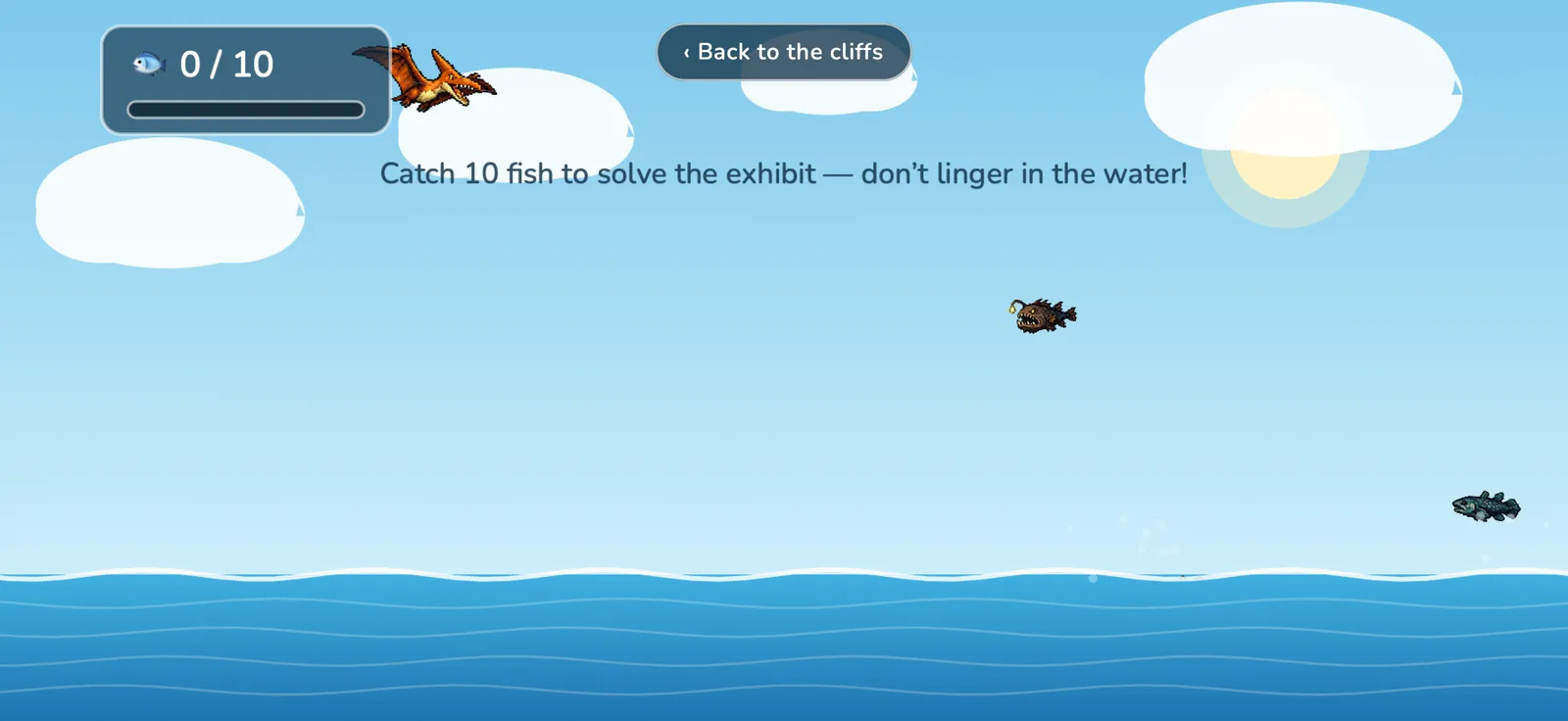
Fish Run
Tap to flap! Skim the waves as a Pteranodon and snatch ten leaping fish, but don’t linger in the water.
✔ The whole Dinosaur Wing is free to play
No ads, ever · Plays offline · Made for young kids and adults