How Do Airplanes Fly?
A big plane weighs as much as a herd of elephants, yet it soars through the sky. The secret is in how its wings push on the air.
The four forces of flight
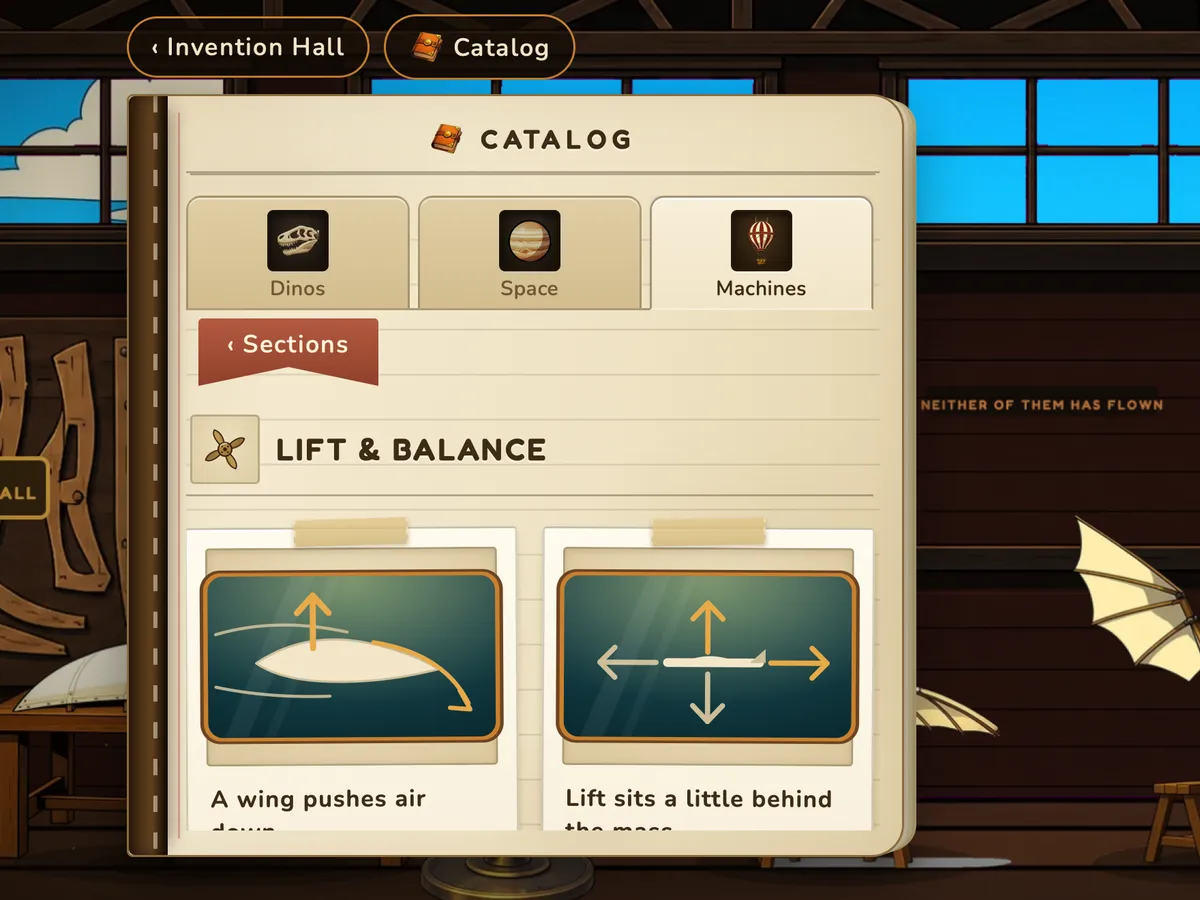
Every airplane in the sky is in a tug-of-war between four forces. Weight pulls it down toward the ground. Lift pushes it up. Thrust, from the engines and propellers, pushes it forward. And drag, the air rubbing and pushing against it, holds it back.
To take off, a plane needs more lift than weight, and more thrust than drag. In 1799, an English inventor named George Cayley worked out that flying is these four separate jobs. That idea set the Wright brothers on their way.
How a wing makes lift
A wing makes lift by throwing air downward. When the wing pushes air down, the air pushes the wing up just as hard. It’s the same rule that makes a rocket fly: every push has an equal push back.
Wings are tilted slightly upward at the front and often curved on top, which helps them turn lots of air downward. But the curve isn’t magic: a flat sheet of paper flies too, as long as it’s tilted. You may hear that air over the top “has farther to go, so it must go faster to catch up”. That popular explanation is actually wrong!
Paper plane experiment
Real aircraft designers work like this. Grab some paper and try it!
- 1
Fold a simple dart
Make a basic paper airplane and throw it gently. Measure how far it flies.
- 2
Change ONE thing
Fold the back edges of the wings up a little, or make the wings wider. Only change one thing at a time!
- 3
Test again
Throw it the same way and measure. Did it fly farther, or loop, or dive?
- 4
Write it down
Keep notes, then change another single thing. Every flying machine in history was found this way.
More secrets of flying machines
- Balance matters. If the lift sits too far in front of the plane’s weight, the nose rises; too far behind, it dives.
- A tail keeps it straight. Like the feathers on an arrow, the tail keeps the plane pointing forward.
- Long, thin wings glide farther. That’s why gliders and soaring birds have long, narrow wings.
- Cables pull but never push. In early planes, steel cables connected the controls.
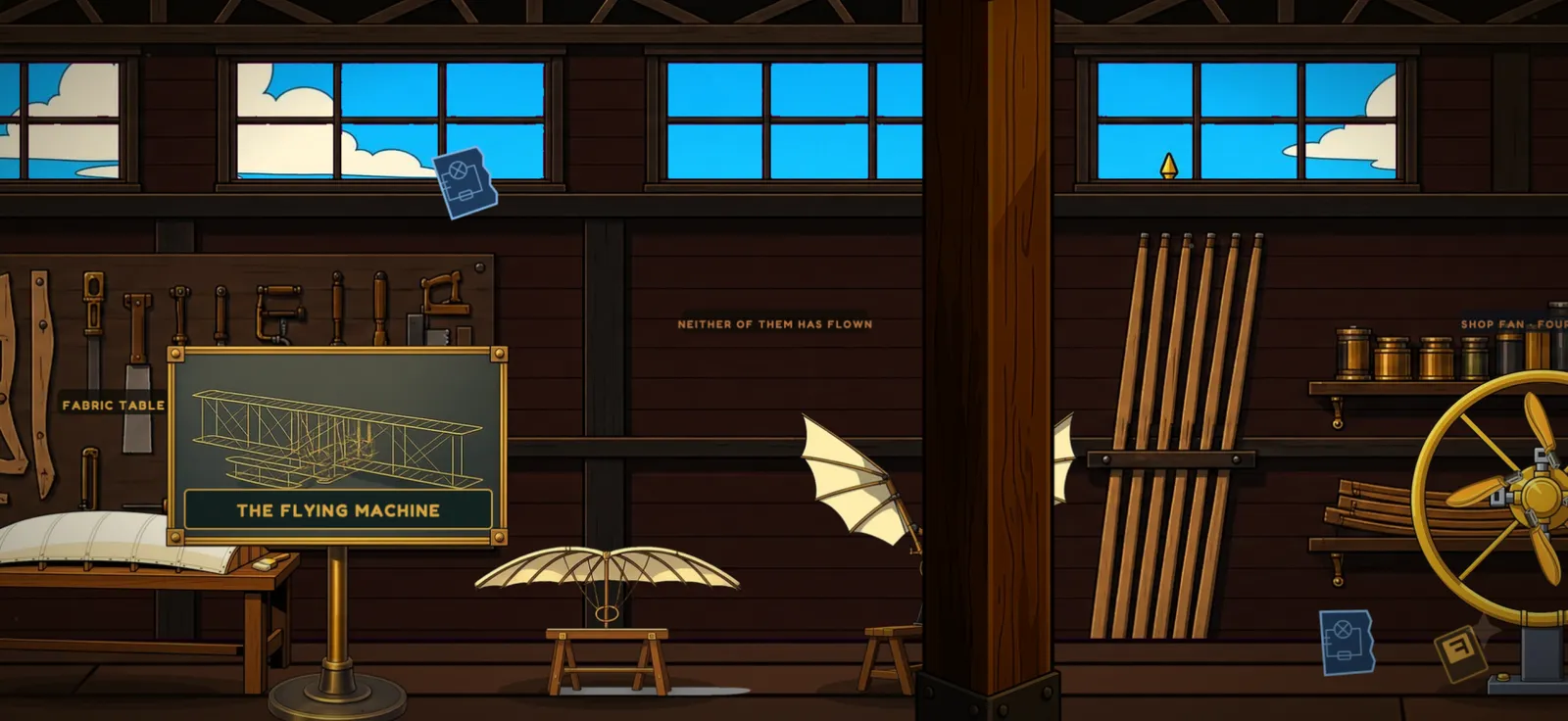
Fly-High Facts
Gliders can fly for hours without an engine.
They ride on rising warm air, called thermals, the same way eagles and vultures soar.
Planes can fly upside down.
Stunt pilots tilt their wings so they still push air downward. The popular “longer path” idea can’t explain that, but the push-down idea can.
Planes take off into the wind.
Flying into the wind means more air rushes over the wings, giving more lift at a lower ground speed.
The Wright brothers built their own wind tunnel.
They tested about 200 small wing shapes because the numbers in books were wrong.
Flapping isn’t needed.
People tried flapping-wing machines for centuries. Fixed wings plus an engine for thrust is what worked.
Science words to know
- Lift
- The upward push that keeps a plane in the air.
- Thrust
- The forward push from engines or propellers.
- Drag
- The air pushing back against something moving through it.
- Weight
- The pull of gravity on an object.
Quick quiz!
0 / 31. Which force pushes a plane up?
2. How does a wing make lift?
3. What’s the best way to improve a paper plane?
Questions kids ask
How do airplanes stay in the air?
Their wings push air downward, and the air pushes the wings up. That push is called lift, and it balances the plane’s weight.
What are the four forces of flight?
Lift (up), weight (down), thrust (forward) and drag (backward).
Why are airplane wings curved?
A curved top helps the wing turn more air downward, making lift more efficiently. But even a flat wing makes lift if it’s tilted.
Who flew the first airplane?
Orville and Wilbur Wright, in 1903. Read their story in the Wright brothers for kids.
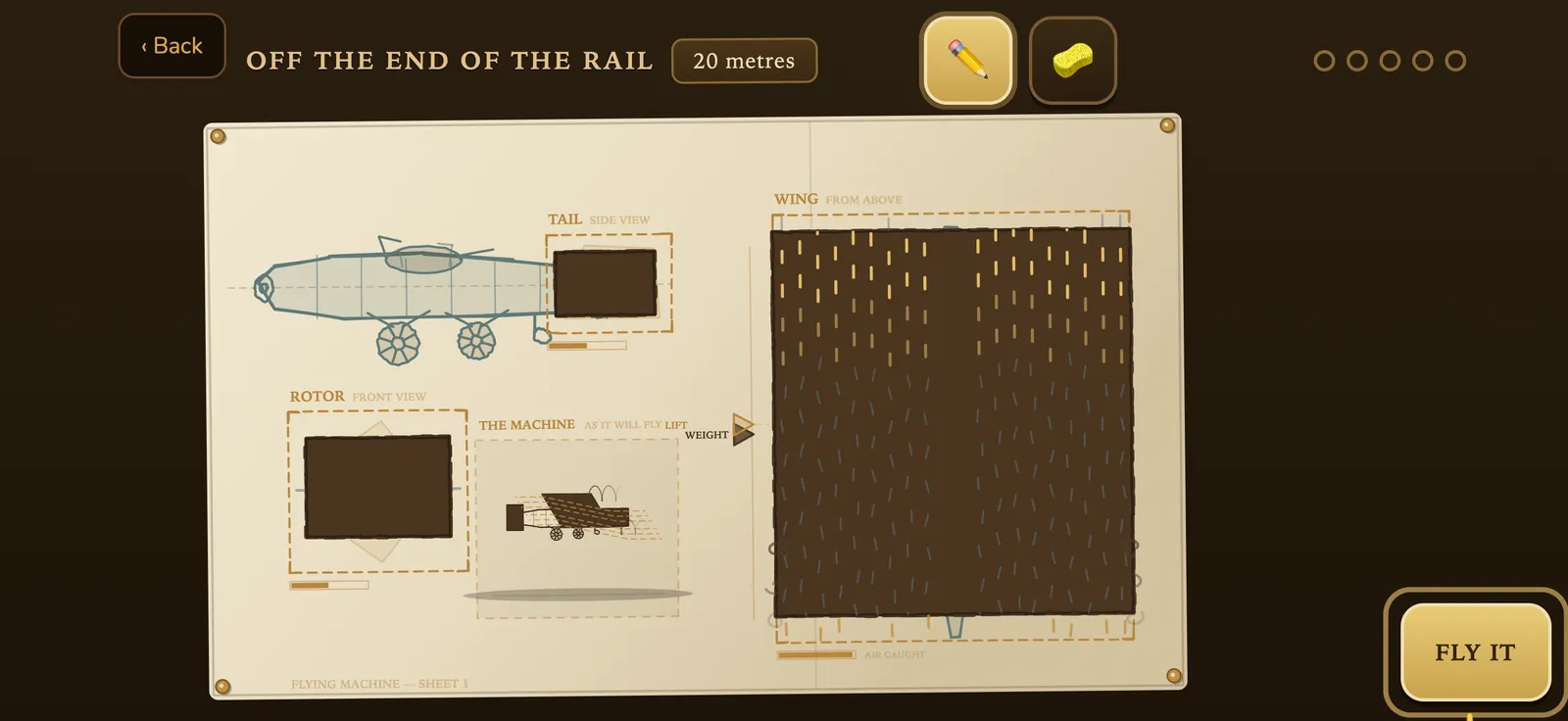
The Drawing Board
Draw your own flying machine, launch it and watch what happens. Then change one thing and fly again, until it soars the whole length of the hall.
No ads, ever · Plays offline · Made for young kids and adults