How Do Rockets Work?
Push hot gas down, and the rocket goes up. Then throw away the empty parts and keep climbing! Here’s rocket science, made simple.
Push one way, move the other
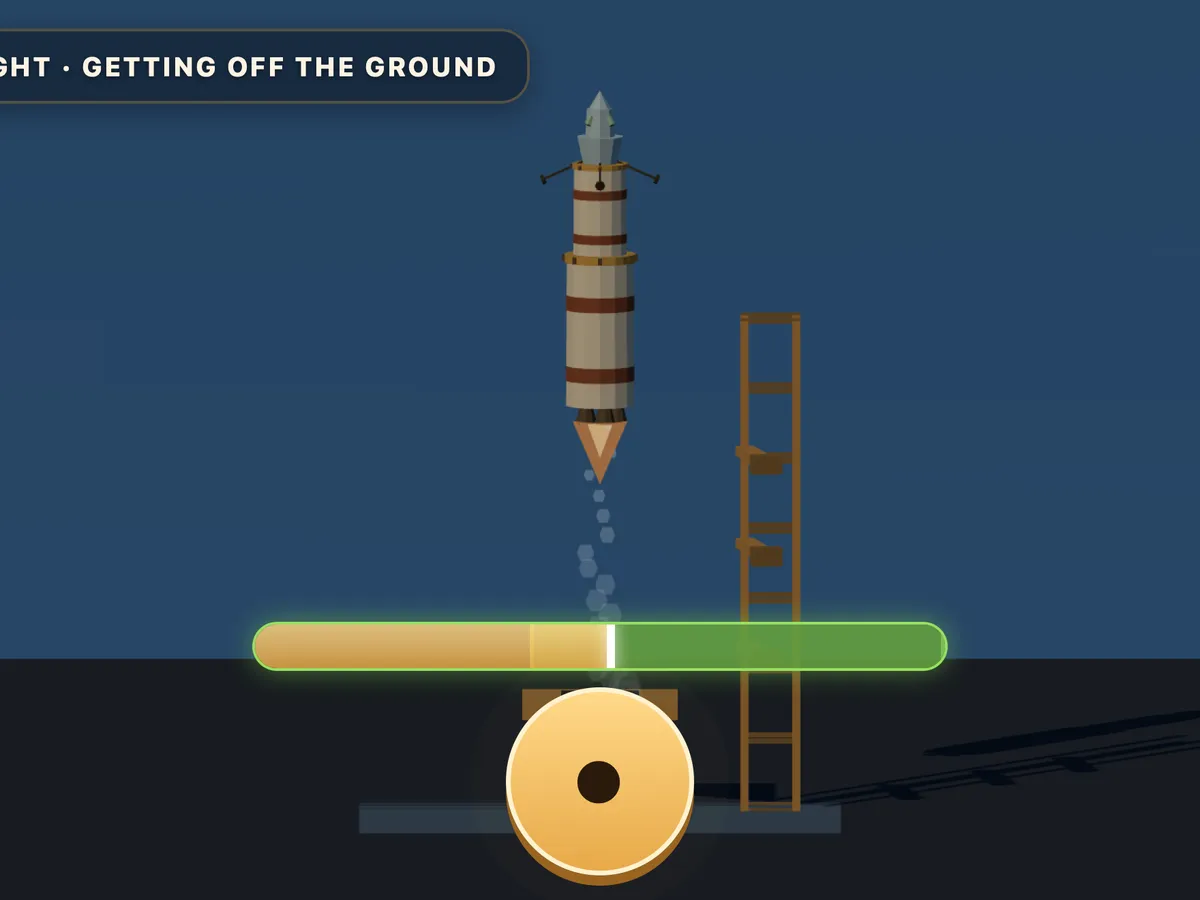
A rocket works by pushing hot gas out of its bottom very fast. As the gas is pushed down, the rocket is pushed up. This is one of Isaac Newton’s laws of motion: for every push, there is an equal push back the other way.
You can feel it yourself. Blow up a balloon, then let it go without tying it. Air rushes out of the back, and the balloon zooms the opposite way. A rocket does the same thing, but with burning fuel instead of air, and with enormous power.
Why rockets carry their own oxygen
Fire needs oxygen to burn. A car or an airplane engine takes oxygen from the air around it, but there is no air in space.
So a rocket carries its own fuel and its own oxygen, often as super-cold liquids. They mix and burn in the engine, making the hot gas that pushes the rocket. That is why most of a rocket is really just giant fuel tanks.
Why rockets come in stages
A big rocket is really several rockets stacked on top of each other.
- 1
The first stage fires
The biggest, heaviest stage lifts the whole rocket off the ground.
- 2
It runs out and lets go
Once its fuel is used up, the empty stage drops away. There’s no point carrying empty tanks!
- 3
The next stage takes over
Now the rocket is much lighter, so the smaller stage can push it even faster.
- 4
Only a small part goes all the way
By the end, just the spacecraft on top is left, travelling fast enough to stay in space.
Up isn’t enough: you have to go sideways
Here’s a surprise. To stay in space, a rocket can’t just go straight up, or it would fall straight back down. Rockets tip over as they climb and race sideways, at about 28,000 kilometres an hour.
At that speed, the spacecraft falls toward Earth but keeps missing it, because the ground curves away beneath it. That’s called being in orbit. Find out more in why do astronauts float.
Blast-off Facts
Rockets don’t push against the air.
They work even better in space, where there’s no air in the way. The push comes from the gas they throw out.
Some rocket fuel is colder than anything in your freezer.
Liquid oxygen and liquid hydrogen must be kept extremely cold, far below −180°C, to stay liquid.
Some rockets land and fly again.
Modern booster stages can fly back and land upright, so they can be used for more than one launch.
Getting to the Moon takes two kinds of burn.
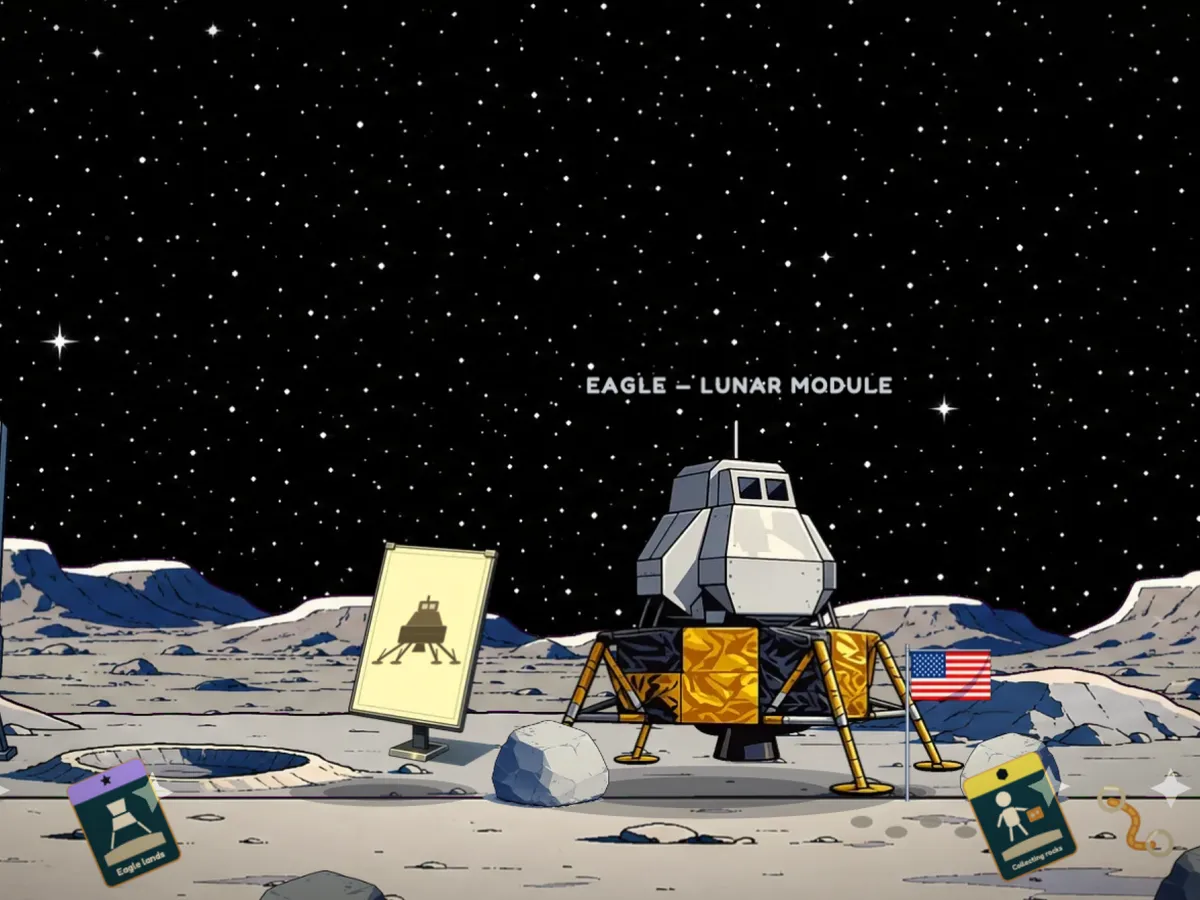
One big burn to escape Earth, then smaller burns to slow down into orbit around the Moon and to land gently.
Rockets were invented in China.
Gunpowder rockets were used in China hundreds of years ago, long before anyone dreamed of space travel.
Science words to know
- Thrust
- The push that moves a rocket forward.
- Stage
- One section of a rocket, with its own engines and fuel, that drops off when empty.
- Orbit
- Falling around a planet while moving sideways fast enough to keep missing it.
- Oxidiser
- The oxygen a rocket carries so its fuel can burn in space.
Quick quiz!
0 / 31. What pushes a rocket up?
2. Why do rockets drop their stages?
3. Why do rockets carry oxygen?
Questions kids ask
How does a rocket work, simply?
It burns fuel to make hot gas and pushes the gas out of its bottom very fast. Pushing gas down pushes the rocket up.
Can a rocket fly in space where there is no air?
Yes! A rocket doesn’t need air to push against. It pushes on its own exhaust gas, so it works in space.
How fast does a rocket go?
To reach orbit around Earth, a spacecraft has to go about 28,000 kilometres an hour, sideways.
How did Apollo 11 get to the Moon?
A Saturn V rocket lifted it, dropping empty stages on the way. Follow every step in the Moon landing for kids.
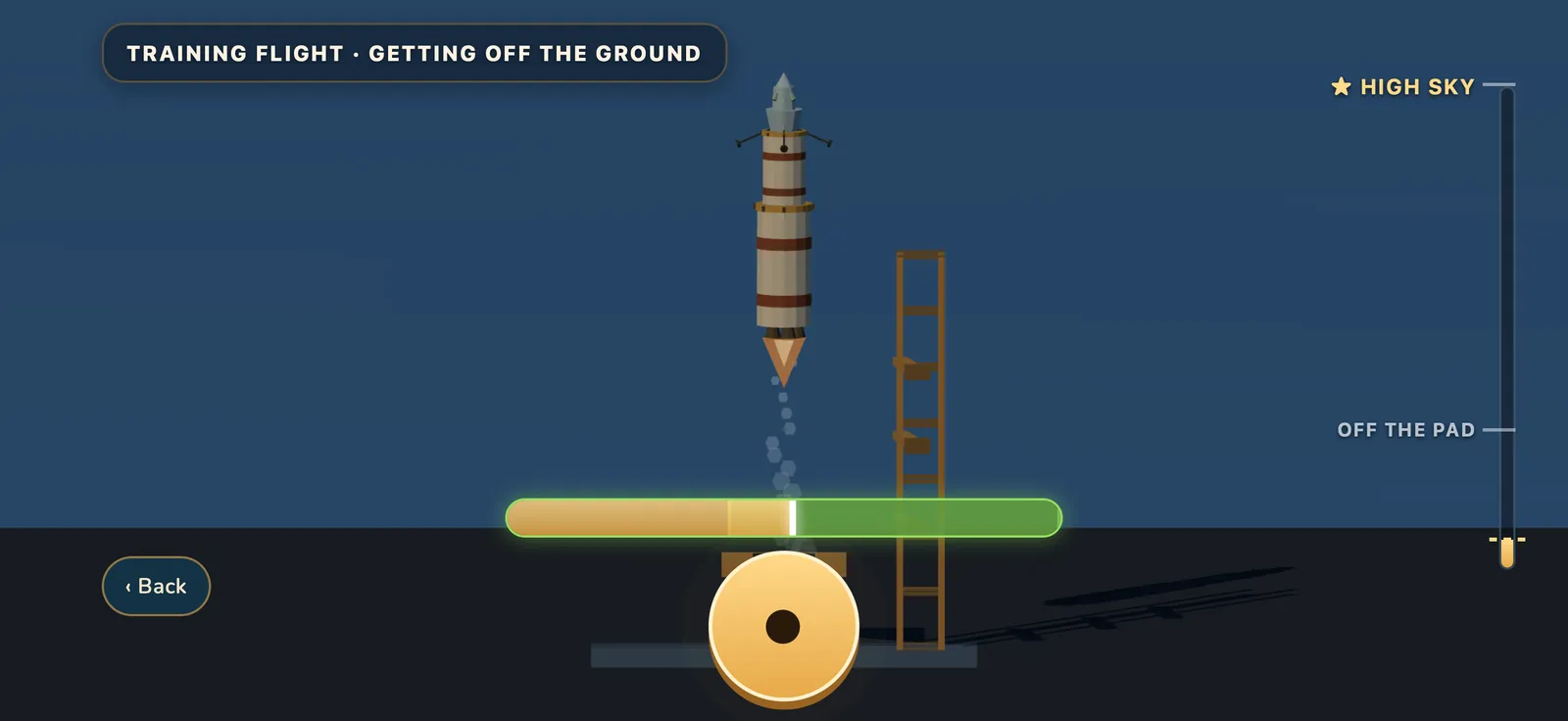
The Long Way Up
Stack the stages, drop each empty one at the right moment, aim for the Moon, circle it and land with two gentle burns, just like Apollo 11.
No ads, ever · Plays offline · Made for young kids and adults