How Do Astronauts Sleep in Space?
No beds, no mattress and no “down”. Here’s how you get a good night’s sleep when you’re floating!

No up, no down, no bed
On Earth, you climb into bed and gravity holds you on the mattress. On the International Space Station, astronauts can’t really lie down, because there is no real up or down. Everything floats, and that includes sleepy astronauts.
So instead of a bed, each astronaut sleeps in a sleeping bag fixed to a wall. They zip themselves in, and some also use straps so they stay put. Without that, a sleeping astronaut could slowly drift across the station and bump into equipment, or into a crewmate!
A tiny bedroom of their own
Most astronauts on the station have their own small sleeping cabin, called crew quarters. Each one is about the size of a phone booth. The American segment has four of them in a module called Harmony, the Russian segment has two more, and Europe’s Columbus module now has one too.
A cabin has room for a sleeping bag, a laptop, a light and a few personal things, like family photos. The door shuts out light and some of the noise, so one astronaut can sleep while another keeps working. Because floating feels the same in any direction, it doesn’t matter which way round the sleeping bag hangs. Some astronauts even sleep head down!
Why a fan is a must
On Earth, the warm air you breathe out rises and drifts away, because gravity pulls the cooler air down. In space, warm air doesn’t rise. Without moving air, the carbon dioxide an astronaut breathes out could gather in a bubble around their head while they sleep.
That’s why every sleeping area needs good airflow. Fans keep fresh air moving all night, so astronauts don’t wake up with a headache, gasping for air. Those fans hum all the time, which is one reason many astronauts sleep with earplugs.
Getting ready for bed in space
Bedtime on the space station looks a bit different from bedtime at home.
- 1
Wash up
There’s no shower, so astronauts wipe themselves clean with a wet cloth and brush their teeth with very little water.
- 2
Float into the cabin
They glide into their crew quarters and close the door.
- 3
Zip into the sleeping bag
The bag is fixed to the wall, so they won’t drift off in the night.
- 4
Mask and earplugs
An eye mask blocks out light and earplugs soften the hum of the fans.
- 5
Lights low
The station’s lights can switch to a warmer, dimmer glow before bedtime, which helps the body get ready to sleep.
Sixteen sunrises a day
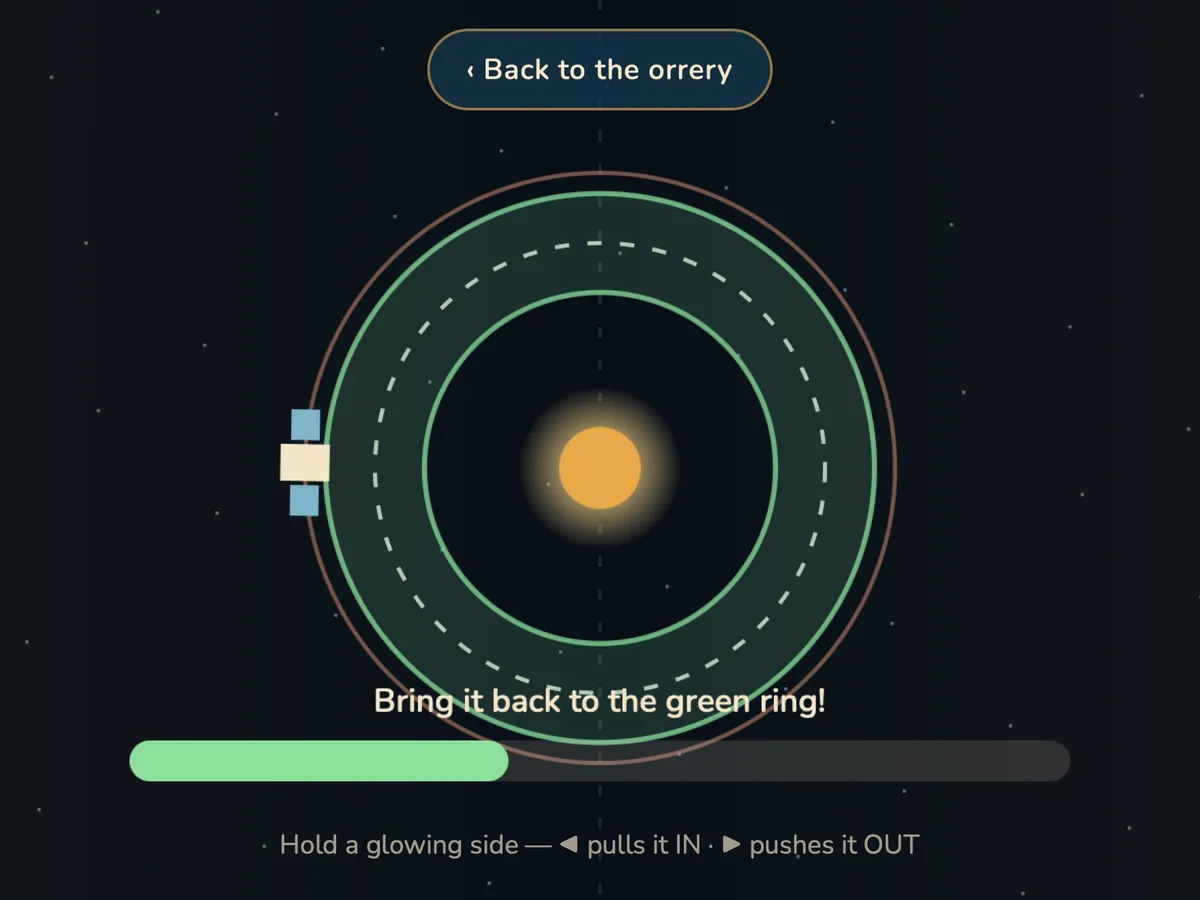
The space station races around Earth about once every 90 minutes. That means the crew see about 16 sunrises and 16 sunsets every day! If astronauts went to sleep every time it got dark, they would be napping every hour and a half.
So the station doesn’t follow the Sun. It runs on one clock, Greenwich Mean Time, the same time as London in winter. The crew get up and go to bed by that clock, and NASA sets aside about 8.5 hours for sleep each day.
Is it easy to sleep in space?
Not always. A big study of astronauts found that, on average, they slept only about six hours a night in space, even though more time was set aside. Noise, strange light, excitement and a busy schedule all make it harder.
Floating changes the body too. When you float, body fluids shift up toward your head, and some astronauts feel stuffy, as if they had a cold. That stuffy feeling may also be one reason food tastes different up there, as you can read in what do astronauts eat in space. To find out why everyone floats in the first place, see why do astronauts float.
Sleepy Space Facts
The first Moon walkers slept on the floor.
On Apollo 11, Buzz Aldrin curled up on the floor of the lunar module and Neil Armstrong rested on top of an engine cover. From Apollo 12 on, crews got hammocks to sleep in.
There’s no wrong way up.
Because there is no up or down on the station, an astronaut can sleep standing up, sideways or head down. It all feels the same.
A pillow has to be strapped on.
Your head doesn’t rest on anything in space, so a loose pillow would just float away. Astronauts who want one strap it to their head or to the sleeping bag.
Astronauts often sleep less than planned.
A study of astronauts found they got about six hours a night in space, even though about 8.5 hours were set aside for sleep.
The lights help set the clock.
In 2016 the station started getting new LED lights that can change colour and brightness, with a dimmer, warmer setting for the time before sleep.
Science words to know
- Crew quarters
- A small private cabin where an astronaut sleeps on the space station.
- Microgravity
- When everything is falling together around Earth, so people and things float.
- Carbon dioxide
- A gas that people breathe out. Too much of it in one place makes it hard to breathe.
- Orbit
- The path a spacecraft or moon takes as it travels around a planet.
Quick quiz!
0 / 31. Where do astronauts sleep on the space station?
2. Why do sleeping areas on the station need fans?
3. About how many sunrises does the crew see every day?
Questions kids ask
Do astronauts float when they sleep?
They would if nothing held them. That’s why they zip into sleeping bags fixed to the wall, and some use straps too. Their arms can still float up unless they tuck them in.
How long do astronauts sleep in space?
NASA sets aside about 8.5 hours for sleep each day. In practice, studies found astronauts often sleep only about six hours, because of noise, light and busy days.
Do astronauts sleep upside down?
In space there is no real upside down. An astronaut can sleep in any direction, and it feels just the same.
How do astronauts know when it’s night?
Not from the Sun, which rises and sets about 16 times a day. The station runs on Greenwich Mean Time, and the crew follow a daily schedule by that clock. Read more about daily life on board in the International Space Station for kids.
Spacewalk Drift
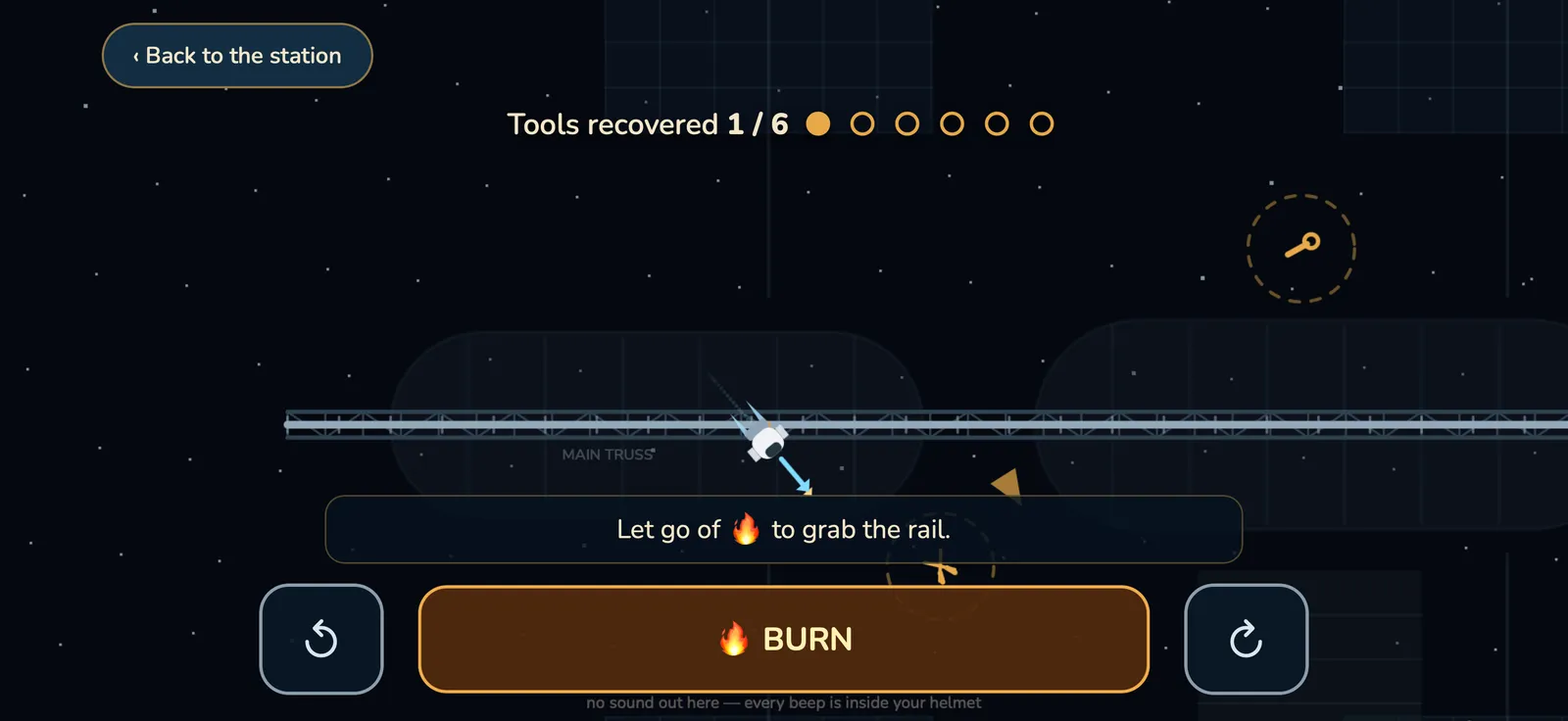
Good morning, astronaut! Six tools have floated loose outside the space station. Use the handrail and short jet bursts to collect them all.
No ads, ever · Plays offline · Made for young kids and adults