What Do Astronauts Eat in Space?
Tortillas, pouches, hot sauce and the odd fresh orange. Here’s how you eat dinner when your food can float away!
Real food, in special packets
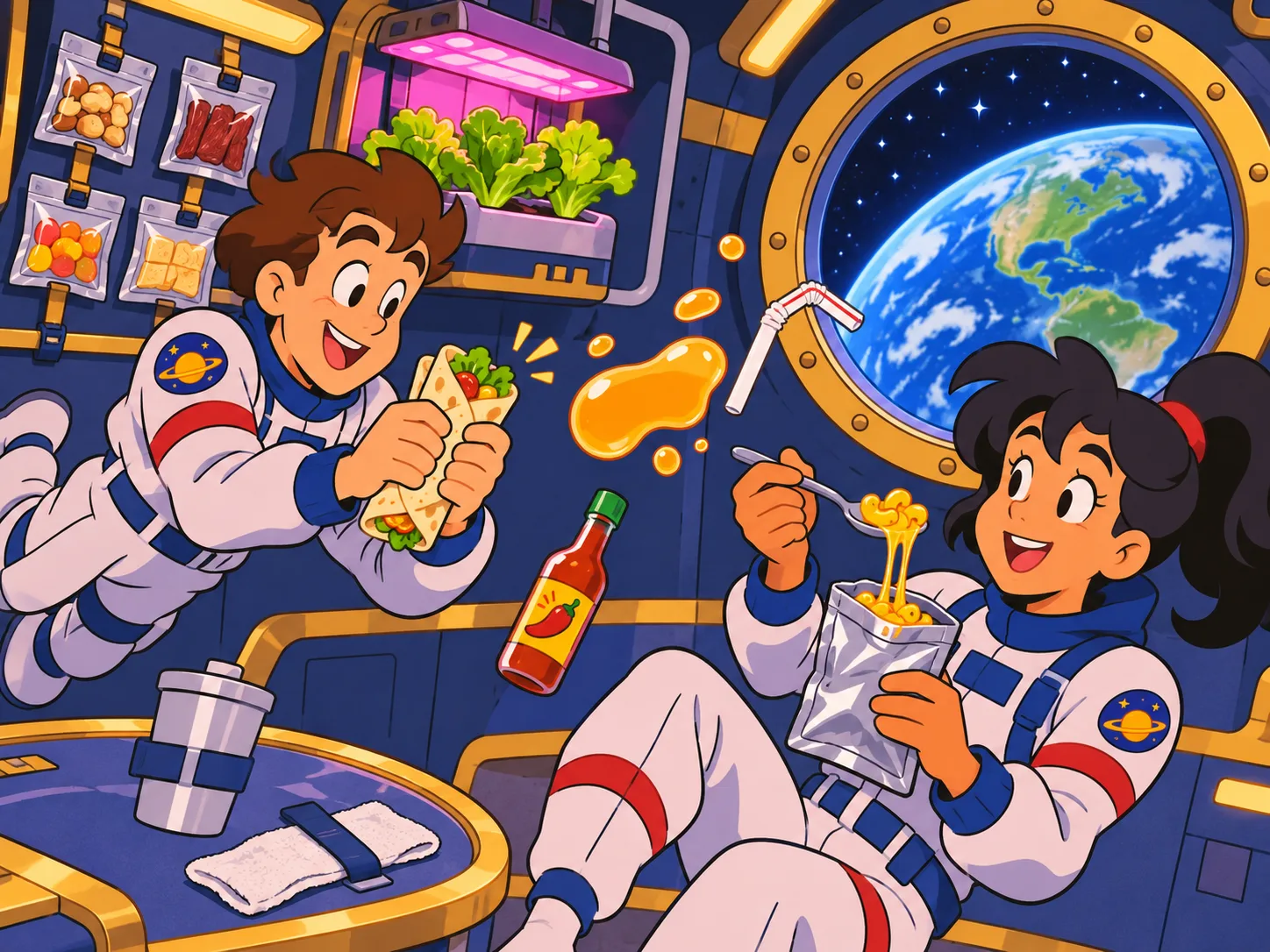
Astronauts on the International Space Station eat a lot of the same things you do: pasta, chicken, eggs, soup, vegetables, cookies and fruit. The difference is how the food is packed.
Everything on board has to stay safe to eat for a long time, because there are no shops in space. So most space food is dried, sealed in pouches or treated with heat, a bit like canned food. Supply ships bring new food, and sometimes a treat of fresh fruit like oranges and apples.
The main kinds of space food
- Just add water. Dried food such as soups, scrambled eggs and drinks. Astronauts squirt water into the packet through a little valve.
- Heat-treated pouches. Ready meals sealed in foil pouches and heated to kill germs, so they keep for a long time. They just need warming up.
- Natural form. Foods that are fine as they are, like nuts, cookies and granola bars.
- Fresh food. Fruit and vegetables that arrive on supply ships. They go off quickly, so they get eaten first!
Why tortillas instead of bread?
Crumbs! On Earth, crumbs fall to the floor. On the space station, everything floats, so a crumb could drift into an astronaut’s eye or into a piece of equipment.
A tortilla makes almost no crumbs, so astronauts use tortillas to make wraps and sandwiches. They have been flying in space since 1985. Salt and pepper are a problem too, because the grains would float away. So the salt is dissolved in water and the pepper is mixed into oil, and astronauts squeeze a few drops onto their food.
How to make dinner in space
The space station has a small kitchen area called a galley, with hot and room-temperature water and a food warmer.
- 1
Pick your meal
Choose a packet from the menu, like macaroni and cheese or a pouch of chicken.
- 2
Add water
Dried food goes under the water dispenser, which squirts hot or room-temperature water in through a valve.
- 3
Warm it up
Pouches go into the food warmer, a box about the size of a briefcase that heats them up.
- 4
Eat carefully
Wet, sticky food clings to the spoon, so it doesn’t fly off. No tossing peas into the air!
The first meals in space
In the early 1960s, scientists were not sure people could even swallow food while floating. In 1962, John Glenn became the first American to eat in space. He squeezed applesauce out of a tube, like toothpaste, and it went down just fine.
Next came bite-sized cubes of food coated in gelatin or oil, so they would not crumble. The water on those spacecraft was cold, so meals that needed water were eaten cold. Space food has come a long way since then!
Why does food taste different in space?
When you float, the fluid in your body no longer gets pulled down toward your feet. More of it moves up into your head, so astronauts often feel stuffy, like when you have a cold. A stuffy nose makes it harder to smell, and smell is a big part of how food tastes.
That’s why many astronauts find their food a bit bland, and why spicy sauces are so popular on the station. Floating can be fun, but it changes your body in lots of ways. Find out more in why do astronauts float.
What do astronauts drink?
Drinks come as powder in pouches, like coffee, tea, juice and lemonade. Astronauts add water and sip through a straw. An orange drink called Tang first flew with NASA in the 1960s. NASA just calls it orange drink, and it is still on the space station today.
And the water? Most of it is recycled. Machines on the station clean the water from the air the crew breathe out, from their sweat and even from their wee. In 2023, NASA said the station recovers about 98 out of every 100 cups of water the crew bring on board.
Space Food Facts
Astronaut ice cream is mostly for gift shops.
Crunchy freeze-dried ice cream was made for NASA in the 1960s, but astronauts don’t remember eating it in space. Today you mostly find it in museum shops.
Astronauts taste-test their menu.
Before a mission, crews visit NASA’s Space Food Systems Laboratory in Houston to try the food and pick their meals from about 200 choices.
They can pack their favourite snacks.
Each astronaut can add a few bonus foods they love, like a favourite sweet or snack bought from a shop on Earth.
Hot sauce is a space-station favourite.
Because a stuffy nose dulls the taste of food, many astronauts love spicy sauces that wake up their taste buds.
They celebrate holidays with special meals.
Crews on the space station have shared special Thanksgiving dinners together, with foods like smoked turkey and stuffing.
Science words to know
- Galley
- The kitchen area on a ship, plane or spacecraft.
- Rehydrate
- To add water back into food that has been dried.
- Microgravity
- When everything is falling together around Earth, so people and food float.
- Recycle
- To clean something that has been used so it can be used again.
Quick quiz!
0 / 31. Why do astronauts eat tortillas instead of bread?
2. How do astronauts use salt in space?
3. Where does most of the drinking water on the space station come from?
Questions kids ask
What do astronauts eat for breakfast in space?
Things like scrambled eggs, oatmeal, granola, fruit and coffee or juice. Many of them come dried, so astronauts add hot water before eating.
Can astronauts eat fresh food in space?
Sometimes. Supply ships bring fresh fruit and vegetables, but they don’t last long, so the crew eat them quickly. Astronauts have also grown lettuce and other greens on board.
How do astronauts drink in space?
They drink from sealed pouches with a straw. Water in an open cup would cling to the sides and creep out, and the smallest bump would send it floating off in wobbly blobs.
Do astronauts cook in space?
Not like at home. There is no stove for frying, so they add water to dried food and heat pouches in a food warmer. Baking cookies in space has only been tried as a science experiment. Read more about life on board in the International Space Station for kids.
Spacewalk Drift
After dinner, it’s time to work! Six tools have floated loose outside the space station. Use the handrail and short jet bursts to collect them all.
No ads, ever · Plays offline · Made for young kids and adults