How Do Circuits Work?
Flip a switch and the light comes on. But only if electricity has a complete path to follow. Here’s why every circuit is a circle.
What is a circuit?
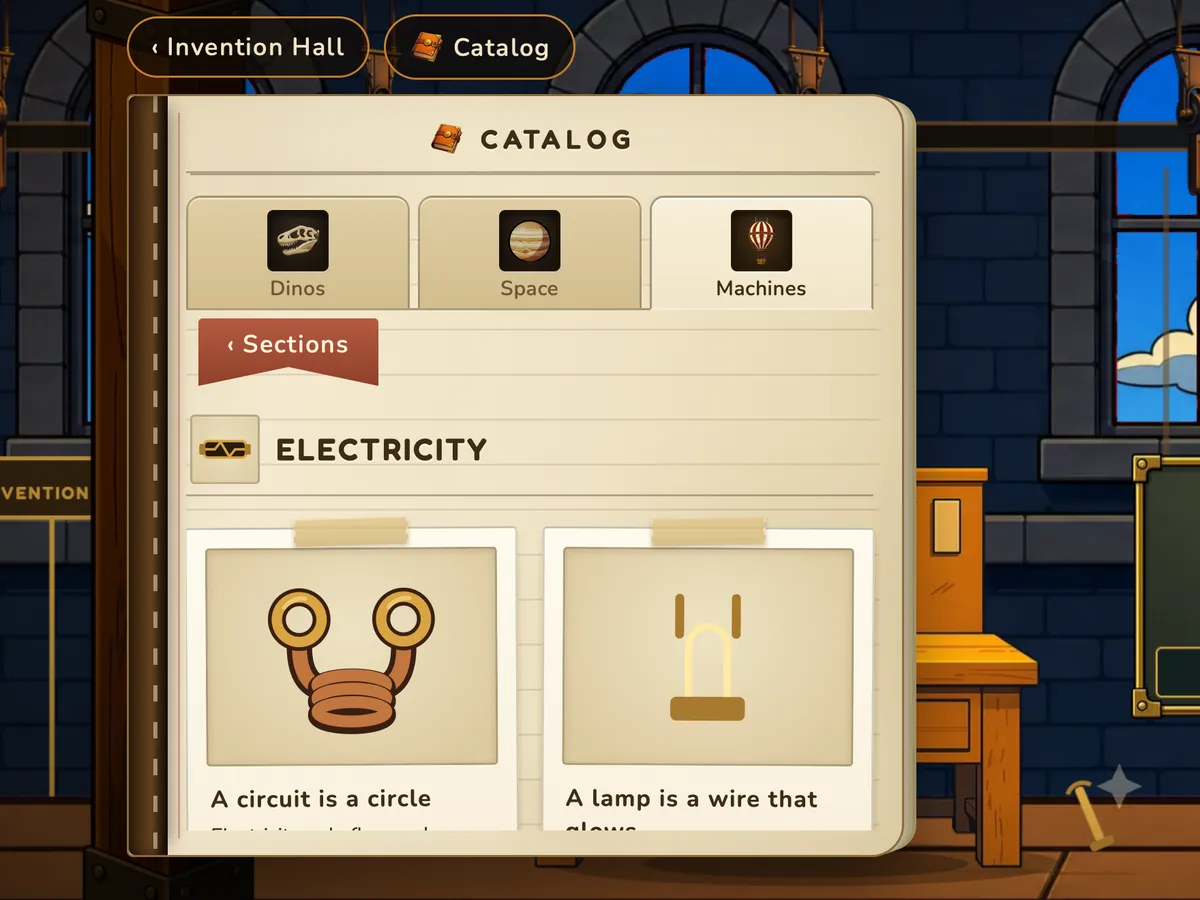
A circuit is a complete path that electricity can flow around. It starts at a power source, like a battery, goes through wires to something that uses the electricity, like a lamp, and comes all the way back to the battery.
If the path is broken anywhere, even by a tiny gap, the electricity stops flowing and everything on the circuit switches off. That’s why it’s called a circuit, from the same word as “circle”.
The parts of a circuit
Power source
A battery or generator pushes the electricity around the circuit.
Wires
Usually copper, because electricity flows through copper very easily.
Load
Anything that uses the electricity: a lamp, a buzzer, a motor.
Switch
Opens a gap to stop the flow, or closes it to start it again.
Fuse
A thin wire that melts on purpose if too much electricity flows, keeping everything else safe.
Insulator
Plastic or rubber around wires. Electricity can’t flow through it, which keeps us safe.
Series or parallel?
In a series circuit, everything shares one single path, one after another. If one bulb breaks, the path is broken and all the bulbs go out, like some old strings of holiday lights.
In a parallel circuit, the path splits into branches, and each lamp has its own route back. If one bulb breaks, the others stay lit. The lights in your home are wired in parallel, so turning off the kitchen light doesn’t switch off the whole house.
Build a simple circuit
With a grown-up’s help, you can light a bulb in minutes. Only ever use small batteries, never a wall socket!
- 1
Gather your parts
A battery, a small torch bulb or LED, and two short wires.
- 2
Connect one side
Join one wire from one end of the battery to the bulb.
- 3
Close the circle
Join the second wire from the bulb back to the other end of the battery. Light!
- 4
Break the path
Lift one wire away. The light goes out, because the circle is broken.
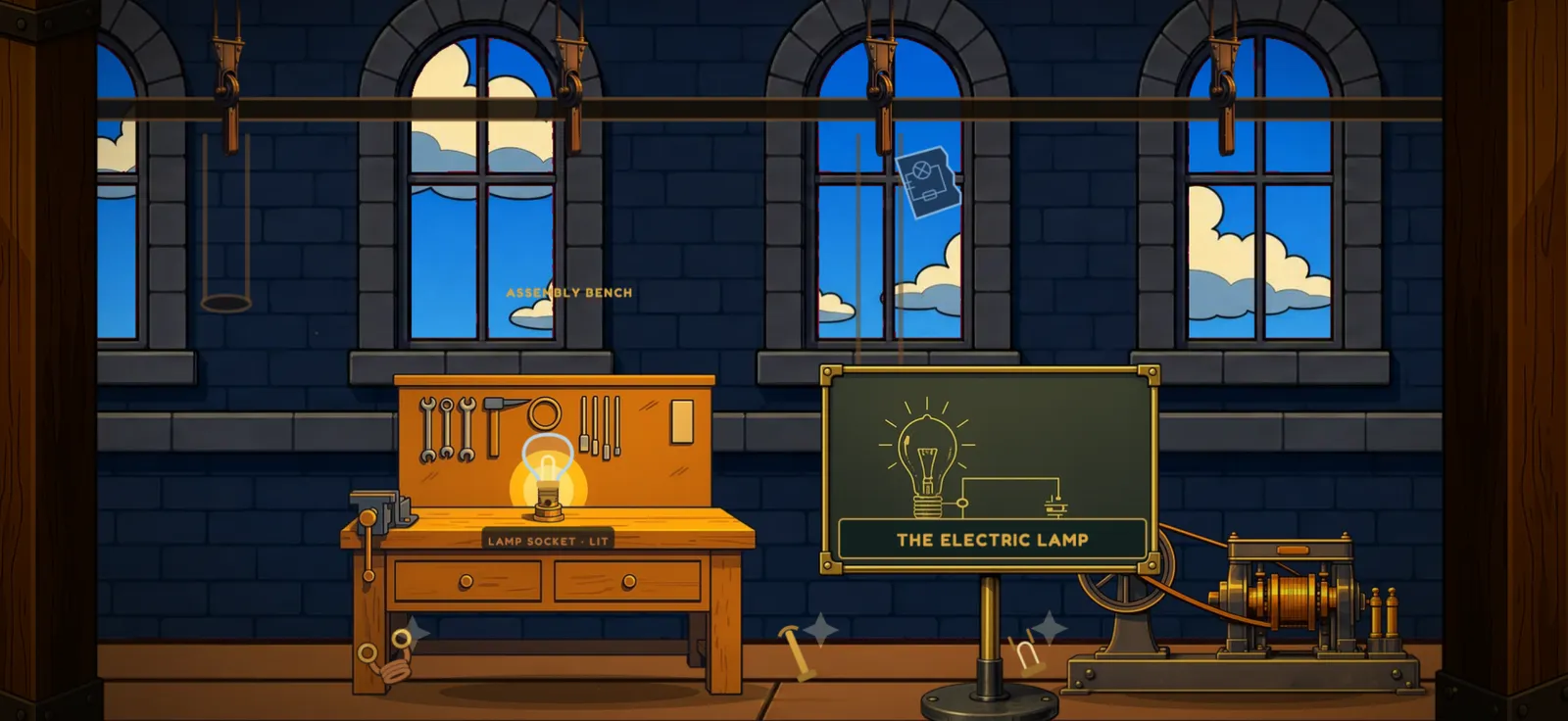
Electrifying Facts
Magnets can make electricity.
In 1831, Michael Faraday found that moving a magnet near a coil of wire makes electricity flow. Generators still work this way.
Lightning is giant natural electricity.
A lightning bolt is electricity jumping between clouds and the ground. Always stay safe indoors in a storm.
Your body uses electricity too.
Tiny electrical signals carry messages along your nerves, from your brain to your fingers and toes.
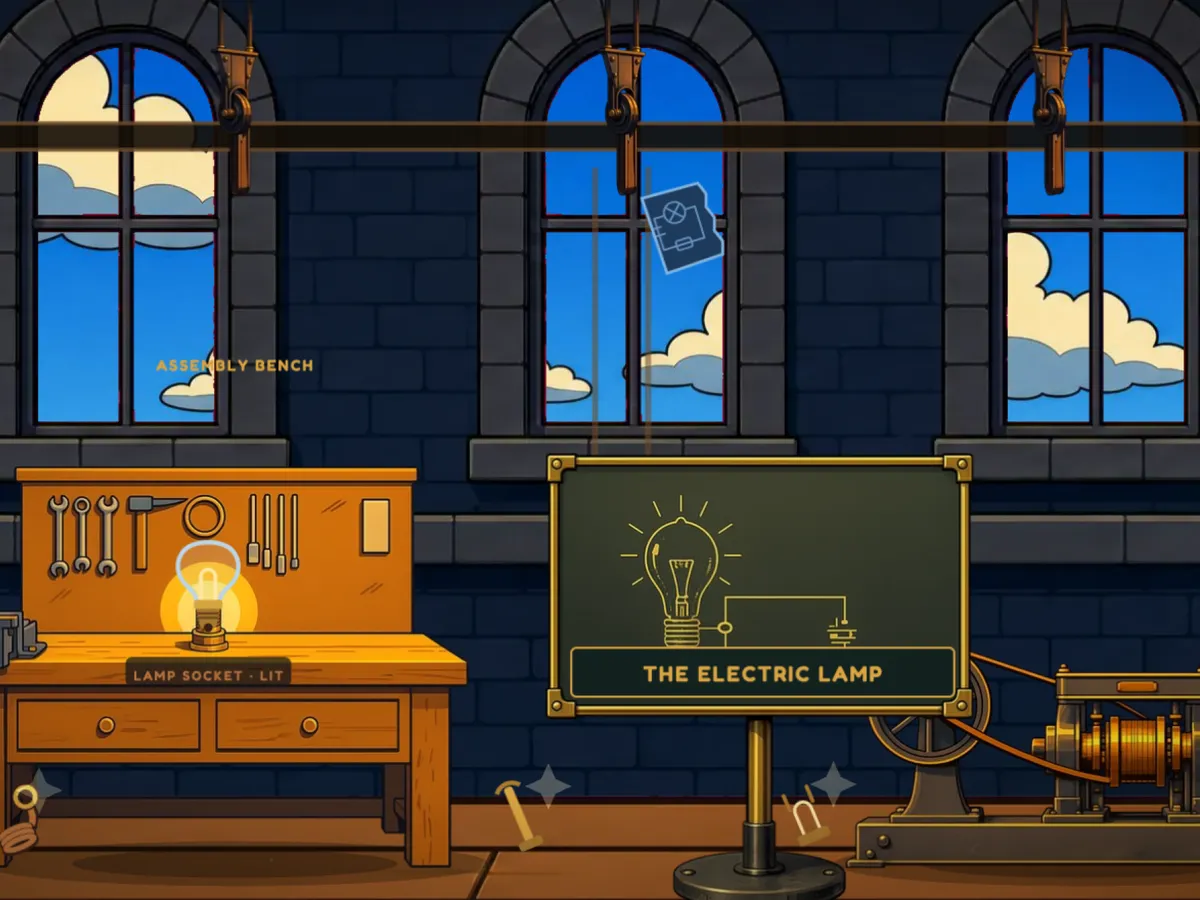
A light bulb is a wire that glows.
Push enough electricity through a thin enough wire and it glows white-hot. Read the whole story in who invented the light bulb.
Old telephones ran on circuits too.
A phone call needed an unbroken copper path across the whole town. See who invented the telephone.
Science words to know
- Circuit
- A complete path that electricity can flow around.
- Current
- The flow of electricity through a wire.
- Conductor
- A material electricity flows through easily, like copper.
- Insulator
- A material electricity can’t flow through, like plastic or rubber.
Quick quiz!
0 / 31. What happens if a circuit has a gap in it?
2. What does a fuse do?
3. Which material is an insulator?
Questions kids ask
What is a circuit in simple words?
A circle-shaped path that electricity flows around, from a power source, through something like a lamp, and back again.
What is the difference between series and parallel circuits?
In series, everything is on one path, so one break stops it all. In parallel, each part has its own branch, so the others keep working.
Why does electricity need a closed circuit?
Electricity only flows when it has a complete path back to where it started. Break the path and the flow stops.
Is it safe to experiment with electricity?
Only with small batteries and a grown-up. Never touch wall sockets, mains plugs or power lines.
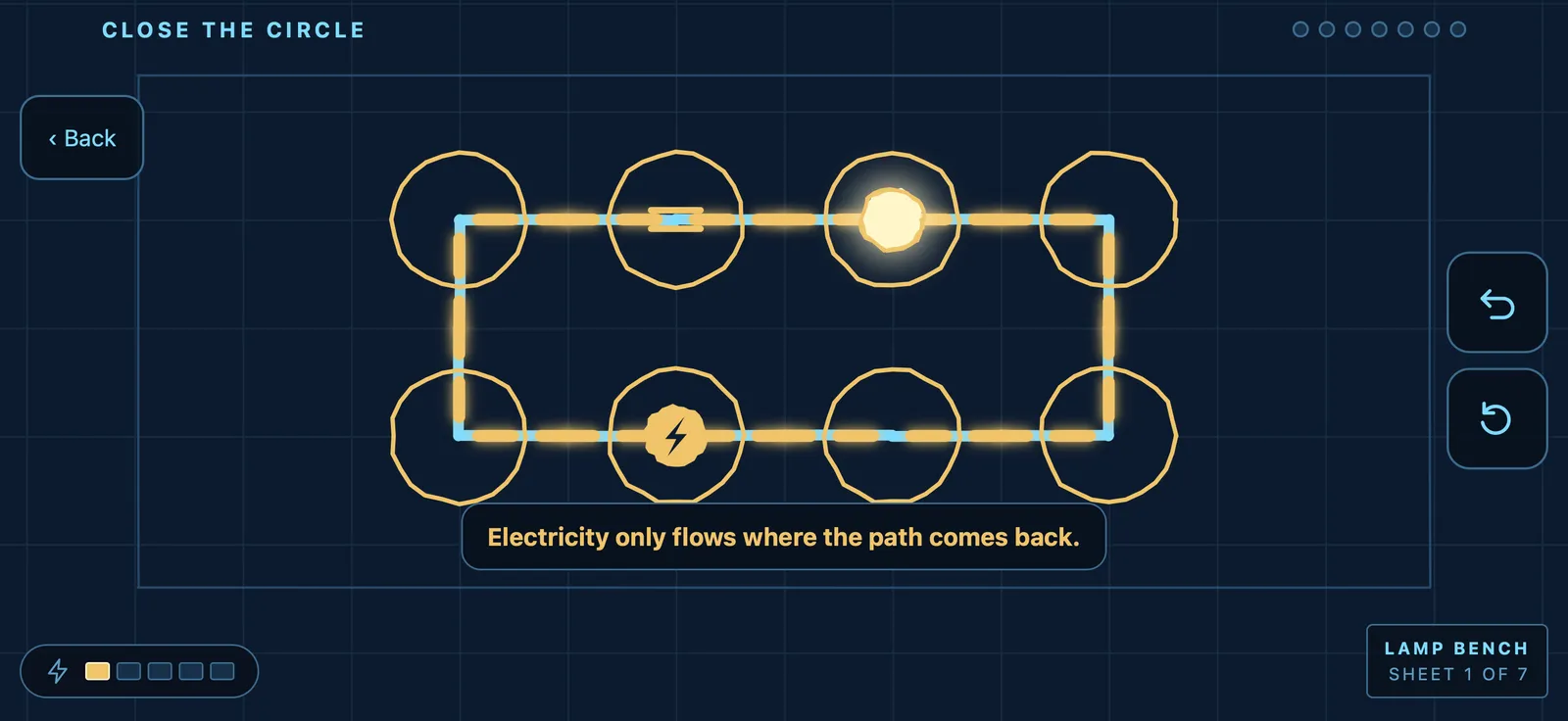
The Schematic
Seven circuit puzzles, from closing a simple circle to wiring two panels in series. Get every lamp burning to light up the workshop.
No ads, ever · Plays offline · Made for young kids and adults