Who Invented the Telephone?
Clicks came first, then voices. Here’s how messages learned to race down a wire, and why people still argue about who invented the telephone.
So who invented it?
Nobody fully agrees! Alexander Graham Bell got the patent for the telephone in 1876, and he is the name most people know. But on the very same day Bell filed his idea, another inventor, Elisha Gray, filed a very similar one, just hours apart.
And years earlier, an Italian inventor living in New York, Antonio Meucci, had built a working talking telegraph. He was too poor to keep paying for his claim, so his name was nearly forgotten. Like many great inventions, the telephone grew out of several people’s ideas at once.
First came the telegraph
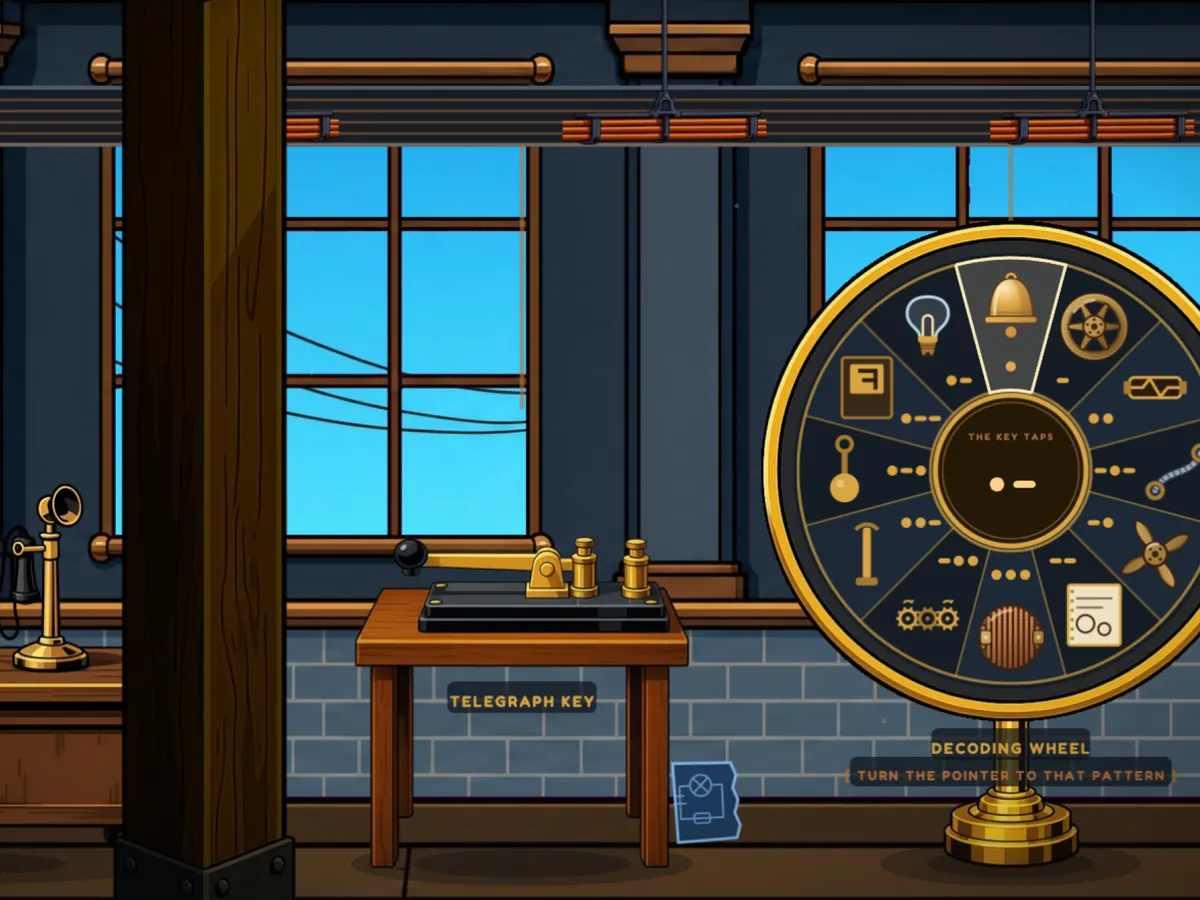
Before telephones could carry voices, the telegraph carried clicks. Electricity was switched on and off along a wire, in short and long bursts that stood for letters. The best-known code is Morse code, where a short burst is a dot and a long one is a dash.
A message that took a rider on horseback a week could cross a whole country in minutes. In 1844, Samuel Morse sent a famous telegraph message from Washington to Baltimore: “What hath God wrought.”
How a telephone carries your voice
You speak
Your voice makes the air shake back and forth very fast. That shaking is sound.
A thin disc trembles
In the mouthpiece, a thin disc called a diaphragm shakes exactly like the air does.
Sound becomes a signal
The shaking disc changes the electric current in the wire, copying your voice.
Signal becomes sound
At the other end, the current makes another disc shake, and your friend hears your voice.
📏 Why we need a telephone exchange
Imagine joining every phone directly to every other phone. How many wires would you need for just 10 phones?
- Every phone wired to every other45 wires
- Every phone wired to one exchange10 wires
For 1,000 phones, joining them all to each other would take about half a million wires. Joining them to an exchange takes just 1,000!
Hello, operator!
At an exchange, every phone line ran into a big board covered in sockets, called a switchboard. When you picked up your phone, an operator answered, asked who you wanted, and plugged a cable into the right socket to connect you.
The first telephone exchanges opened in 1878. Soon, many operators were young women, connecting calls at amazing speed. Later, automatic switches did the job without a person, using the numbers you dialled.
Ring-Ring Facts
An electric bell rings by switching itself on and off.
Electricity pulls a little hammer to strike a gong, which breaks the circuit, which lets the hammer fall back, over and over, many times a second.
Emma Nutt was one of the first women telephone operators.
She started work in Boston in 1878 and was said to remember thousands of phone numbers.
SOS in Morse code is easy to remember.
It is three dots, three dashes, three dots: dot-dot-dot, dash-dash-dash, dot-dot-dot.
Telegraph wires once crossed the ocean floor.
In 1866, a cable laid across the bottom of the Atlantic Ocean let messages travel between Europe and America in minutes.
Your phone still uses the same big idea.
It turns your voice into a signal, sends it, and turns it back into sound, only now by radio instead of copper wire.
Science words to know
- Telegraph
- A machine that sends messages as electric clicks along a wire.
- Morse code
- A code of dots and dashes that stand for letters and numbers.
- Switchboard
- A board of sockets where operators connected phone calls by hand.
- Diaphragm
- A thin disc that shakes with sound, inside a phone’s mouthpiece and earpiece.
Quick quiz!
0 / 31. What came before the telephone?
2. Who filed a telephone idea on the same day as Bell?
3. Why build a telephone exchange?
Questions kids ask
Who really invented the telephone?
Alexander Graham Bell got the patent in 1876, but Elisha Gray filed the same idea the same day, and Antonio Meucci built a working one years earlier. Nobody fully agrees.
When was the telephone invented?
Bell’s telephone patent was granted in March 1876, and the first telephone exchanges opened in 1878.
How did people talk before telephones?
They wrote letters or sent telegraph messages in code. Telegraphs carried clicks, not voices.
How does electricity carry a voice?
A thin disc shakes with your voice and changes the electric current in the wire. Learn about electric paths in how do circuits work.
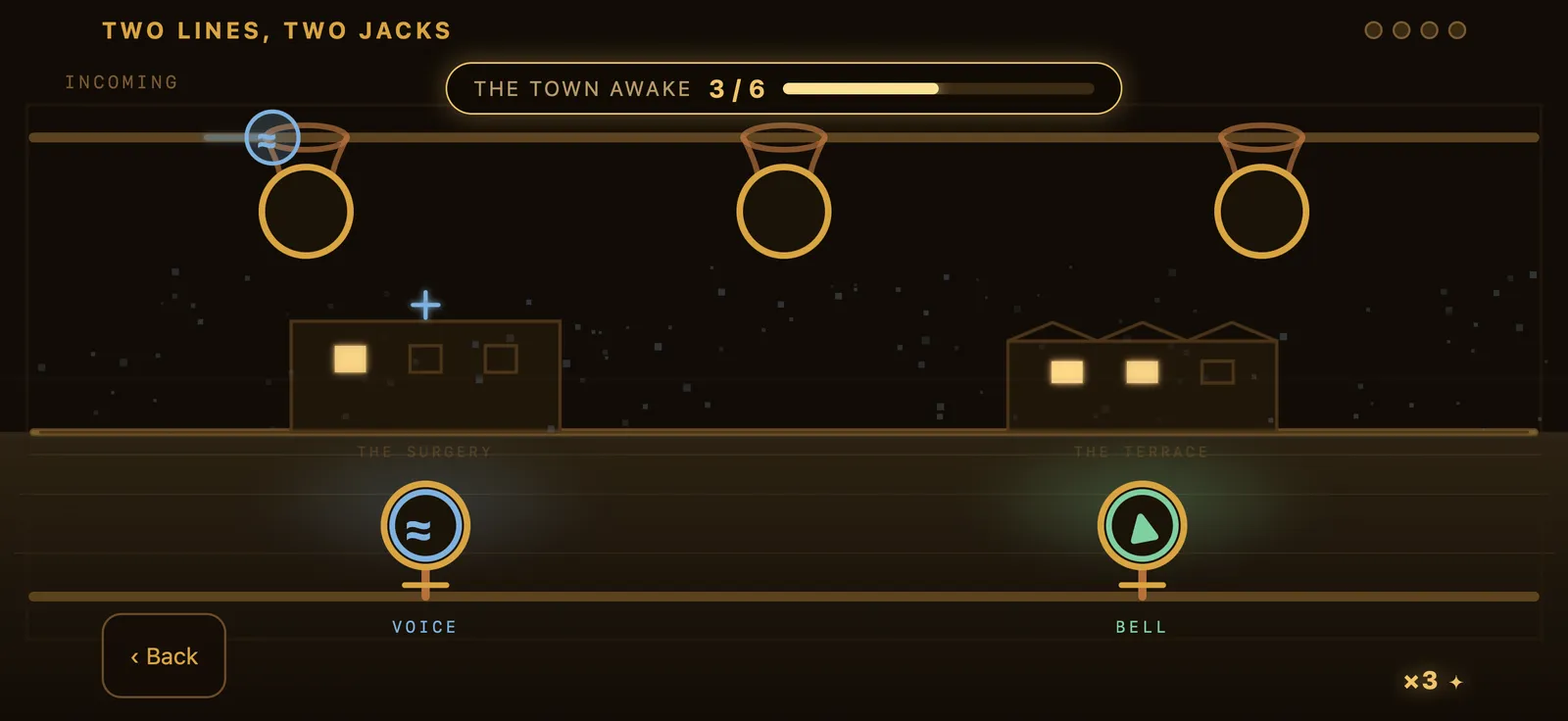
The Switchboard
The whole town is calling! Plug cables into the right sockets to connect every call, and keep up with the morning rush.
No ads, ever · Plays offline · Made for young kids and adults