How Do Gears Work?
Gears are wheels with teeth that pass turning from one place to another. They can make things faster, slower, stronger, or turn the other way!
What is a gear?
A gear is a wheel with teeth around its edge. When the teeth of two gears fit together, or mesh, turning one gear turns the other. Gears are inside clocks, bicycles, cars, washing machines, toys and even some printers.
Gears can do three useful jobs. They can change speed (faster or slower), change direction (clockwise or anticlockwise), and change strength (a slow gear can turn with more force).
The three gear rules
Touching gears turn opposite ways
If one gear turns clockwise, the gear it meshes with turns anticlockwise.
Small gears spin faster
A small gear driving a big one makes the big one turn slowly, but with more force. A big gear driving a small one makes it spin fast.
A gear in the middle flips the direction back
Put a third gear, called an idler, between two others, and the last gear turns the same way as the first. The idler’s own size doesn’t change the speed at all!
📏 Counting teeth
A small gear with 10 teeth drives a big gear with 40 teeth. How many turns does each make?
- Small gear (10 teeth)4 turns
- Big gear (40 teeth)1 turn
The big gear has four times as many teeth, so the small gear must spin four times to turn it once. That’s called a gear ratio of 4 to 1.
How gears run a clock
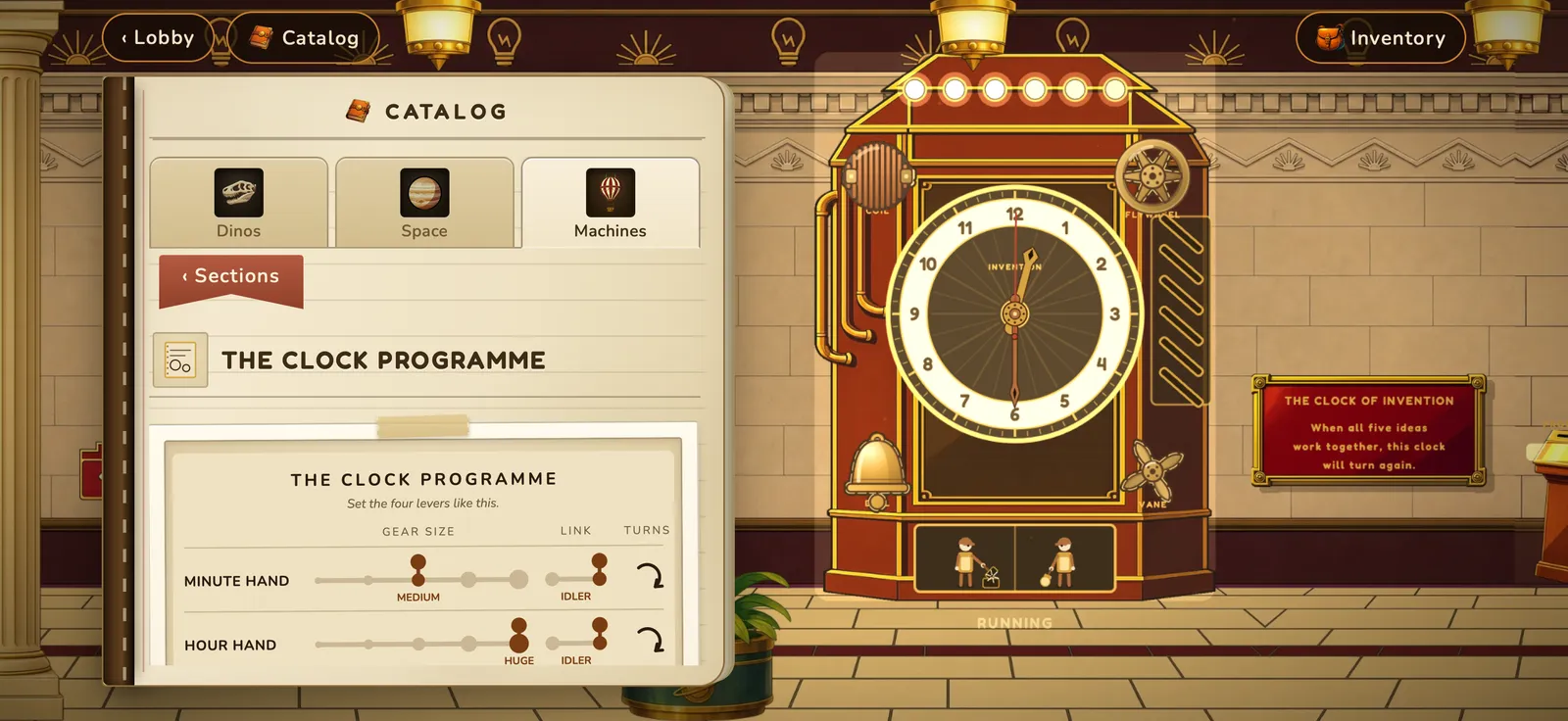
A mechanical clock is a chain of gears called a gear train. Each gear turns the next at a carefully chosen speed. One set makes the minute hand go round once an hour, and another makes the hour hand go round once every 12 hours, 12 times slower.
Something has to keep the gears ticking at a steady pace. Many old clocks used a swinging pendulum. In 1656, the Dutch scientist Christiaan Huygens built the first pendulum clock, which kept far better time than any clock before it.
Gear-Up Facts
Bicycle gears help you climb hills.
A low gear makes pedalling easier but slower, perfect for hills. A high gear is harder to push but takes you faster on the flat.
A chain lets gears work far apart.
On a bike, the chain links the gear at your pedals to the gear on the back wheel, so both turn the same way.
Engines use gears and wheels too.
Steam engines turned a piston’s push into spinning, and wheels and gears carried that motion where it was needed. See the steam engine for kids.
Some of the first mechanical clocks were in church towers.
Some of the first ones, built in Europe about 700 years ago, had no faces at all. They just rang a bell.
Gears can make you stronger.
A small gear turning a big gear trades speed for force, which is how a hand-cranked winch can lift heavy loads.
Science words to know
- Gear
- A wheel with teeth that meshes with other gears to pass on turning.
- Mesh
- When the teeth of two gears fit together.
- Idler gear
- A gear placed between two others to make them turn the same way.
- Pendulum
- A weight that swings back and forth at a steady pace, used to keep time.
Quick quiz!
0 / 31. Two gears are touching. One turns clockwise. Which way does the other turn?
2. A small gear drives a big gear. The big gear turns…
3. What does an idler gear do?
Questions kids ask
How do gears work, simply?
Gears are toothed wheels. When their teeth mesh, turning one turns the other, and their sizes decide how fast and which way each one spins.
Why do gears turn opposite ways?
Where the teeth meet, they push each other along in the same direction, which makes the two wheels spin opposite ways.
What is a gear ratio?
It compares how many times one gear turns for each turn of another. A 10-tooth gear driving a 40-tooth gear has a ratio of 4 to 1.
Where are gears used?
In clocks, bikes, cars, toys, washing machines and many machines. Even old printing presses used screws and levers, gears’ simple-machine cousins.
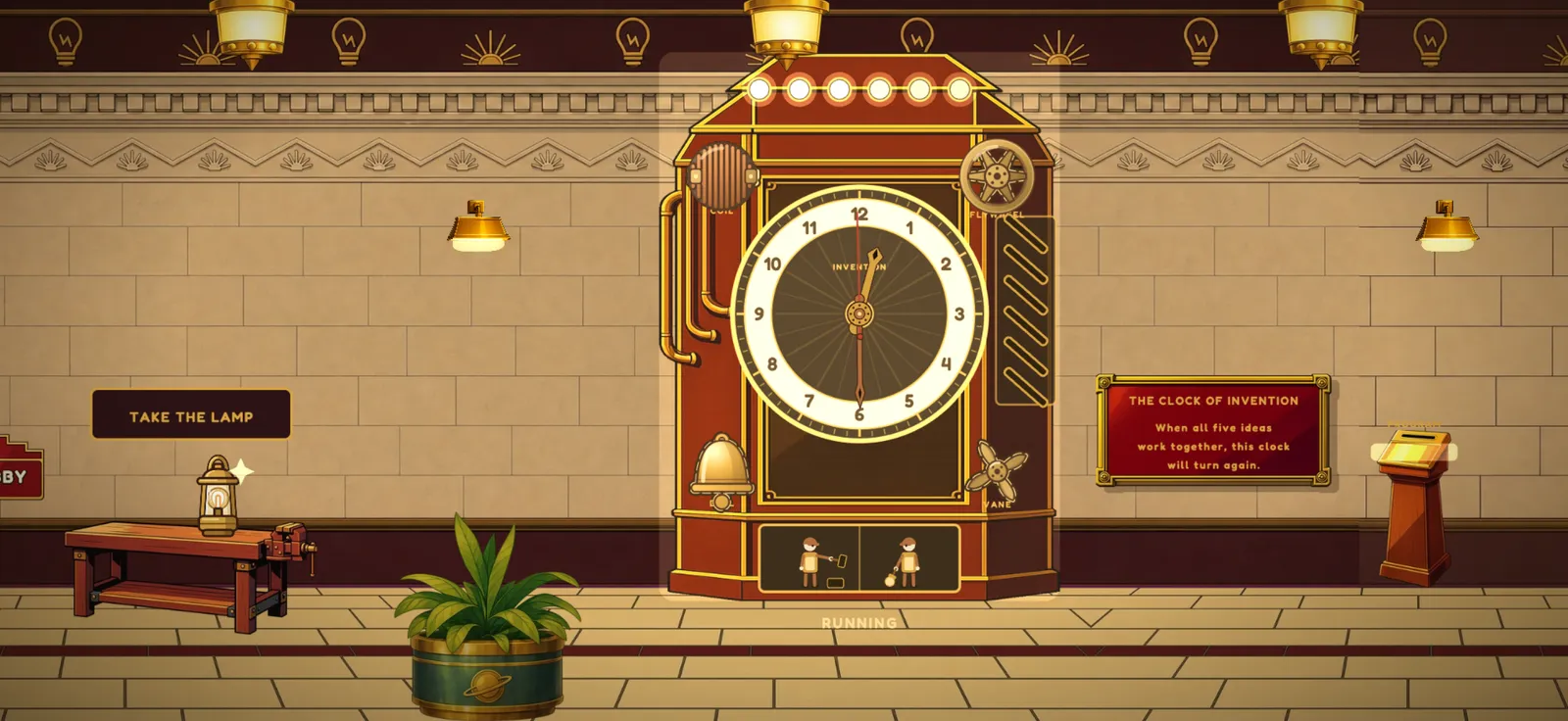
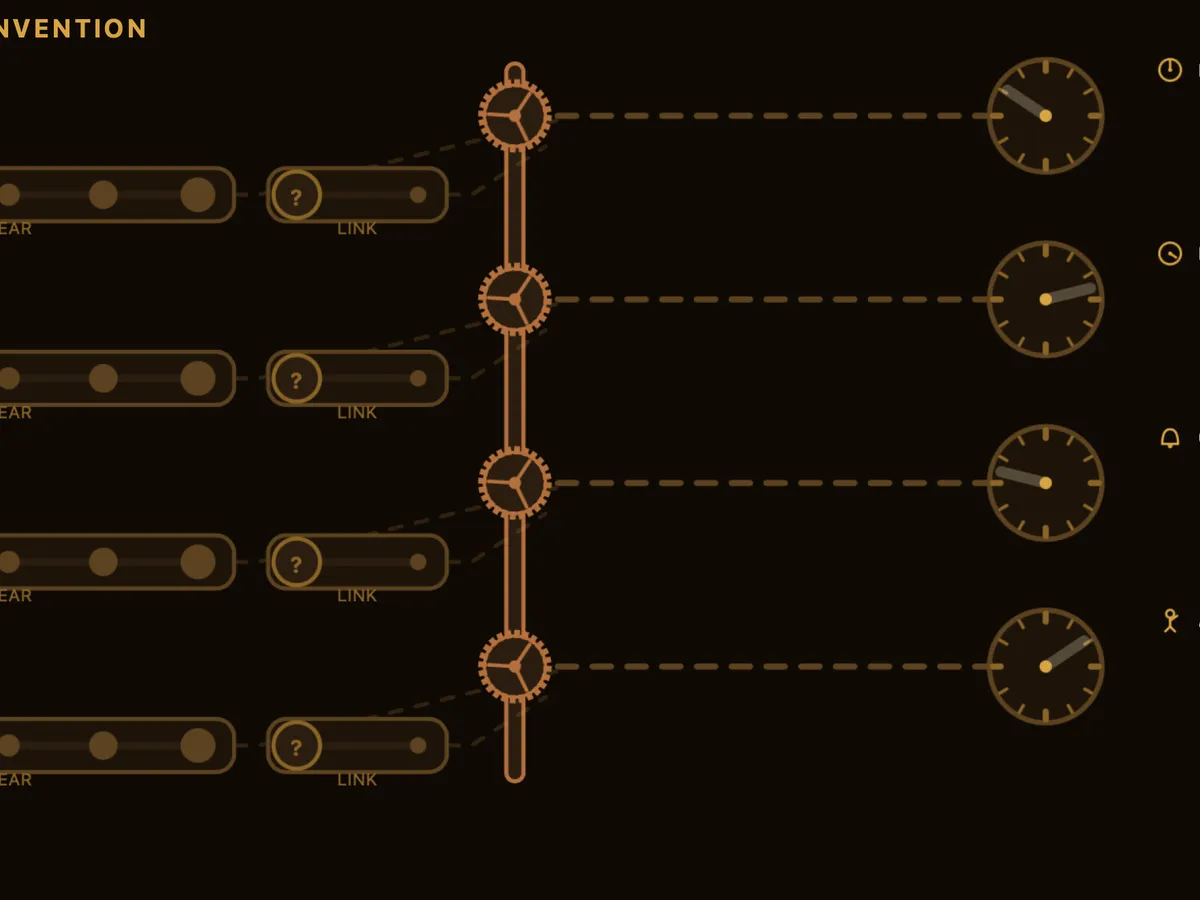
The Clock of Invention
Choose a gear size and how it joins on each shaft, matching the ghost pointer, until the great clock turns again.
No ads, ever · Plays offline · Made for young kids and adults