The Printing Press for Kids
Before printing, every book was copied by hand. Then came little metal letters that could be used again and again, and ideas started to fly.
Did Gutenberg invent printing?
No, printing is much older! In China, people printed with carved wooden blocks more than a thousand years ago. Around 1040, a Chinese craftsman named Bi Sheng made the first movable type: separate little letters, or characters, of baked clay that could be arranged, printed and then reused.
In Korea, printers were using metal type by 1234, and a Korean book called the *Jikji*, printed with metal type in 1377, still survives today. All of this happened before Johannes Gutenberg was born.
What Gutenberg added
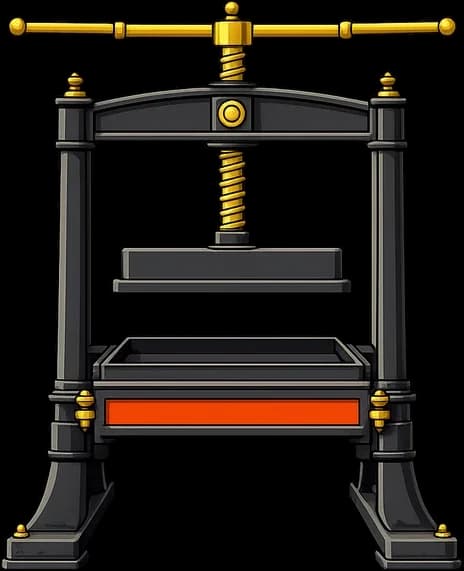
Around 1450 in Mainz, Germany, Johannes Gutenberg put together a printing system that changed Europe. He invented a hand mould that could cast thousands of identical metal letters quickly, an oily ink that stuck to metal, and he adapted a screw press, like the ones used to squeeze grapes for wine.
Together, these made printing fast and cheap. His most famous book, the Gutenberg Bible, was printed around 1455.
How to print a page
- 1
Set the type
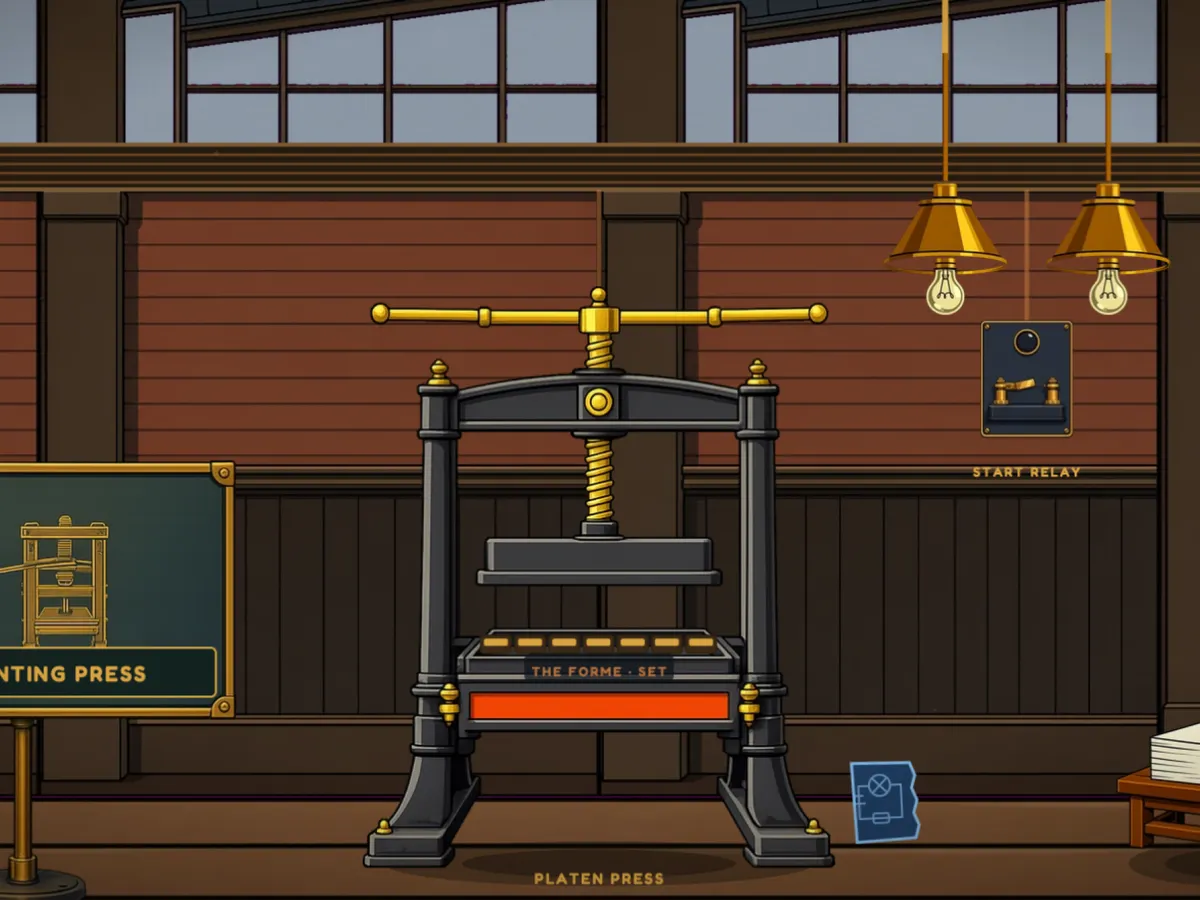
Pick out each little metal letter and line them up in a frame. Every letter is back to front!
- 2
Lock it in
Wedge the letters tightly into the frame so none can wiggle loose.
- 3
Ink it up
Dab sticky ink over the raised letters.
- 4
Press down
Lay paper on top and pull the lever, squeezing the paper onto the inked letters.
- 5
Peel and dry
Lift the page off. The back-to-front letters now read the right way round! Hang it up to dry.
📏 How fast could you make a book?
- A printing presshundreds of sheets a day
- A scribe copying by handa few pages a day
A scribe could take months to copy one whole book. Within about fifty years of Gutenberg’s press, Europe had millions of printed books.
Why did printing change the world?
When books were rare and copied by hand, only a few people could own them. Once presses spread, books, maps, songs and newspapers became cheap enough for many more families.
More people learned to read, scientists could share their discoveries quickly and accurately, and the same words could reach thousands of readers in different cities at once. Many historians think printing helped make modern science possible.
Hot-off-the-Press Facts
The oldest dated printed book is from China.
The Diamond Sutra, printed from carved wooden blocks in the year 868, is the oldest printed book with a date in it.
Movable type can be reused forever.
Build a page from pieces, print it a thousand times, then take it apart and build a different page.
Fewer than 50 Gutenberg Bibles survive.
About 180 copies were printed, and the ones that remain are some of the most valuable books in the world.
Printing spread ideas fast.
Once books were cheaper, many more people could read the same ideas, which helped science, news and learning grow.
The press came from a wine press.
Screw presses were already used to squeeze grapes and olives. Gutenberg adapted one to squeeze paper onto type.
Science words to know
- Movable type
- Separate letters that can be arranged, printed and rearranged.
- Scribe
- A person who copied books and documents by hand.
- Mould
- A hollow shape that hot liquid metal is poured into to make a copy.
- Press
- A machine that squeezes things together, like paper onto inked type.
Quick quiz!
0 / 31. Who made the first movable type, around 1040?
2. Why is printing type back to front?
3. Where did people print with metal type by 1234?
Questions kids ask
Who invented the printing press?
Johannes Gutenberg built the famous printing press around 1450, but printing and movable type were invented earlier in China and Korea.
Why was the printing press so important?
It made books faster and cheaper to produce, so ideas, news and knowledge could spread to many more people.
How did people make books before printing?
Scribes copied them by hand, letter by letter. One book could take months.
How does a printing press work?
Metal letters are set in a frame, inked and pressed onto paper. Its screw and levers are simple machines, like the gears in how do gears work.
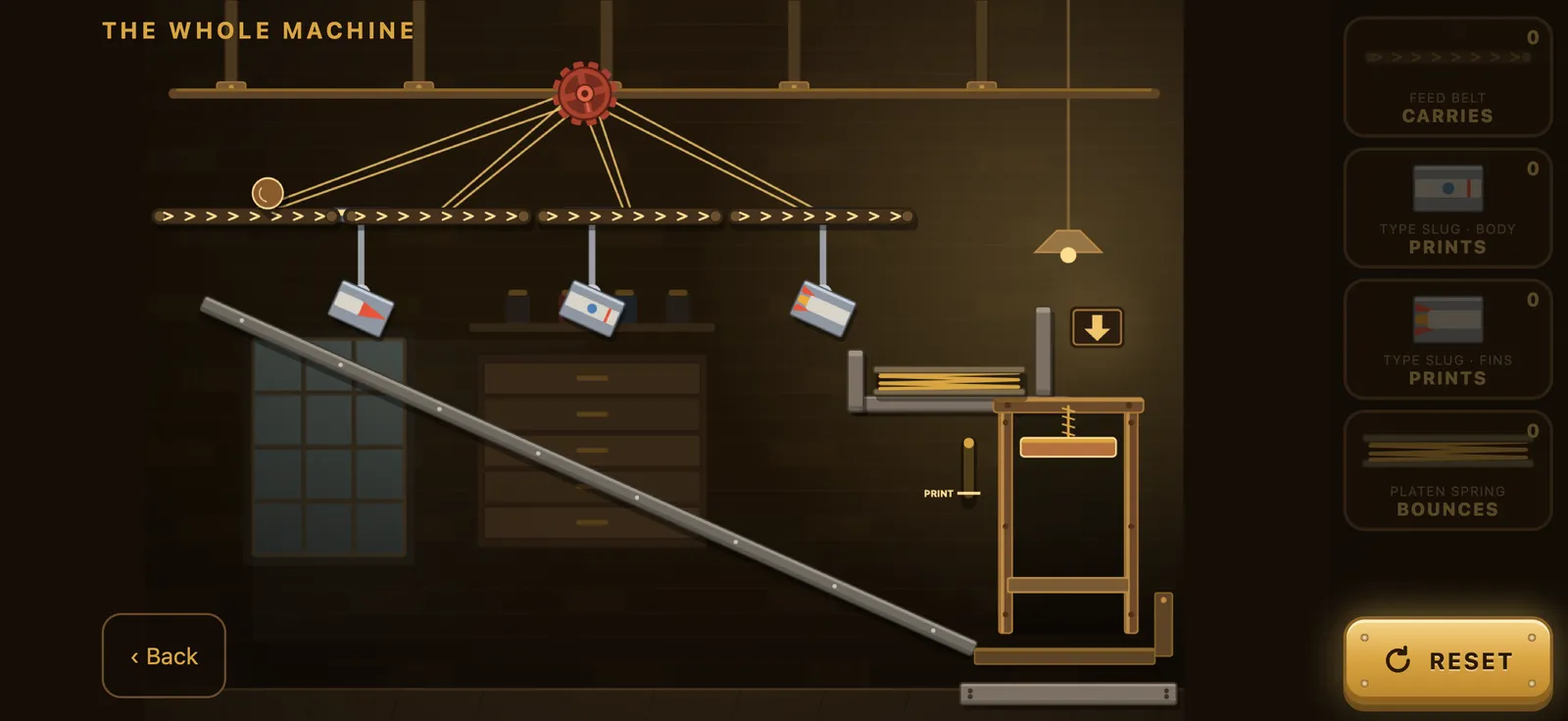
The Press
Set the type in the right order, time each part of the machine and run the press. Every letter goes in backwards!
No ads, ever · Plays offline · Made for young kids and adults