The Steam Engine for Kids
Boil some water, trap the steam, and you can pump mines, spin factories and pull trains. Here’s how fire and water changed the world.
What is a steam engine?
A steam engine is a machine that uses the push of steam to make things move. When you boil water, it turns into steam that takes up about 1,700 times more room. A cupful of water becomes a bathful of steam! Trap that steam in a strong metal tube and it pushes hard on anything in its way.
Steam engines powered the Industrial Revolution, when factories, mines and railways changed how people lived and worked, starting in Britain in the 1700s.
How a steam engine works
Heat
A fire of coal or wood heats water in a big metal tank called a boiler.
Steam
The water boils into steam, which needs much more room and builds up pressure.
Push
The steam pushes a piston along a cylinder, like a plunger in a tube.
Turn
A rod called a crank turns the piston’s back-and-forth push into spinning.
Smooth
A heavy flywheel stores the push and keeps the wheels turning smoothly between pushes.
Did James Watt invent the steam engine?
No! That’s a famous mix-up. Thomas Newcomen built a working steam engine in 1712, and his engines pumped water out of mines for decades. But they wasted most of their coal, heating and cooling the same cylinder over and over.
After repairing a model of a Newcomen engine, James Watt had a brilliant idea in 1765: cool the steam in a separate condenser, so the main cylinder could stay hot. His engines did the same work with about a quarter of the coal. That made steam power cheap enough for factories everywhere.
All aboard the steam train!
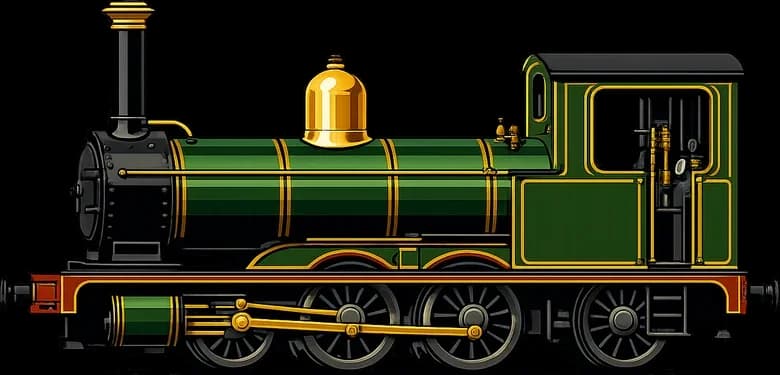
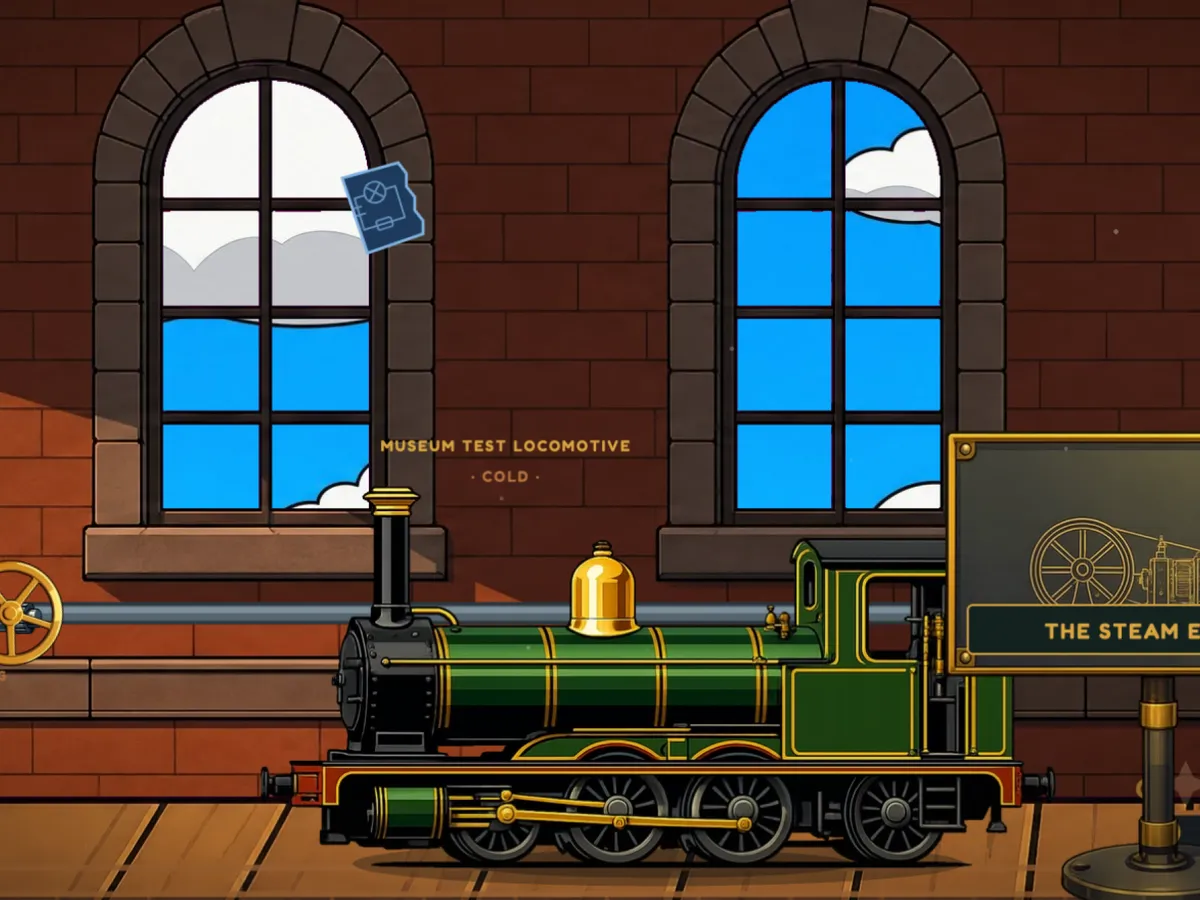
Put a steam engine on wheels and you get a locomotive. Richard Trevithick built the first railway steam locomotive in 1804. In 1825 the Stockton and Darlington Railway in England became the first public railway to use steam trains.
In 1829, George and Robert Stephenson’s locomotive Rocket won a famous speed contest. Steam trains soon carried people and goods across whole countries in hours instead of days.
Full Steam Ahead Facts
Every boiler has a safety valve.
A weight holds it shut, but if the pressure gets too high, the valve lifts and lets steam out, so the boiler doesn’t burst.
Steam still makes much of our electricity.
Many power stations heat water into steam, which spins giant fans called turbines connected to generators.
A flywheel is heavy on purpose.
Its weight stores energy from each push and carries the engine through the moments when the piston has no push at all.
Wood burns fast; coal burns long.
Engine drivers used different fuels for different jobs. Coal gives a steady heat for climbing long hills.
Steam changed where people lived.
Factories with steam engines drew millions of people from farms into fast-growing towns and cities.
Science words to know
- Steam
- Water that has been heated into an invisible gas. It takes up much more room than water.
- Piston
- A part that slides back and forth inside a tube when pushed.
- Pressure
- How hard something, like steam, pushes on the walls around it.
- Locomotive
- An engine on wheels that pulls a train.
Quick quiz!
0 / 31. Who built a working steam engine in 1712?
2. What did James Watt add?
3. What does a flywheel do?
Questions kids ask
Who invented the steam engine?
Thomas Newcomen built the first practical steam engine in 1712. James Watt greatly improved it in 1765 with his separate condenser.
How does a steam engine work, simply?
Fire boils water into steam. The steam pushes a piston, and a crank turns that push into spinning wheels.
When was the first steam train?
Richard Trevithick’s locomotive ran on rails in 1804. The first public steam railway opened in 1825.
Do we still use steam engines?
Steam still spins turbines in many power stations to make electricity. Learn how gears and wheels pass that motion along in how do gears work.
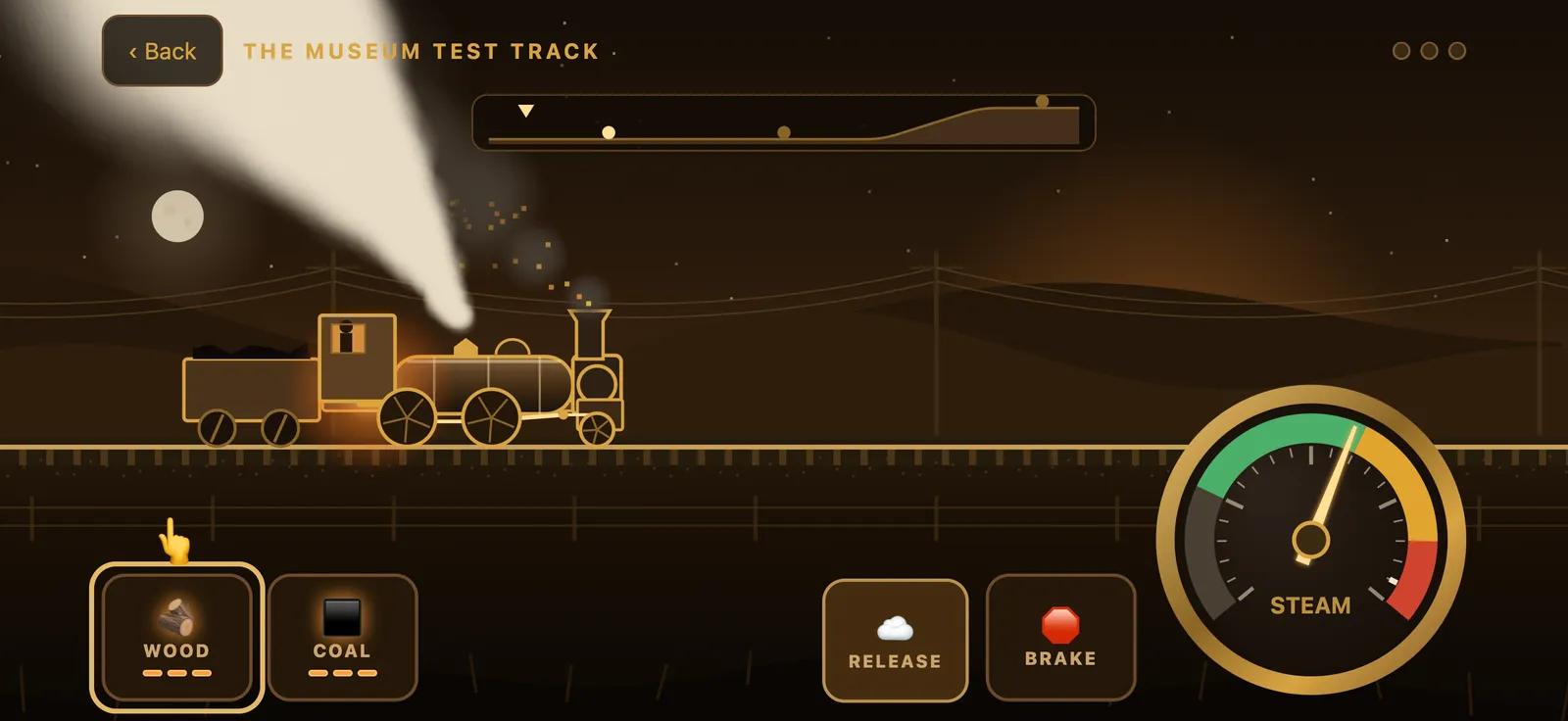
The Test Track
Feed the fire, watch the pressure gauge and let off steam before it hits the red. Can you drive the locomotive up the big hill?
No ads, ever · Plays offline · Made for young kids and adults