What Do Paleontologists Do?
They hunt for fossils, dig them out, clean them up and work out how animals lived millions of years ago. Here’s what the job is really like.
What is a paleontologist?
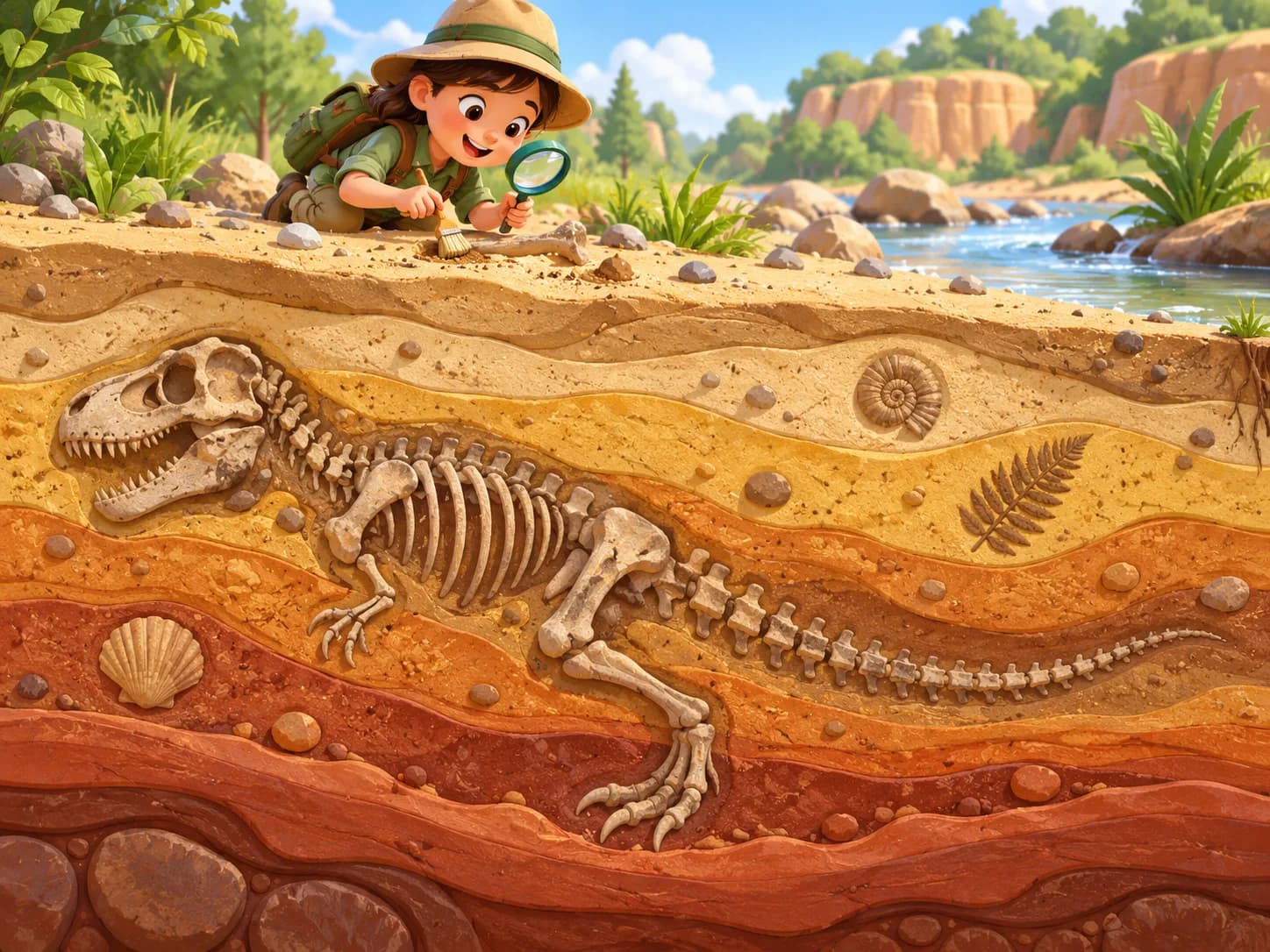
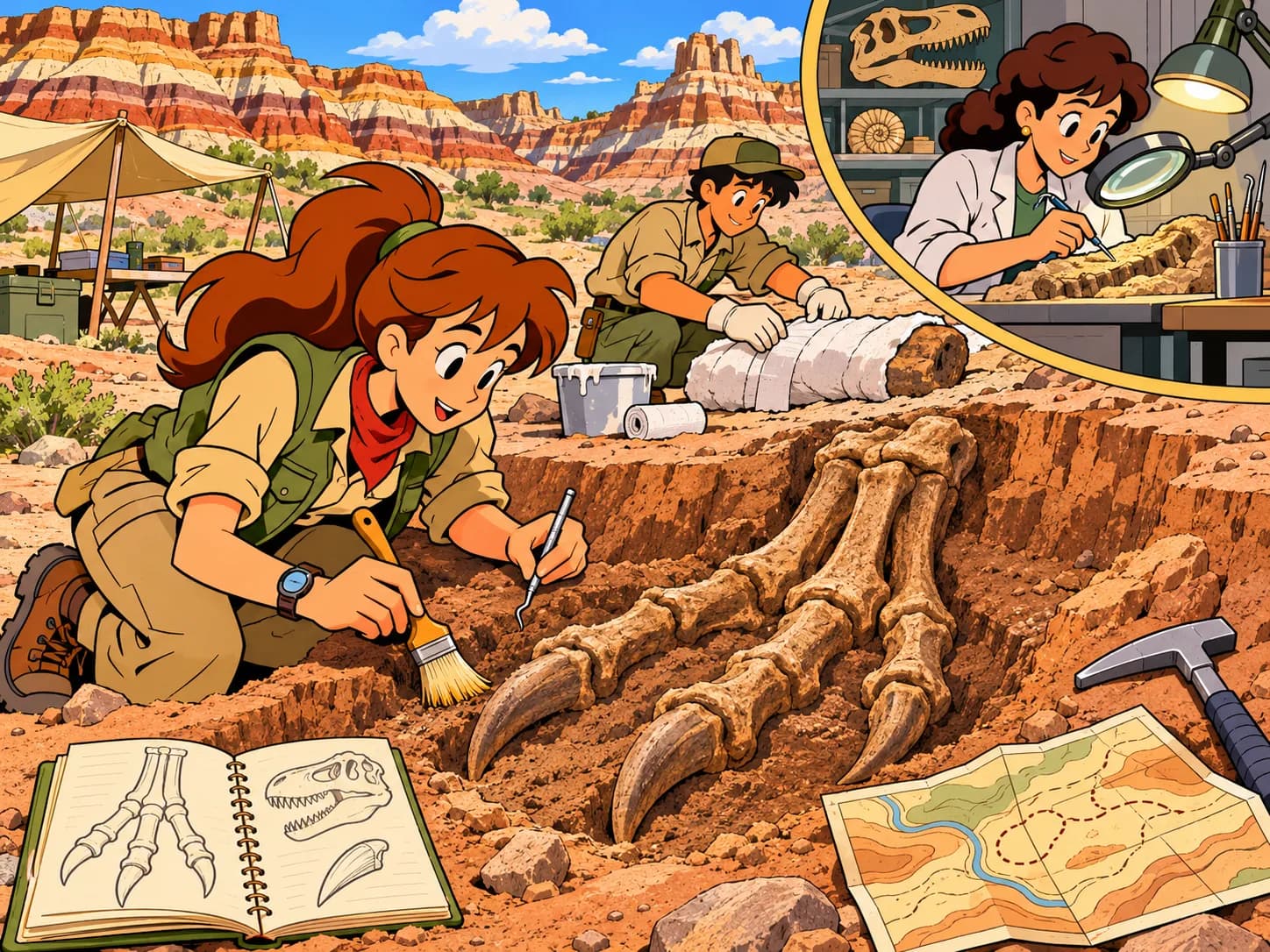
A paleontologist (say it: pay-lee-on-TOL-oh-jist) is a scientist who studies fossils to learn about life long ago. The word comes from Greek words that mean “old”, “beings” and “study”. So paleontology is the study of ancient life.
Dinosaurs are the most famous part of the job, but paleontologists study all kinds of ancient life: plants, fish, insects, shellfish, mammals like mammoths and even tiny microbes. A fossil can be a bone, a tooth, a shell, a leaf or a footprint. To see how one forms, read how do fossils form.
Paleontologists are not the same as archaeologists. Archaeologists study things that people made and left behind, like pots, tools and old buildings. Paleontologists study the remains of living things, and most of them are far older than any people.
A paleontologist’s job, step by step
Finding a dinosaur is only the start. Here is how a fossil gets from the ground to a museum.
Hunt
They walk slowly over dry, rocky land, cliffs and riverbanks, where wind and rain wear rock away. They look for bits of bone poking out of the ground.
Record
Before moving anything, they photograph the fossil, mark it on a map and note which rock layer it was in. That helps them work out how old it is.
Dig
They clear the rock around the fossil with picks, chisels, small knives, brushes and tools made for dentists. Special glue holds crumbly bone together.
Jacket
They cover the fossil with paper or foil, then wrap it in strips of cloth dipped in plaster. The hard jacket protects it, like a cast on a broken arm.
Prepare
Back in the lab, workers called preparators remove the last rock with pen-sized tools that work like tiny jackhammers, plus needles and brushes, often under a microscope.
Study and share
Scientists measure the fossil, compare it with others, write up what they learn and help museums put it on show.
What can a fossil tell us?
Paleontologists read fossils like detectives read clues.
Teeth
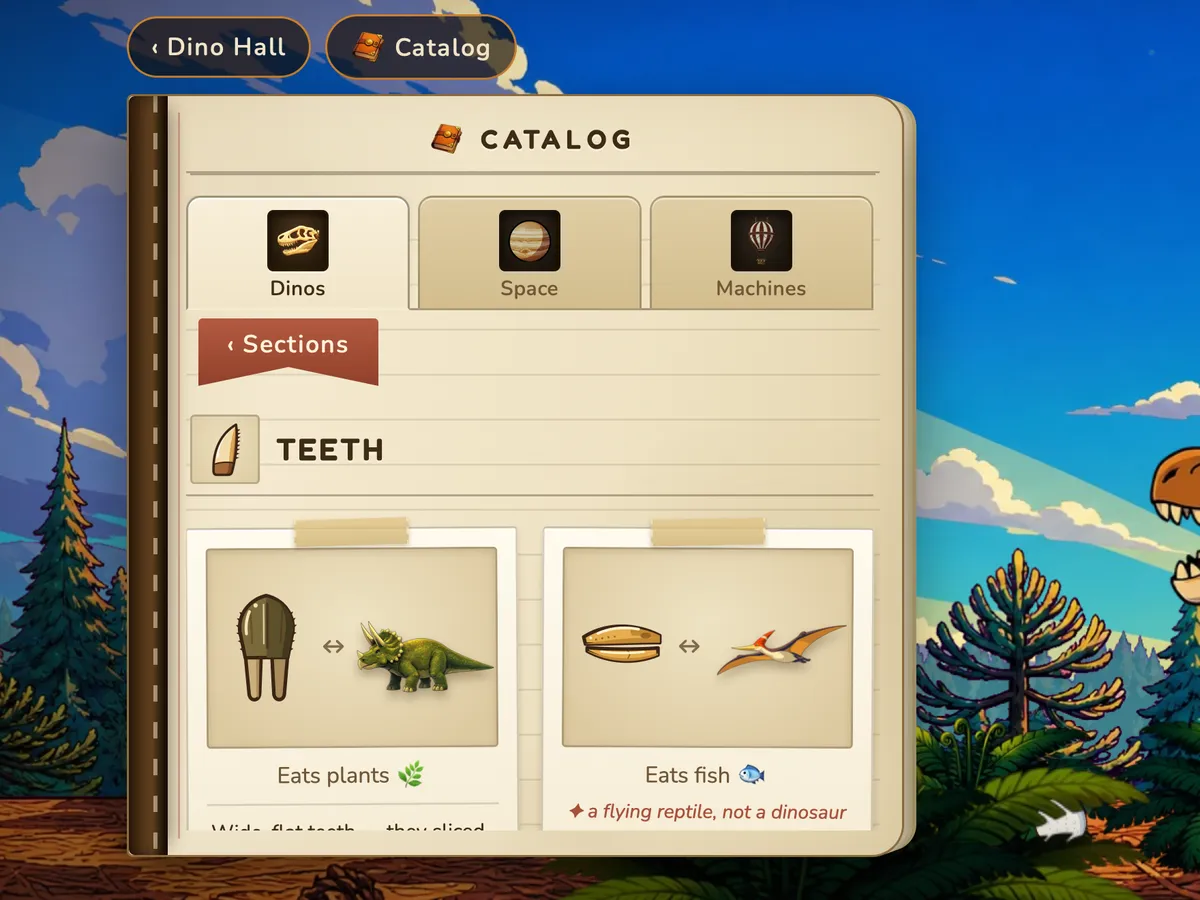
Sharp, jagged teeth mean meat. Flat or leaf-shaped teeth mean plants.
Read more →Growth rings
Bones have rings inside, a bit like a tree trunk. They show how old an animal was and how fast it grew.
Read more →Footprints
Tracks show how an animal walked, how fast it moved and whether it travelled in a group.
Read more →Eggs and nests
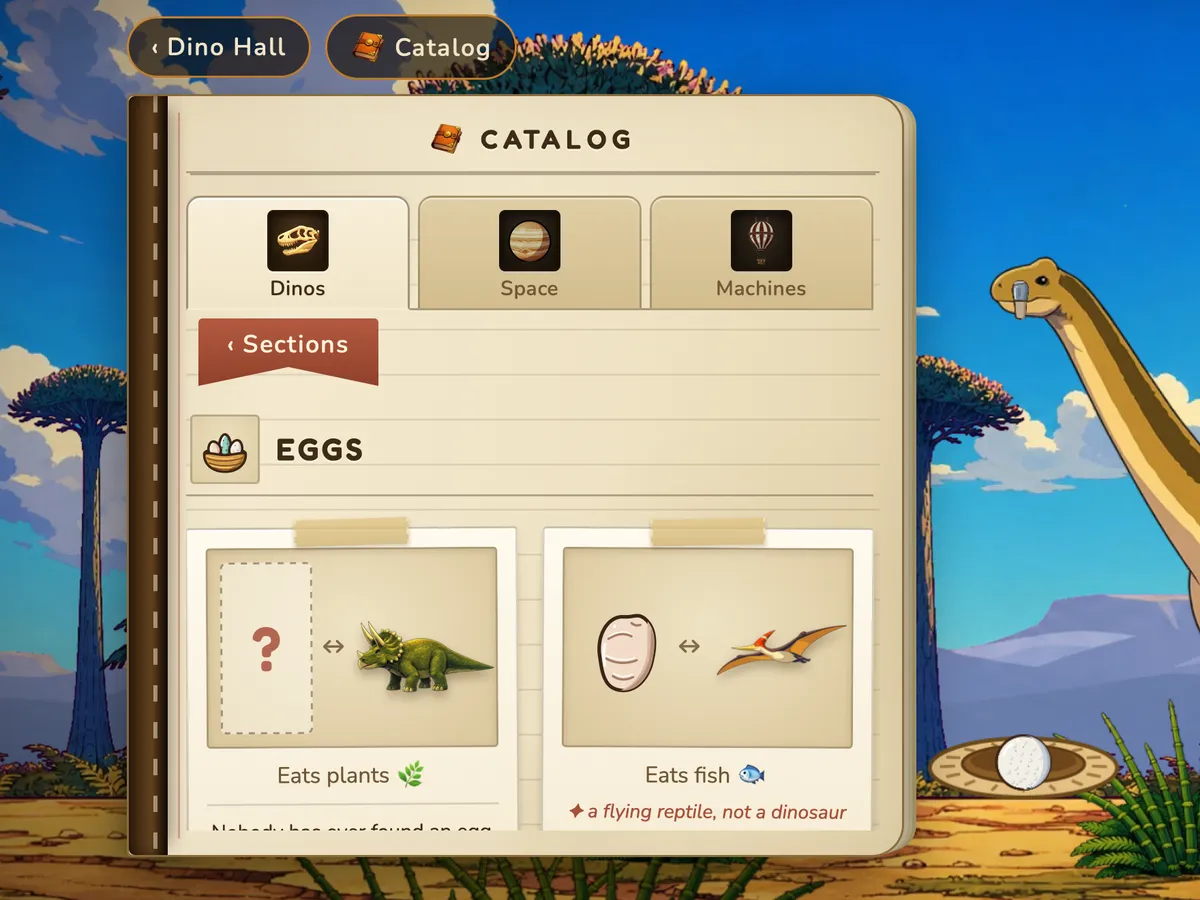
Eggs, nests and baby bones show how dinosaurs raised their young.
Read more →
Looking inside without breaking anything
Some of the best clues are hidden inside a fossil. Paleontologists use CT scanners, like the ones in hospitals, to take hundreds of X-ray pictures of a skull or an egg. A computer stacks them into a 3D model.
That way they can see the space where the brain was, the shape of the inner ear, or a tiny baby dinosaur curled up inside an egg, without cutting the fossil open.
Where do paleontologists work?
Many work at museums and universities. Others work for national parks or for the government. A lot of them spend a few weeks or months each year digging outdoors, often in hot, dusty places, and the rest of the year in labs, offices and museum storerooms.
Lab work can take far longer than the dig. When the Field Museum in Chicago got SUE, the most complete T. rex skeleton found so far, 12 preparators spent more than 30,000 hours getting the bones ready to study and show.
Famous fossil finds
- In 1902, the fossil hunter Barnum Brown found the first skeleton of Tyrannosaurus rex in Hell Creek, Montana.
- In 1923, a team led by Roy Chapman Andrews found the first fossil eggs that scientists knew were dinosaur eggs, in the Gobi Desert in Mongolia.
- In 1811, when Mary Anning was 12, her brother found a strange skull near Lyme Regis, England. Mary later dug out the rest of the skeleton, an ancient sea reptile, and became one of the most famous fossil hunters ever.
- In 1990, Sue Hendrickson spotted bones in a cliff in South Dakota. They belonged to the T. rex now named SUE, after her.
How can you become a paleontologist?
Most paleontologists study science at university, especially biology (the study of living things) and geology (the study of rocks). Many go on to study for several more years to become experts.
You can start now. Visit natural history museums, read about fossils, and keep a notebook of rocks and shells you spot outdoors. The US National Park Service has a free Junior Paleontologist program with activities and a badge.
One important rule: never take fossils from a national park. It is against the law. If you find one, leave it where it is, take a photo and tell a park ranger. It might be an important clue for scientists.
Fun Facts About Fossil Hunters
They borrow tools from dentists.
Dental picks are perfect for scraping rock away from small, delicate fossils without scratching them.
Some fossils are too small to see.
Microfossils, like the tiny shells of sea creatures, are studied under microscopes. They help scientists work out how old rocks are and what ancient seas were like.
Paleontologists name new species.
Each new species gets a two-part scientific name. Tyrannosaurus rex means “tyrant lizard king”.
Some discoveries happen in museum drawers.
Museums store millions of fossils, and many have never been studied closely. Paleontologists sometimes find a new species in a fossil that was dug up decades earlier. The eggs found in 1923 have their own surprising story in dinosaur eggs.
The dig is the quick part.
Digging up a big skeleton can take weeks, but cleaning and studying it can take years.
Science words to know
- Paleontologist
- A scientist who studies fossils to learn about life long ago.
- Fossil
- The remains or traces of a living thing from long ago, kept in rock.
- Field jacket
- A hard cover of plaster and cloth that protects a fossil on its way to the lab.
- Preparator
- An expert who carefully removes rock from fossils in a lab.
- Archaeologist
- A scientist who studies things people made and left behind, like tools and pots.
Quick quiz!
0 / 31. What does a paleontologist study?
2. Why do paleontologists wrap fossils in plaster?
3. What can growth rings inside a fossil bone show?
Questions kids ask
What do paleontologists do?
They search for fossils, dig them out carefully, protect them in plaster jackets, clean them in a lab and study them to learn how ancient animals and plants lived.
Do paleontologists only study dinosaurs?
No. They study all kinds of ancient life, including plants, fish, insects, shellfish, mammoths and tiny microbes.
What tools do paleontologists use?
Picks, chisels, brushes, dental picks, glue and plaster in the field, plus tiny jackhammer-like tools, microscopes and CT scanners in the lab.
What is the difference between a paleontologist and an archaeologist?
A paleontologist studies fossils of ancient living things. An archaeologist studies things people made and left behind, like tools, pots and buildings.
How do you become a paleontologist?
Study science, especially biology and geology, at university, and then train to become an expert. You can start now by visiting museums and learning about how fossils form.
The Dinosaur Wing
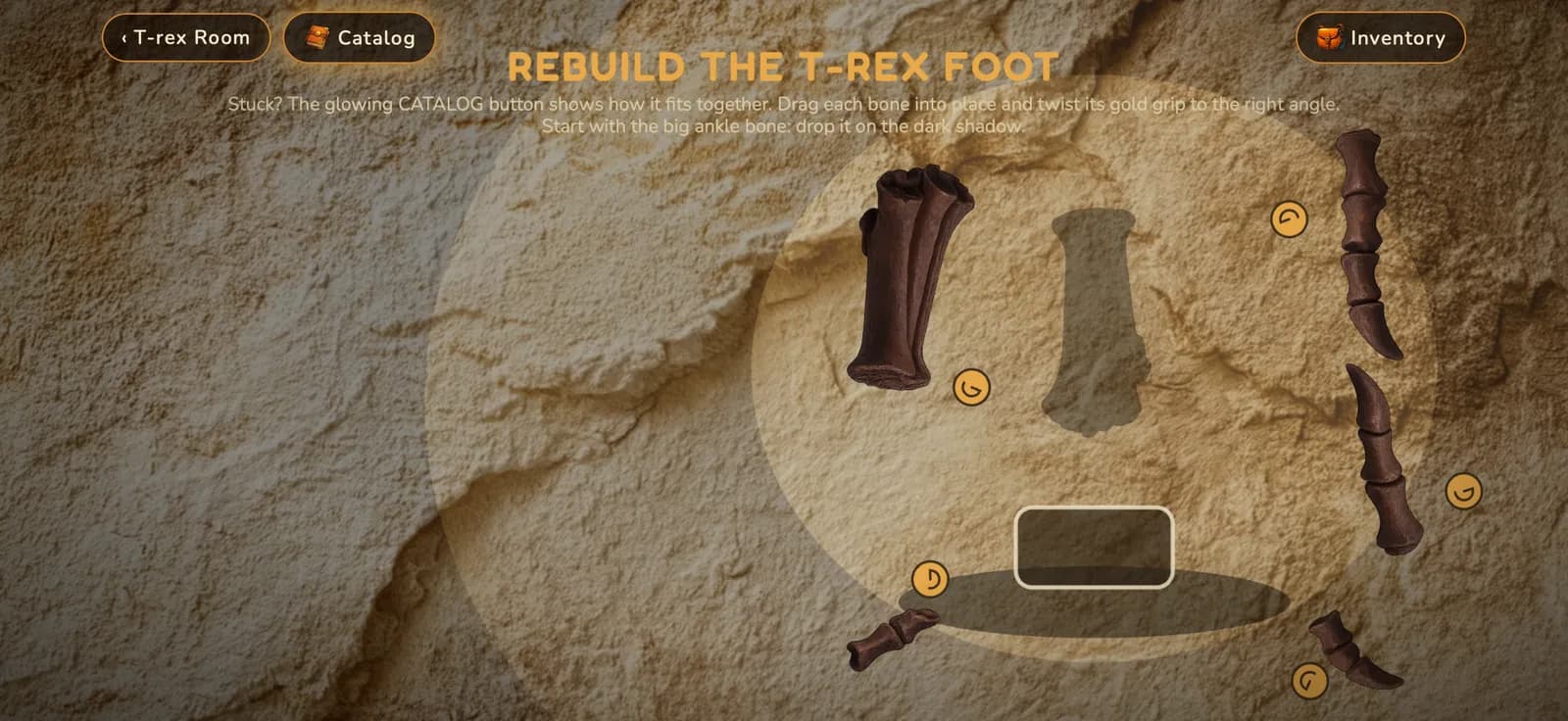
Be the paleontologist: rebuild a fossil T. rex foot bone by bone, find the fossil hidden in each room and use the Field Guide to work out who it belongs to.
✔ The whole Dinosaur Wing is free to play
No ads, ever · Plays offline · Made for young kids and adults